The potatoes start to soften around the edges first, and a few can split if they boil too hard. I keep the water at a steady simmer instead; the pieces cook evenly and mash without turning waterlogged. These olive oil mashed potatoes get their creamy texture from warm milk and extra-virgin olive oil, with no butter to cover up the oil’s flavor.
Yukon Golds make a naturally smooth, tender mash, and the olive oil gives it a softer, more savory finish than a butter-heavy version. I stir the warm milk and oil in gradually so I can stop when the potatoes look creamy rather than loose. A little black pepper brings the olive oil forward, and the finished potatoes are at their best served hot.
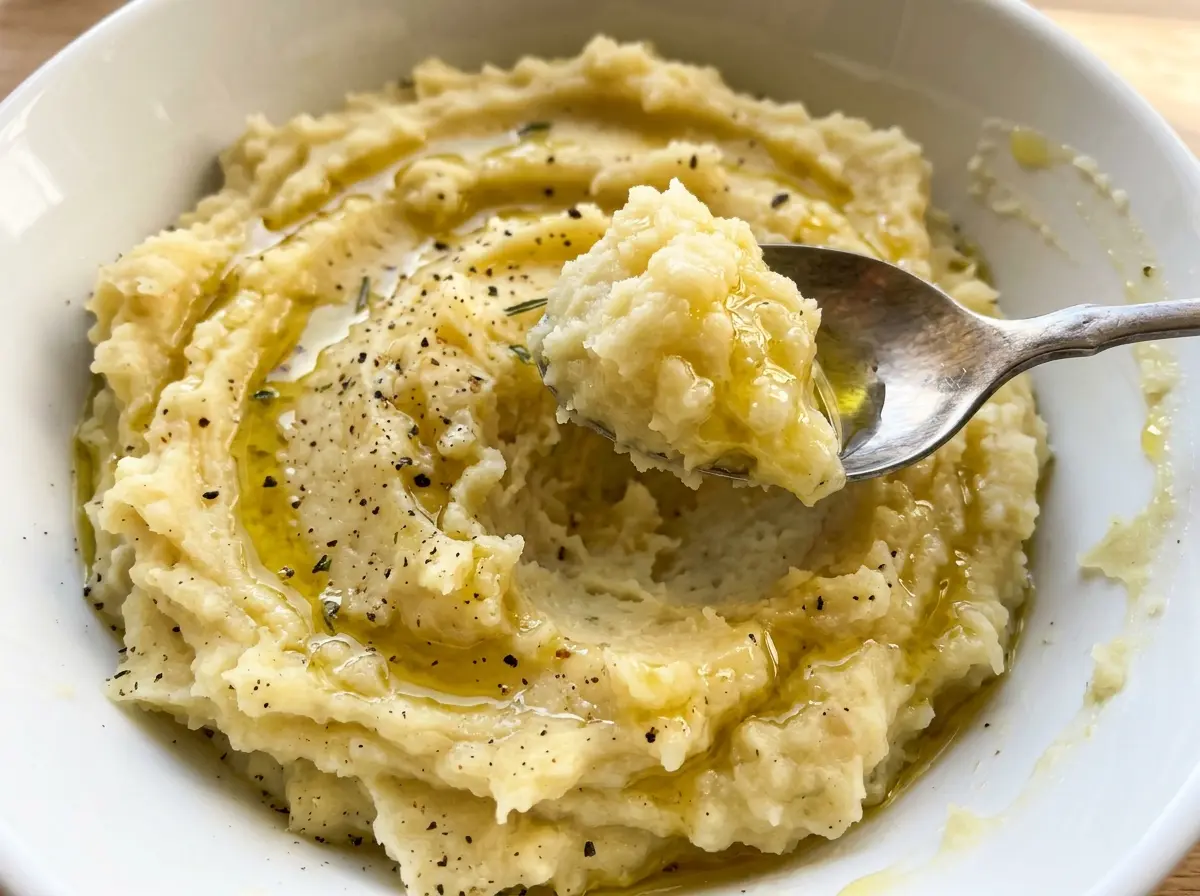
Kitchen Note
Cut the potatoes into pieces that are close to the same size. If some are much smaller than the others, they can start breaking apart before the larger pieces are tender.
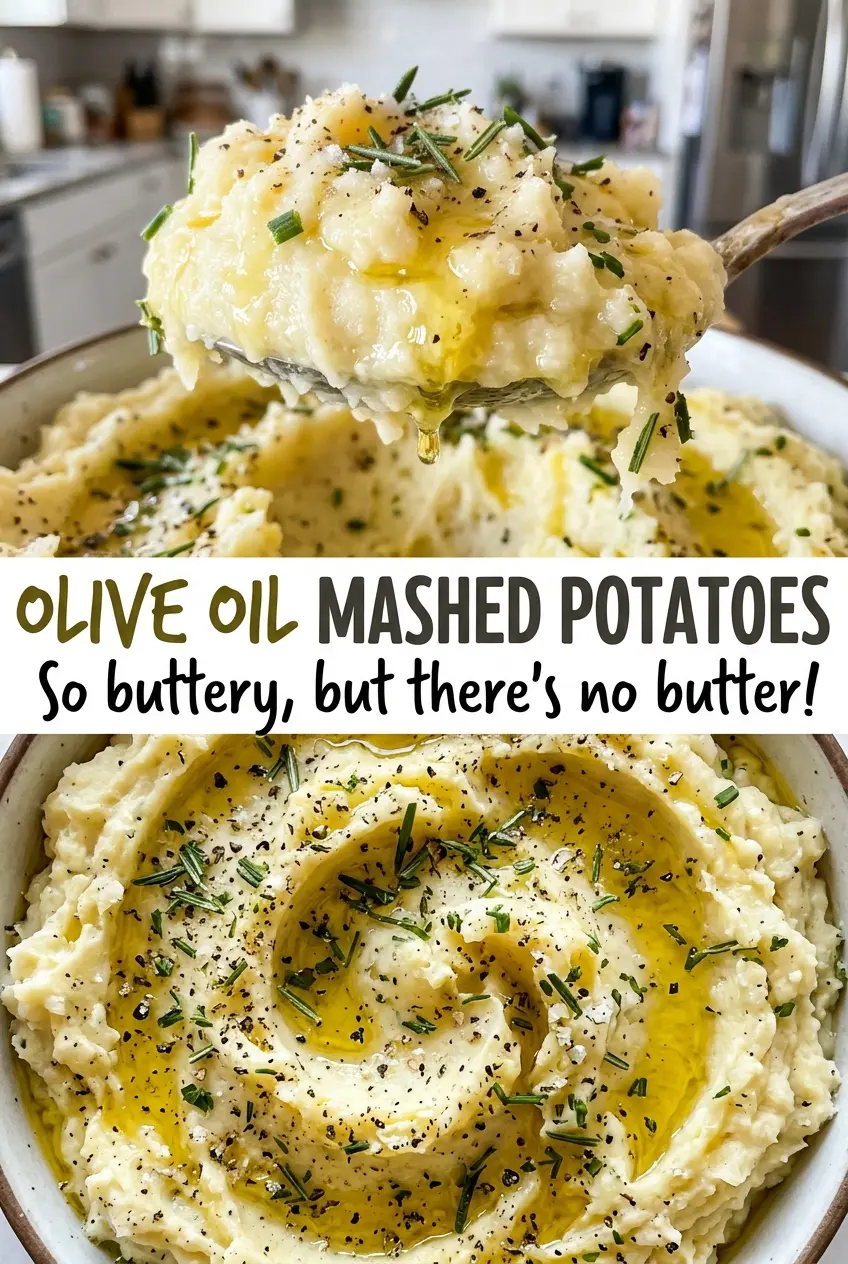
Save these Olive Oil Mashed Potatoes for a creamy, buttery-free side with a smooth finish and a savory extra-virgin olive oil flavor.
Why the Potatoes Need Salt Before They’re Mashed
Seasoning the cooking water does more than make the pot taste salty. Potatoes absorb some of that seasoning as they cook, so the flavor reaches the pieces themselves instead of sitting only on the surface after mashing. That matters in a simple side dish with just a few ingredients: there’s nowhere for bland potatoes to hide.
I divide the salt between the water and the finished mash. The first portion seasons the potatoes as they soften; the last portion lets me adjust the finished bowl once the milk and olive oil are stirred in. Taste at the end, because the oil and milk soften the initial impression of salt. Add the finishing salt and pepper, stir, and taste again before serving. This gives you seasoning throughout, not just a salty bite here and there.
There’s another reason not to put all the salt in at the end. Once the potatoes are mashed, it takes more stirring to distribute seasoning evenly, and extra handling can make the texture heavy. Seasoning in the pot does some of that work early, while the potatoes are still whole.
What Yukon Golds, Whole Milk, and Olive Oil Each Bring
- Yukon Gold potatoes — Their naturally creamy texture makes a smooth mash without the fluffiness of a russet. Choose firm potatoes without soft spots; peeling and cutting them into even pieces helps them cook at the same pace. Russets work if that’s what you have, but expect a lighter, more starchy result rather than the dense, creamy texture of Yukon Golds.
- Whole milk — It adds richness and helps the mashed potatoes turn creamy without needing butter. Warm it before stirring it in; cold milk cools the potatoes and makes it harder to get a smooth finish. For a dairy-free version, see the adaptation below.
- Extra-virgin olive oil — Since the oil is a defining flavor here, use one whose taste you enjoy on its own. A mild, affordable extra-virgin oil works well if you want the potatoes to stay delicate; a greener, pepperier one will be more noticeable. There’s no need to reach for an expensive bottle, but skip an oil with a taste you dislike.
- Black pepper — It gives the soft, rich potatoes a little warmth and pairs naturally with olive oil. Freshly ground pepper makes a more pronounced finish, while standard ground pepper keeps the flavor quieter.
How to Get a Creamy Mash Without Boiling Away the Flavor
Start the Potatoes in Cold, Salted Water
Put the peeled, evenly cut potatoes in a 6-quart pot, then cover them with cold water and add the first portion of salt. Bring the pot to a boil over high heat, then lower the heat until the water keeps a steady simmer. A hard, rolling boil can knock the pieces against one another and break their edges apart before the centers are tender. Cook for 15 to 20 minutes, until a fork passes through the potatoes easily.
Warm the Milk and Oil Gently
While the potatoes cook, combine the milk and olive oil in a small saucepan over low heat. Warm them until the mixture is steaming, but don’t let it boil. Keep the heat low rather than stepping away and letting the mixture bubble; boiling isn’t needed to warm it. A warm mixture blends into the potatoes more easily than cold liquid.
Drain Well, Then Mash
Drain the potatoes thoroughly and return them to the pot. Let the excess water leave with the draining; leftover water on the pieces can make the mash loose. Mash the potatoes until mostly smooth before adding the liquids. A few small lumps are fine, but stop mashing once you’ve reached that texture rather than working the potatoes longer than needed.
Stir in the Warm Mixture Gradually
Pour in the warm milk and oil a little at a time, stirring after each addition. The potatoes will look dry at first, then turn creamy as the liquid is absorbed. Pause when they’re soft and cohesive; adding everything at once makes it harder to judge the texture as you go. Stir in the remaining salt and black pepper, then serve the potatoes hot.
Three Ways to Adapt These Olive Oil Mashed Potatoes
Make the Mash Dairy-Free
Before draining the potatoes, reserve some of their cooking water. Use it in place of the milk, stirring it into the mash gradually with the olive oil until the potatoes are creamy. The starchy water helps bind the mash, though the result will be less rich and milky than the original.
Choose a Bolder Olive Oil Finish
Keep the same amount of oil, but choose a more peppery, grassy extra-virgin olive oil if you want its flavor to stand out. A milder oil makes a softer, quieter mash. Because the oil isn’t hidden by butter or strong seasonings, the difference is easy to taste.
Leave a Little More Texture
For a more rustic bowl, stop mashing while a few small pieces remain instead of taking the potatoes all the way to mostly smooth. Stir in the warm milk and oil gently so those pieces stay intact. You’ll get a looser, more varied texture rather than a uniformly creamy mash.
Storage and Reheating
- Refrigerator: Store leftovers in a covered container for up to 4 days. The potatoes will firm up as they chill.
- Freezer: They can be frozen in an airtight container, though the texture may be less smooth after thawing. Thaw overnight in the refrigerator and stir well after reheating.
- Reheating: Warm them in a covered saucepan over low heat, stirring regularly until heated through. Avoid high heat, which can make the bottom scorch before the center is warm.
Questions That Come Up When Making Olive Oil Mashed Potatoes
Olive Oil Mashed Potatoes
Ingredients
Equipment
Method
- Put the potatoes in a 6-quart pot and add the water and 2 teaspoons of the salt.
- Bring to a boil over high heat.
- Reduce the heat to maintain a simmer and cook for 15 to 20 minutes, until the potatoes are fork-tender.
- While the potatoes cook, warm the milk and olive oil in a small saucepan over low heat until steaming; do not let the mixture boil.
- Drain the potatoes well and return them to the pot.
- Mash the potatoes until mostly smooth.
- Gradually stir in the warm milk and oil until creamy.
- Stir in the remaining 1 teaspoon salt and the black pepper, then serve hot.