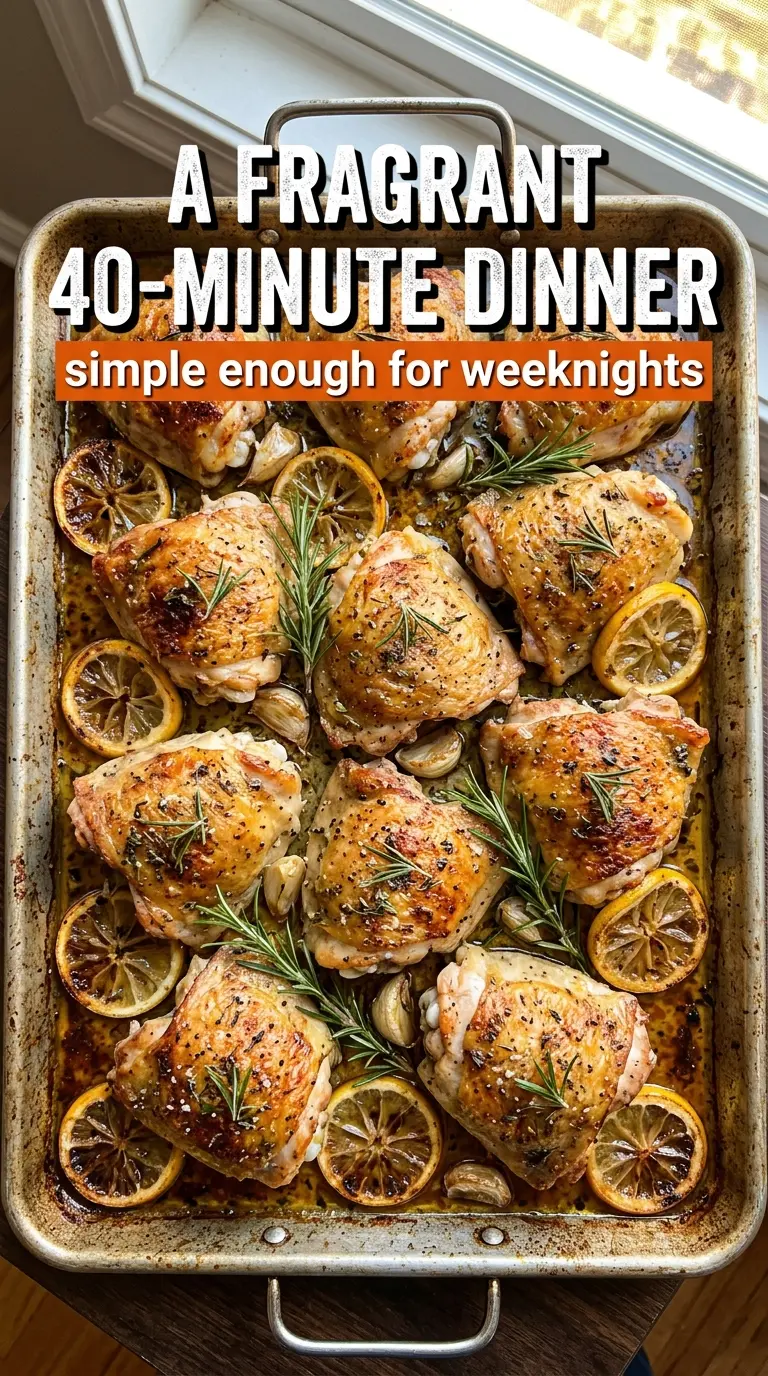
Crispy-skinned chicken thighs with rosemary and garlic hit that sweet spot between low effort and high payoff. The skin turns deeply golden in the oven, the garlic softens into the oil instead of burning, and the rosemary perfumes the whole pan without taking over. It’s the kind of dinner that feels a little more intentional than the time it takes to pull it together.
What makes this version work is the dry skin and the high oven temperature. If the thighs go into the oven damp, the skin steams before it has a chance to crisp. Patting them dry first, then roasting them skin-side up on a lined baking sheet, gives you better browning and keeps cleanup easy. The lemon slices underneath add just enough brightness to keep the chicken from tasting heavy.
Below, I’ve included the little details that matter most, from getting the seasoning under the skin to knowing exactly when the chicken is done. If you’ve ever ended up with pale skin or rosemary that tasted a little harsh, the notes in this post will help you avoid both.
The skin got crisp in the oven and the rosemary-garlic oil soaked right into the chicken. I tucked the lemon slices under the thighs like you said, and the pan juices were incredible spooned over rice.
Save these oven baked rosemary chicken thighs for a crispy-skin dinner that comes together fast and still tastes special.
The Reason the Skin Crisps Instead of Steaming
Chicken thighs have enough fat under the skin to roast beautifully, but that same fat works against you if the surface stays wet. Moisture has to evaporate before browning begins, and that delay is what leaves chicken skin pale, leathery, or patchy. Drying the thighs well before seasoning is the difference between a crisp finish and a soft one.
The other mistake is crowding the pan. If the thighs sit too close together, the steam has nowhere to go and the skin never really tightens. Give them space on the baking sheet and keep them skin-side up the whole time. The oven does the work here, but it needs air to move around the chicken.
- Bone-in, skin-on chicken thighs — These stay juicy through a 425°F roast and give you the best chance at crisp skin. Boneless thighs cook faster, but they won’t give you the same rich texture.
- Fresh rosemary — Fresh rosemary brings a piney, fragrant note that holds up in the oven. Dried rosemary works in a pinch, but use less and crush it between your fingers first so it doesn’t eat like twigs.
- Lemon zest and lemon slices — The zest mixes into the oil for bright flavor without extra liquid, while the slices underneath perfume the pan as they roast. If you don’t have a lemon, a small splash of vinegar in the seasoning mix can replace some of the brightness, but it won’t give the same aroma.
- Olive oil — This carries the garlic and rosemary and helps the skin brown. A neutral oil will work, but olive oil gives the chicken a rounder flavor and better aroma.
- Garlic — Minced garlic clings to the chicken and softens in the oven. If the pieces are too large, they can scorch on the pan, so mince it fine and rub it into the oil well.
How to Roast the Chicken So the Skin Turns Crisp and the Meat Stays Juicy
Build the seasoning paste first
Stir the olive oil, garlic, rosemary, lemon zest, salt, and pepper into a loose paste before you touch the chicken. That keeps the seasoning evenly distributed and prevents clumps of garlic from burning in one spot. When you rub it over the thighs, work some under the skin where you can; that’s where the flavor goes deeper. If the skin tears a little, don’t worry. A small split won’t stop it from crisping.
Roast skin-side up and leave them alone
Lay the thighs on the parchment-lined sheet with the skin facing up and tuck the lemon slices between them. Once they’re in the oven, resist moving them around. The skin needs uninterrupted heat to tighten and brown, and flipping too early can pull off the seasoning and soften the crust. Roast until the skin is deeply golden and the thickest part of the thigh reads 165°F.
Let the juices settle before serving
A five-minute rest makes a bigger difference than people think. The juices thicken slightly as the chicken cools, so they stay in the meat instead of running onto the cutting board. If you slice or serve the thighs immediately, the first few bites can seem drier than they really are. Spoon any pan juices over the top right before serving.
What to Change When You Want a Different Finish
Garlic-Lover Version
Add two extra cloves of garlic and mash them into the oil before rubbing it on the chicken. You’ll get a stronger roasted garlic flavor, but the garlic pieces can brown faster, so keep an eye on any bits that land directly on the pan.
Dairy-Free, Naturally
This recipe is already dairy-free, which is one reason it’s such a practical weeknight dinner. The olive oil carries the seasoning without needing butter, so you still get a rich, glossy finish.
Lower-Salt Approach
Cut the kosher salt to 1/2 teaspoon and lean more heavily on the lemon zest and rosemary for brightness. The chicken will still taste seasoned, but the finish will be a little cleaner and less savory.
Storage and Reheating
- Refrigerator: Store leftovers in an airtight container for up to 4 days. The skin softens, but the chicken stays juicy.
- Freezer: Freeze cooked thighs for up to 2 months. Wrap them tightly and thaw in the refrigerator before reheating, though the skin won’t return to its original crispness.
- Reheating: Reheat on a baking sheet at 375°F until hot, about 12 to 15 minutes. The oven brings back more texture than the microwave, which turns the skin rubbery.
Answers to the Questions Worth Asking

Oven Baked Rosemary Chicken Thighs
Ingredients
Equipment
Method
- Preheat the oven to 425°F and line a baking sheet with parchment paper.
- Pat the chicken thighs dry with a paper towel to help the skin crisp in the oven.
- In a small bowl, combine the olive oil, garlic, rosemary, lemon zest, salt, and pepper.
- Rub the mixture evenly over the chicken thighs, getting under the skin where possible for maximum flavor.
- Arrange the chicken skin-side up on the baking sheet with lemon slices tucked between the pieces, then roast for 35–40 minutes at 425°F until the skin is golden and the internal temperature reaches 165°F.
- Let rest for 5 minutes before serving so the juices settle.