Oven roasted vegetables earn their place at the table when they come out caramelized at the edges, tender in the middle, and just structured enough to hold their shape. The difference between average roasted vegetables and the kind people go back for usually comes down to one thing: enough heat and enough space for the vegetables to brown instead of steam.
This version keeps the seasoning simple on purpose. Olive oil carries the garlic powder and Italian seasoning across every piece, while the mix of broccoli, carrots, bell pepper, zucchini, and red onion gives you a range of textures in one pan. The carrots need a little head start to soften, the zucchini releases moisture fast, and the broccoli picks up those browned, crisp edges that make the whole tray taste deeper than the ingredient list looks.
Below, I’ll show you the one pan mistake that steals color from roasted vegetables, plus a few easy swaps if you want to work with what’s already in the fridge.
The vegetables actually roasted instead of going soft, and the zucchini held its shape while the broccoli got those crispy edges I always want. I used two pans like you said and it made all the difference.
Crispy-edged oven roasted vegetables like this are the easiest side to keep in rotation for busy nights.
The Reason Roasted Vegetables Go Soft Instead of Brown
The biggest mistake with sheet pan vegetables is crowding them. When the pan is packed, the vegetables release moisture faster than it can evaporate, and you end up with soft edges instead of caramelized ones. That’s why this recipe works best on a large sheet pan with the vegetables spread in a true single layer.
Temperature matters too. Four hundred twenty-five degrees gives you enough heat to brown the outside before the inside turns mushy. If your oven runs cool or you use a dark pan, the vegetables can brown faster on the bottom, so stirring halfway through keeps the color even without sacrificing those crisp spots.
- Broccoli florets — These brown beautifully because of their loose surface area. Cut the florets into similar sizes so the small ones don’t overcook before the stems soften.
- Baby carrots — Halving them lengthwise helps them cook at the same pace as the quicker vegetables. Whole baby carrots stay too firm unless you roast them much longer.
- Zucchini — This is the vegetable most likely to go watery if the pan is crowded. Slice it thick enough to hold shape, but not so thick that the centers stay pale and spongy.
- Olive oil — You need enough to lightly coat every piece. Too little and the vegetables dry out; too much and they slide instead of roast.
- Garlic powder and Italian seasoning — These cling better than fresh garlic for a high-heat roast. Fresh garlic can burn before the vegetables are done, which turns the pan bitter.
How to Season the Pan So Every Vegetable Tastes the Same
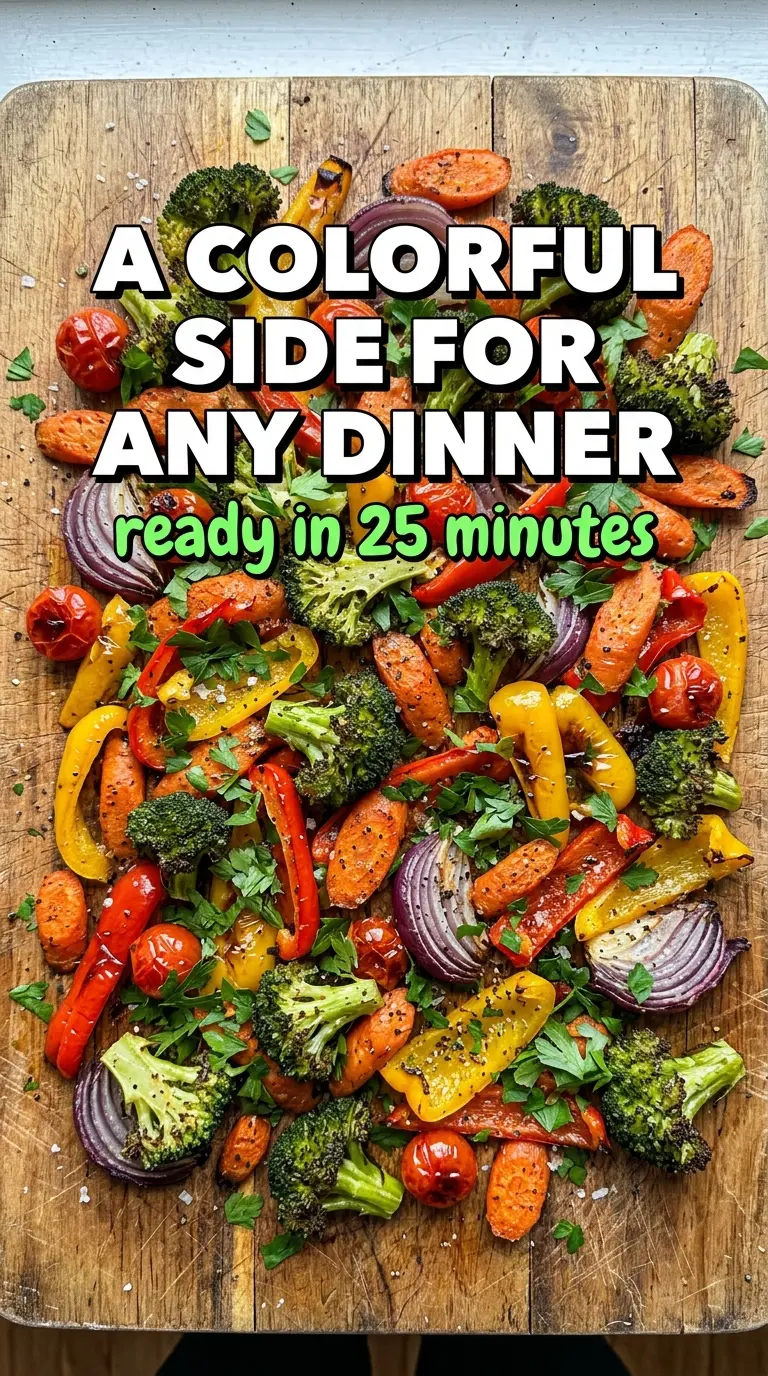
Mix the vegetables and seasoning in a large bowl before they go anywhere near the pan. That keeps the oil and spices distributed evenly, so the broccoli isn’t bland while the onions are overloaded. A bowl also gives you room to toss without breaking the zucchini into soft pieces.
Use a light hand with the salt at first if your Italian seasoning blend already contains salt. Once the vegetables roast down and lose moisture, the seasoning concentrates. What tastes mildly seasoned raw usually lands right where it should after 20 minutes in a hot oven.
- Red bell pepper — It softens faster than the carrots, so slice it into wider strips instead of thin slivers. That keeps it from disappearing into the pan.
- Red onion — It turns sweet and jammy in the oven. If you slice it too thin, it can burn at the edges before the rest of the vegetables are done.
- Fresh parsley — Add it after roasting, not before. Heat dulls the color and flavor, while a fresh sprinkle at the end wakes up the whole tray.
The 20 Minutes That Matter Most
Coating the Vegetables Evenly
Toss the vegetables until every surface has a thin sheen of oil and the seasoning looks evenly scattered, not clumped in the bowl. If the oil pools at the bottom, keep tossing a little longer. Dry patches stay pale in the oven, and that is usually the first sign the pan won’t roast evenly.
Roasting With Space Around Each Piece
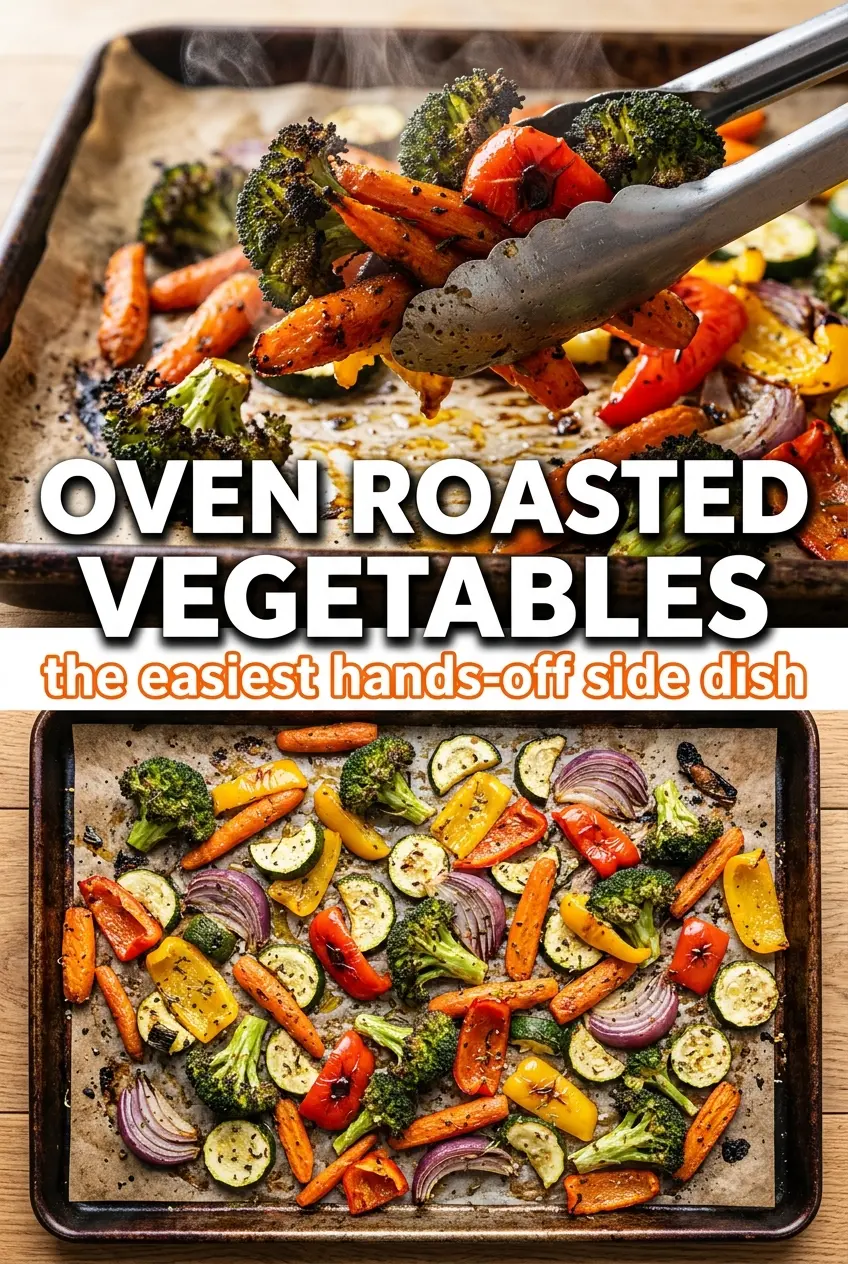
Spread the vegetables out so they have breathing room. You should still see patches of parchment between them. If they overlap, steam gets trapped underneath and the undersides go soft before the edges ever brown. Use two pans if the vegetables can’t sit in a single layer without piling up.
Stirring for Even Caramelization
Give the pan a turn halfway through roasting and use a spatula to move the vegetables from the edges toward the center. Most ovens have hot spots, and this keeps the broccoli from scorching while the carrots catch up. Pull the pan when the zucchini is tender but still intact, the onions are browned at the edges, and the broccoli has crisp tips.
Make It With What’s in the Crisper Drawer
Swap in cauliflower, Brussels sprouts, or green beans in place of one of the vegetables here. Keep the total amount about the same, but expect firmer vegetables like Brussels sprouts to need a few extra minutes and softer ones like green beans to come out a little earlier.
Dairy-Free and Naturally Gluten-Free
This recipe is already dairy-free and gluten-free as written, which makes it easy to serve alongside almost anything. Just check the seasoning blend if you use a store-bought Italian mix, since some blends include anti-caking additives or hidden salt levels that change the final seasoning.
Turn It Into a Heartier Side
Add cubed potatoes or chunks of butternut squash if you want something more filling, but give them a head start since they take longer than the rest. Roast the denser vegetables for 10 minutes first, then add the quicker ones so the whole pan finishes at the same time.
Storage and Reheating
- Refrigerator: Store leftovers in an airtight container for up to 4 days. The vegetables soften a little as they sit, especially the zucchini.
- Freezer: You can freeze them, but the texture turns softer after thawing, so I only do this if they’ll be mixed into soup, grain bowls, or a frittata.
- Reheating: Warm them on a sheet pan in a 400°F oven for a few minutes until the edges wake back up. The microwave heats them fast, but it also steams them and wipes out the roasted texture.
Answers to the Questions Worth Asking
Oven Roasted Vegetables
Ingredients
Equipment
Method
- Preheat the oven to 425°F and line a large sheet pan with parchment paper.
- Toss all the vegetables together with olive oil, garlic powder, Italian seasoning, kosher salt, and black pepper in a large bowl.
- Spread the vegetables in a single layer on the sheet pan without overcrowding, using two pans if needed.
- Roast for 20–25 minutes, stirring halfway through, until tender and caramelized at the edges.
- Sprinkle with fresh parsley before serving.
- Store leftovers in an airtight container in the fridge for up to 4 days.