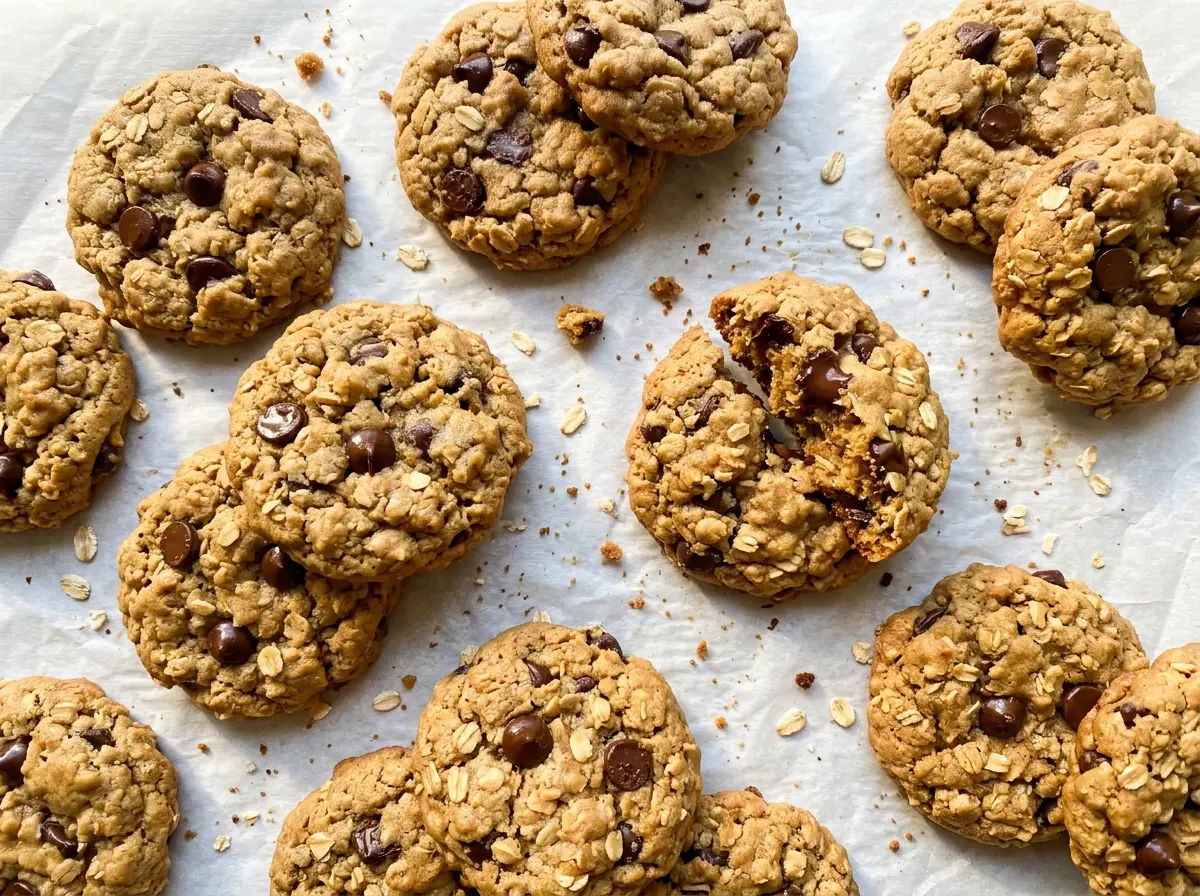
When these cookies come out of the oven, the edges look set and lightly golden, but the centers still seem a little soft. That’s exactly the point: they firm up on the hot baking sheet before moving to the rack. Peanut butter, oats, and semisweet chocolate make each cookie hearty without turning it into a dry, crumbly bite.
I like how the dough comes together in one bowl after the dry ingredients are whisked separately. Creaming the butter and peanut butter with both sugars first gives the mixture time to turn smooth and creamy, while adding the oats only after the flour disappears helps keep the dough tender. The result is a cookie with a soft middle, a lightly crisp edge, and chocolate in every bite.
Kitchen Note
I portion the dough with a 1 1/2-tablespoon scoop so the cookies bake at the same pace. If you eyeball the portions, the smaller ones may be ready before the larger ones.
Save these peanut butter oatmeal chocolate chip cookies for a batch with soft centers, chewy oats, and plenty of semisweet chocolate.
Why the Oats Go In After the Flour
It’s easy to treat oats like just another dry ingredient, but the order matters here. The flour, baking soda, and salt get whisked together and mixed into the creamy base only until no dry flour remains. Then the oats and chocolate chips are stirred in. That keeps the flour from getting worked longer than it needs to be while you’re trying to distribute the heavier add-ins.
Overmixing after the flour goes in can make cookies tougher than you want. The dough should look cohesive before the oats and chips are added, not perfectly smooth or elastic. Once those are in, a few folds are enough to spread them through the dough without beating it. You’ll get a more even cookie, with oats and chocolate throughout instead of a dense patch where the add-ins have been pushed around.
This also makes the final mix easier to judge: look for no dry flour, then stop. The oats bring their own texture, so there’s no need to keep mixing until the dough looks polished.
How Peanut Butter, Brown Sugar, and Old-Fashioned Oats Shape Each Bite

- Creamy peanut butter — It brings the unmistakable peanut flavor and helps make the dough rich. Use a creamy, well-stirred peanut butter for the most consistent texture; natural peanut butter that has separated can make the dough behave differently. Crunchy peanut butter works if you want small peanut pieces, though it changes the smooth texture of the finished cookie.
- Unsalted butter — Softened butter creams with the sugars and gives the cookies their tender bite. It should yield when pressed, but it shouldn’t be melted or greasy. Since the butter is unsalted, the listed salt helps balance the sweetness and peanut butter.
- Light brown sugar and granulated sugar — The brown sugar gives the dough a deeper, molasses-like sweetness, while granulated sugar keeps the flavor from leaning too heavily in that direction. Pack the brown sugar into the measuring cup so the amount is consistent. I wouldn’t replace both sugars with just one; the balance contributes to the cookie’s texture as well as its sweetness.
- Old-fashioned rolled oats — These provide the chewy, distinct oat texture. Quick oats are thinner and absorb moisture differently, so they won’t give quite the same bite. For this version, old-fashioned rolled oats are worth using rather than swapping in a finer oat.
- Semisweet chocolate chips — Their sweetness works well against the peanut butter and brown sugar. Standard baking chips are a practical choice here; you don’t need a premium brand for the dough to come together. They can be left out for a chocolate-free peanut butter oatmeal cookie.
- All-purpose flour, egg, vanilla, and baking soda — These support the dough, bind it, and help the cookies bake up with structure. Measure the flour without packing it down, and whisk it with the baking soda and salt before it goes into the wet mixture so the leavening is spread through the dough.
Mixing and Baking Dough for Soft-Centered Cookies
Get the Oven and Pan Ready
Heat the oven to 350°F and line a large baking sheet with parchment paper. Having the pan ready before you mix means the dough can go straight from the bowl to the oven once it’s portioned. Work in batches if needed, keeping the remaining dough in the bowl while the first sheet bakes.
Cream the Butter, Peanut Butter, and Sugars
Beat the softened butter, creamy peanut butter, packed brown sugar, and granulated sugar with a mixer on medium speed for about 2 minutes. The mixture should look creamy rather than lumpy, with the sugars worked into the fats. Scrape down the bowl if there are streaks clinging to the sides, then beat in the egg and vanilla until combined.
Mix the Dry Ingredients and Fold in the Oats
Whisk the flour, baking soda, and salt together in a separate bowl before adding them to the peanut butter mixture. Mix just until you can’t see dry flour; stop there rather than continuing to beat the dough. Stir in the oats and chocolate chips until they’re spread through the mixture. The finished dough will be thick, with visible oats and chips.
Bake Until the Edges Turn Golden
Set the dough portions about 2 inches apart on the prepared sheet. Bake one sheet at a time for 10 to 12 minutes, watching for lightly golden edges and centers that still look slightly soft. Don’t wait for the centers to look completely firm in the oven, or the cookies can bake past the soft texture you’re after. Let them cool on the baking sheet for 5 minutes, then move them to a wire rack to cool completely.
Two Easy Ways to Change These Peanut Butter Oatmeal Cookies
Leave Out the Chocolate Chips
For a chocolate-free batch, omit the semisweet chocolate chips and keep the rest of the dough the same. The cookies will have a more direct peanut butter and oat flavor, with no change to the mixing or baking method.
Put More Chocolate on the Surface
Set aside a few of the chocolate chips before stirring the rest into the dough, then press the reserved chips onto the tops of the scooped portions. You’ll see more chocolate on the baked cookies, while the dough still has chips mixed through it.
Storage and Reheating
- Refrigerator: Store cooled cookies in an airtight container for up to 5 days. They’ll feel firmer when chilled; let them sit at room temperature before serving.
- Freezer: Freeze fully cooled cookies in an airtight freezer-safe container for up to 2 months. Thaw at room temperature before eating.
- Reheating: Warm an individual cookie in the microwave for about 8 seconds to soften it. Avoid heating it too long, since the chocolate can get hot before the cookie feels warm.
Questions That Come Up When Baking These Cookies
Peanut Butter Oatmeal Chocolate Chip Cookies
Ingredients
Equipment
Method
- Heat the oven to 350°F.
- Line a large baking sheet with parchment paper.
- In a large bowl, beat the butter, peanut butter, brown sugar, and granulated sugar with a mixer on medium speed until creamy, about 2 minutes.
- Beat in the egg and vanilla until combined.
- In a medium bowl, whisk together the flour, baking soda, and salt.
- Add the flour mixture to the large bowl and mix just until no dry flour remains.
- Stir in the oats and chocolate chips until evenly distributed.
- Scoop the dough into 1 1/2-tablespoon portions.
- Place the portions about 2 inches apart on the prepared baking sheet, working in batches.
- Bake one sheet at a time for 10 to 12 minutes, until the edges are lightly golden and the centers still look slightly soft.
- Cool the cookies on the baking sheet for 5 minutes.
- Transfer them to a wire rack to cool completely.