The top of a chocolate loaf can look ready while the center is still catching up. Peppermint bark makes that little guessing game trickier: a toothpick can hit a melted piece and come out looking underbaked even when the crumb is done. I check the center in a clear spot, away from the bark, and look for a few moist crumbs rather than waiting for a perfectly clean pick.
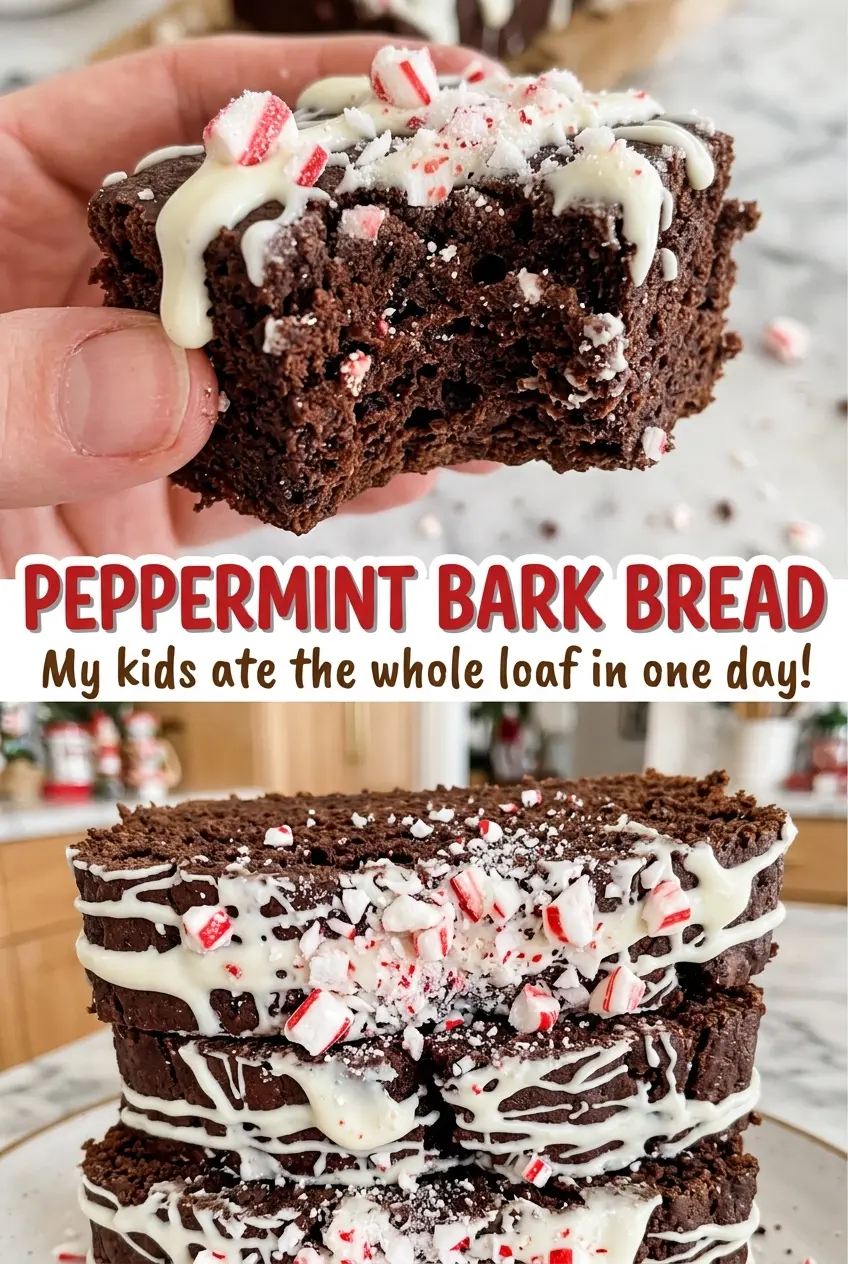
This peppermint bark bread has a tender cocoa crumb with mint tucked through it, then a white chocolate drizzle and more bark on top. Buttermilk brings a gentle tang to the chocolate, while vegetable oil keeps the loaf soft without needing to cream butter and sugar. The batter comes together with a whisk and a bowl, so the work is mostly about mixing just enough and giving the center time to bake. Once the topping sets, each slice has a little snap of peppermint bark against the soft chocolate bread.
Kitchen Note
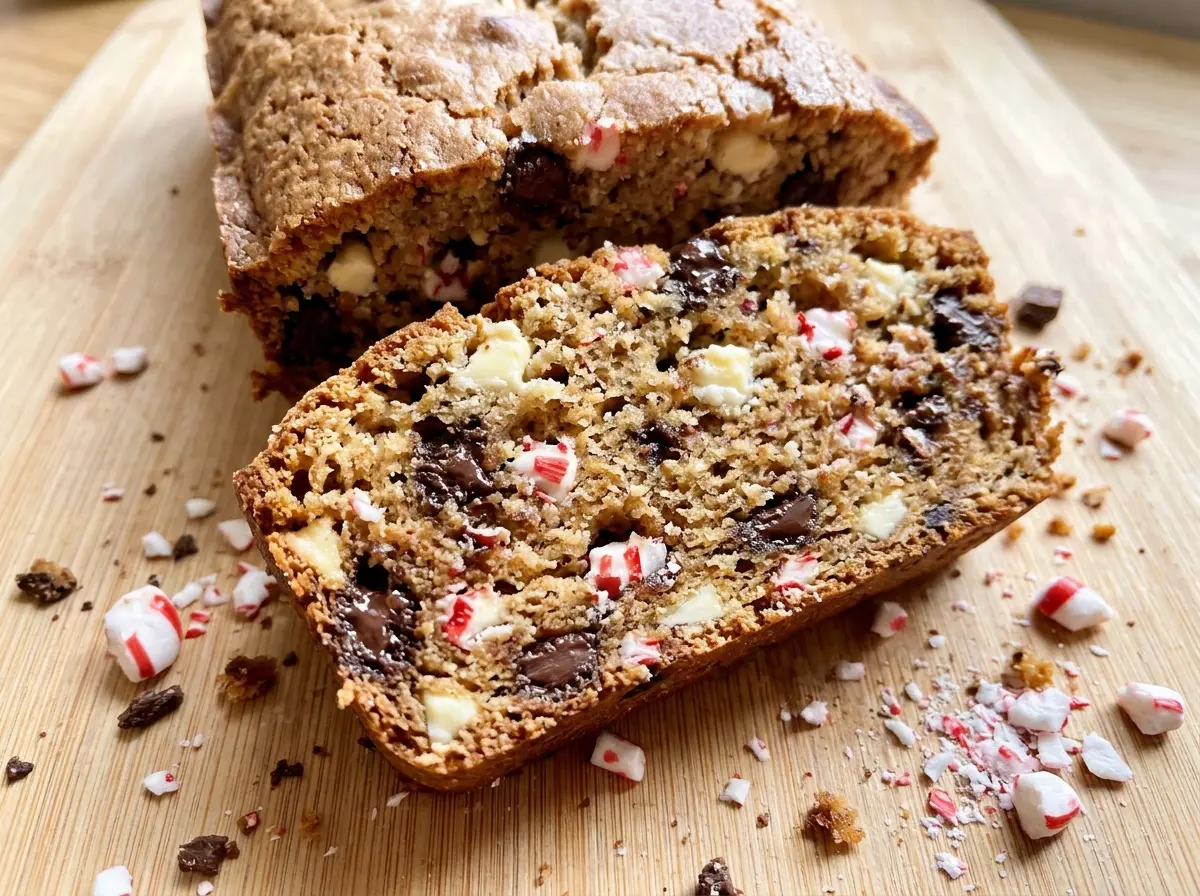
Keep the peppermint bark pieces close to a quarter inch. Pieces that size spread through the loaf more evenly than large shards, so you get bark in the slices without a few oversized pockets.
Save this peppermint bark bread for a chocolate loaf with a soft cocoa center, peppermint pieces inside, and a white chocolate finish.
Why the Toothpick Has to Miss the Peppermint Bark
A clean toothpick isn’t the goal for this loaf. The cocoa crumb is meant to stay moist, and a toothpick pushed into a piece of peppermint bark may pick up melted chocolate or candy even after the surrounding bread has baked through. That can make a done loaf seem raw if you test in the wrong spot.
Test the center in a place where you can see there isn’t a bark piece directly in the toothpick’s path. A few moist crumbs clinging to the pick are the cue to pull the loaf; wet batter means it needs more time. The baking window is 55 to 65 minutes, but ovens and the exact placement of the bark pieces vary, so use the crumb cue along with the clock. Waiting for the pick to come out bone-dry risks taking the loaf too far and losing the soft texture that makes a chocolate quick bread worth slicing.
Why Buttermilk and Peppermint Bark Need Different Jobs
- Unsweetened cocoa powder gives the loaf its chocolate flavor without adding sweetness on top of the sugar already in the batter. Use cocoa that smells fresh and chocolatey; there’s no need for a specialty brand. Sweetened cocoa mix isn’t a good swap because it changes both the sweetness and the dry-ingredient balance.
- Buttermilk adds tang and helps keep the cocoa crumb tender. If you don’t have it, plain unsweetened yogurt thinned with milk until pourable is a practical replacement; use the same volume as the buttermilk. The batter may feel a little thicker, especially with a dense yogurt, so thin it before measuring.
- Vegetable oil gives the loaf a moist, soft texture and blends directly into the wet ingredients. A neutral-tasting oil is the best fit here; a strongly flavored oil would compete with the peppermint and cocoa.
- Peppermint bark brings both mint and little candy-and-chocolate pieces, so it does more than add a minty note. Choose bark that breaks cleanly rather than a sticky, soft piece. Chopped chocolate can stand in for the pieces in the batter, but it won’t bring the same peppermint crunch.
- Peppermint extract sharpens the mint flavor, while vanilla rounds it out. Extracts vary in strength, so measure carefully rather than adding an extra splash; the bark already contributes peppermint.
- White chocolate makes the top read like peppermint bark and gives the chopped topping something to cling to. A standard baking bar is fine; you don’t need a premium one for a drizzle. Chop it evenly so it melts at a similar pace in the microwave.
Mixing the Chocolate Batter Without Toughening It
Whisk the dry ingredients evenly
Whisk the flour, cocoa powder, baking powder, baking soda, and salt together in a medium bowl. Cocoa tends to form small clumps, so work the whisk through the mixture until the color looks consistent. Even distribution matters here: a pocket of baking soda can leave an unpleasant taste in one part of the loaf.
Make the smooth peppermint base
In a large bowl, whisk the sugar, eggs, buttermilk, oil, vanilla, and peppermint extract until the mixture looks smooth and the sugar is no longer sitting in a dry layer at the bottom. This wet mixture should look cohesive, not separated. Keep whisking until the eggs are fully blended, then stop; there’s no need to beat air into it.
Combine gently and fold in the bark
Add the flour mixture to the wet ingredients and stir just until no dry streaks remain. A few small lumps are better than a long, vigorous mix, which can make a quick bread tough. Fold in the chopped peppermint bark at the end, using a broad turn of the spoon so the pieces spread through the batter without overworking it.
Bake until the center gives the right cue
Scrape the batter into a buttered 9×5-inch loaf pan and bake at 350°F. Start checking at 55 minutes, then continue as needed up to 65 minutes, testing in the center away from a bark piece. The loaf is ready when the toothpick comes out with a few moist crumbs rather than wet batter; the top should look set, not glossy in the middle.
Cool before adding the bark finish
Leave the loaf in the pan for 15 minutes, then turn it out onto a wire rack and let it cool completely. Melt the chopped white chocolate in a small microwave-safe bowl in 20-second intervals, stirring between each one until smooth. Drizzle it over the cooled loaf, scatter the remaining chopped peppermint bark on top, and wait about 20 minutes for the finish to set before slicing.
Two Ways to Tune the Mint and the Finish
Make the mint gentler
Leave out the peppermint extract for a softer mint note. The peppermint bark still gives the loaf its defining flavor, but the mint won’t come through as sharply in the cocoa crumb.
Skip the white chocolate drizzle
For a less layered finish, leave off the melted white chocolate and scatter the chopped peppermint bark over the cooled loaf on its own. You’ll still get the bark on top, with less sweetness and no creamy white chocolate layer.
Storage and Reheating
- Refrigerator: Keep the loaf in an airtight container for up to 5 days. The chilled crumb will feel firmer, and the topping may lose some of its crispness.
- Freezer: Freeze the fully cooled loaf once the topping has set, wrapped tightly, for up to 2 months. Thaw it while wrapped so the bread doesn’t dry out; the topping may look a little less polished after thawing.
- Reheating: This loaf is best served at room temperature, not warmed. A microwave can soften the white chocolate and smear the topping, so let chilled slices sit out briefly instead.
Questions That Come Up Before Slicing Peppermint Bark Bread
Peppermint Bark Bread
Ingredients
Equipment
Method
- Heat the oven to 350°F.
- Grease a 9x5-inch loaf pan with the softened butter.
- Whisk the flour, cocoa powder, baking powder, baking soda, and salt in a medium bowl.
- In a large bowl, whisk the sugar, eggs, buttermilk, vegetable oil, vanilla extract, and peppermint extract until smooth.
- Add the flour mixture to the wet ingredients and stir just until no dry streaks remain.
- Fold in the 4 ounces of chopped peppermint bark.
- Scrape the batter into the prepared pan.
- Bake for 55 to 65 minutes, until a toothpick inserted in the center away from a bark piece comes out with a few moist crumbs.
- Let the loaf cool in the pan for 15 minutes.
- Turn it out onto a wire rack and cool completely.
- Melt the white chocolate in a small microwave-safe bowl in 20-second intervals, stirring between intervals, until smooth.
- Drizzle the melted white chocolate over the cooled loaf.
- Scatter the remaining chopped peppermint bark on top.
- Let the topping set for about 20 minutes before slicing.