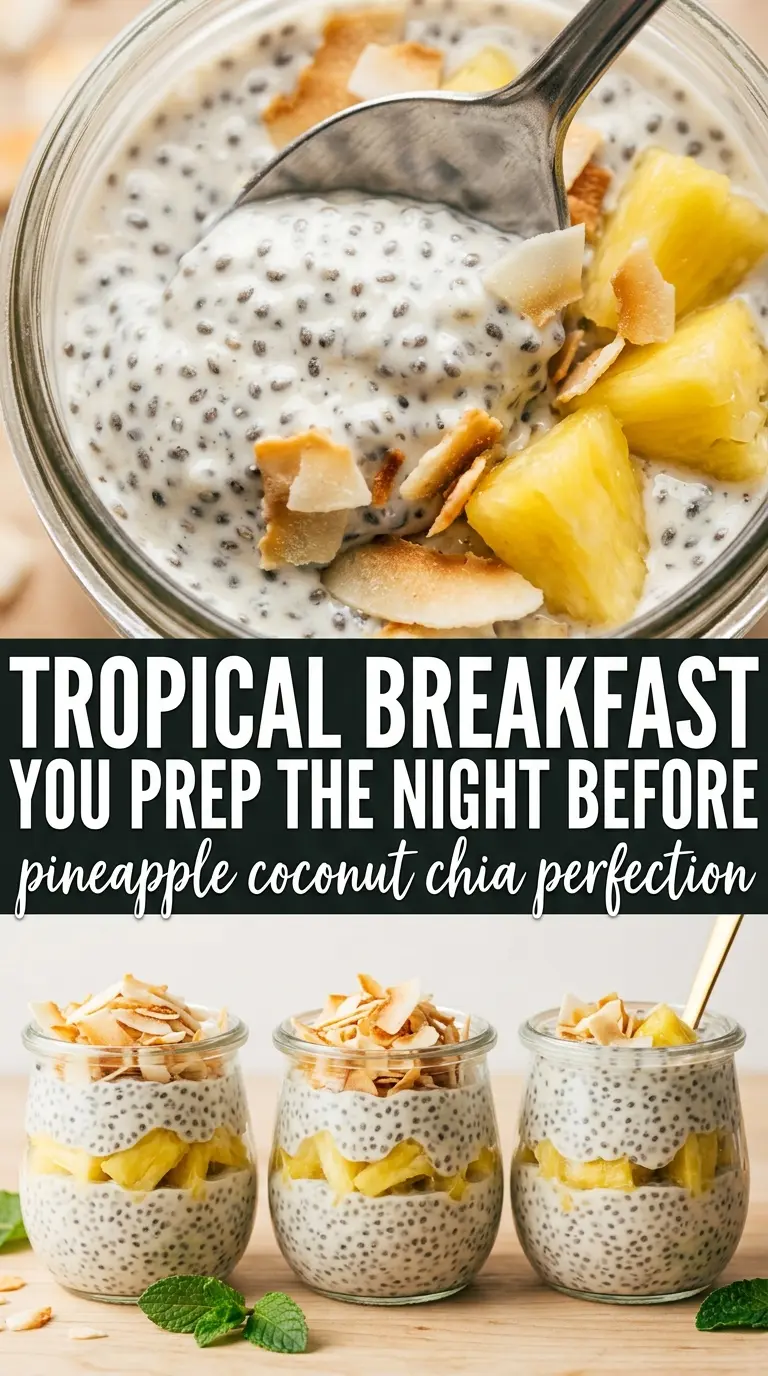
Creamy coconut chia pudding turns thick and spoonable overnight, then gets lifted by juicy pineapple, toasty coconut, and just enough crunch from granola to keep every bite interesting. The balance is what makes this jar worth repeating: rich but not heavy, sweet without turning dessert-like, and sturdy enough to hold its layers without collapsing into soup by breakfast time.
The part that makes this version work is the ratio. Full-fat coconut milk gives the pudding body and that lush texture chia needs, while the first whisk and second whisk keep the seeds from clumping at the bottom. Pineapple adds brightness that cuts through the richness, and draining canned pineapple well matters more than most people realize — extra juice can thin the pudding and make the whole jar taste watered down.
Below, you’ll find the trick for getting the chia texture right the first time, plus a few smart swaps if you want to adjust the sweetness, make it dairy-free by default, or prep it ahead without losing the crunch on top.
The chia pudding set up thick and creamy overnight, and the pineapple kept it from tasting too heavy. I added the granola right before eating like suggested and it stayed crunchy the whole time.
Save this pineapple coconut chia pudding jar for mornings when you want breakfast prepped, creamy, and ready with tropical layers.
The reason this chia pudding stays creamy instead of gritty
Chia pudding can go grainy, watery, or stubbornly clumpy if the seeds aren’t given a fair shot to absorb liquid evenly. The fix is simple but easy to skip: whisk once, wait a few minutes, then whisk again. That second stir breaks up the seeds that sink and gather together before they start gelling, which is how you get a smooth pudding instead of a jar with a soggy bottom and dry pockets on top.
Full-fat coconut milk matters here because chia seeds need enough fat and thickness to set up into something spoonable. Thin coconut milk or carton coconut beverage won’t give the same body. If your finished pudding feels loose after chilling, it usually means the coconut milk was too thin or the jar needed more time. Chia keeps tightening as it sits, so don’t judge it too early.
What each ingredient is actually doing in this jar
- Chia seeds — These are the engine of the recipe. They absorb liquid and create the pudding texture, so old chia seeds that have been sitting in the pantry for years may not thicken as well. If you need a swap, ground flax can work in a pinch, but the texture will be softer and less defined.
- Full-fat coconut milk — This gives the pudding its rich, spoonable base. Use canned coconut milk, not the carton kind, if you want a proper set. If the can has separated, shake it hard or whisk it smooth before measuring.
- Maple syrup or honey — This adds just enough sweetness to round out the coconut and pineapple. Either one works; maple gives a softer, deeper note, while honey leans a little brighter. Start with the amount here and adjust after chilling if your pineapple is especially sweet.
- Pineapple chunks — Fresh pineapple gives the cleanest flavor and best texture, but well-drained canned pineapple is fine. Drain it thoroughly or blot it dry so the fruit doesn’t leak juice into the pudding. That extra moisture is the fastest way to blur the layers.
- Toasted coconut flakes — These bring the toasted finish that makes the jar taste finished, not assembled. Plain coconut flakes can be toasted in a dry skillet for a minute or two until fragrant and lightly golden. Don’t walk away; coconut goes from pale to burnt fast.
- Granola — This is the crunch that keeps the jar from eating like dessert cream. Add it right before serving if you want it crisp. If you need this gluten-free, use a certified gluten-free granola and check the labels on every packaged topping.
- Macadamia nuts — Optional, but they add a buttery crunch that fits the coconut-pineapple combination perfectly. Chop them coarsely so they stay noticeable. If you don’t have them, toasted almonds or cashews work well.
The overnight chill that builds the texture
Mixing the base without clumps
Whisk the chia seeds, coconut milk, sweetener, and vanilla in a jar or bowl until the liquid looks evenly speckled. Let it sit for about 5 minutes, then whisk again. That pause gives the seeds time to start absorbing liquid, and the second whisk catches the little clumps before they set.
Letting the pudding fully thicken
Cover the mixture and refrigerate it for at least 4 hours, though overnight gives the best texture. When it’s ready, the pudding should mound softly on a spoon and hold its shape for a second before settling. If it still looks loose, give it more time instead of trying to rescue it with extra chia, which can turn the texture heavy and uneven.
Building the layers so they stay distinct
Stir the pudding before assembling, then spoon in half the base and add half the pineapple. Repeat with the remaining pudding and fruit. The layers stay prettier when the fruit is dry and the pudding is already set, because excess liquid will slip through and blur everything together.
Finishing with crunch at the last minute
Top with toasted coconut, granola, and macadamia nuts just before eating. If the granola sits on the pudding too long, it softens fast and loses the contrast that makes the jar worth making. That last-minute crunch is what keeps each bite from feeling one-note.
What to change when you want a different kind of breakfast jar
Dairy-Free and Naturally Vegetarian
This jar is already dairy-free and vegetarian as written, which is one reason it works so well for breakfast prep. The richness comes from coconut milk instead of cream or yogurt, so you don’t lose body when you keep it plant-based. If you want it even more filling, add a spoonful of hemp seeds on top for extra protein and a little more texture.
Lower-Sugar Version
Cut the maple syrup or honey back to 1 teaspoon if your pineapple is very ripe and sweet. You’ll still get a balanced jar, but the coconut and fruit will taste cleaner and less dessert-like. If you skip the sweetener entirely, the pudding will still set, but the flavor lands flatter and the coconut can taste a little muted.
No-Macadamia Crunch Swap
Almonds, cashews, or pumpkin seeds can stand in for the macadamias. The flavor shifts a little — almonds read toastier, pumpkin seeds lean earthier — but the crunchy contrast stays intact. Keep the pieces small so they don’t sink into the pudding.
Storage and Reheating
- Refrigerator: The assembled pudding keeps for about 24 hours before the granola softens, though the pudding base itself will hold for 3 days. Expect the fruit to release a little juice as it sits.
- Freezer: I don’t recommend freezing this one. Chia pudding can separate and turn icy after thawing, and pineapple loses its fresh texture.
- Reheating: No reheating needed. If the pudding thickens too much in the fridge, stir in 1 to 2 tablespoons of coconut milk until it loosens to a creamy spooning consistency. Add crunchy toppings after that, not before.
Questions I Get Asked About This Recipe
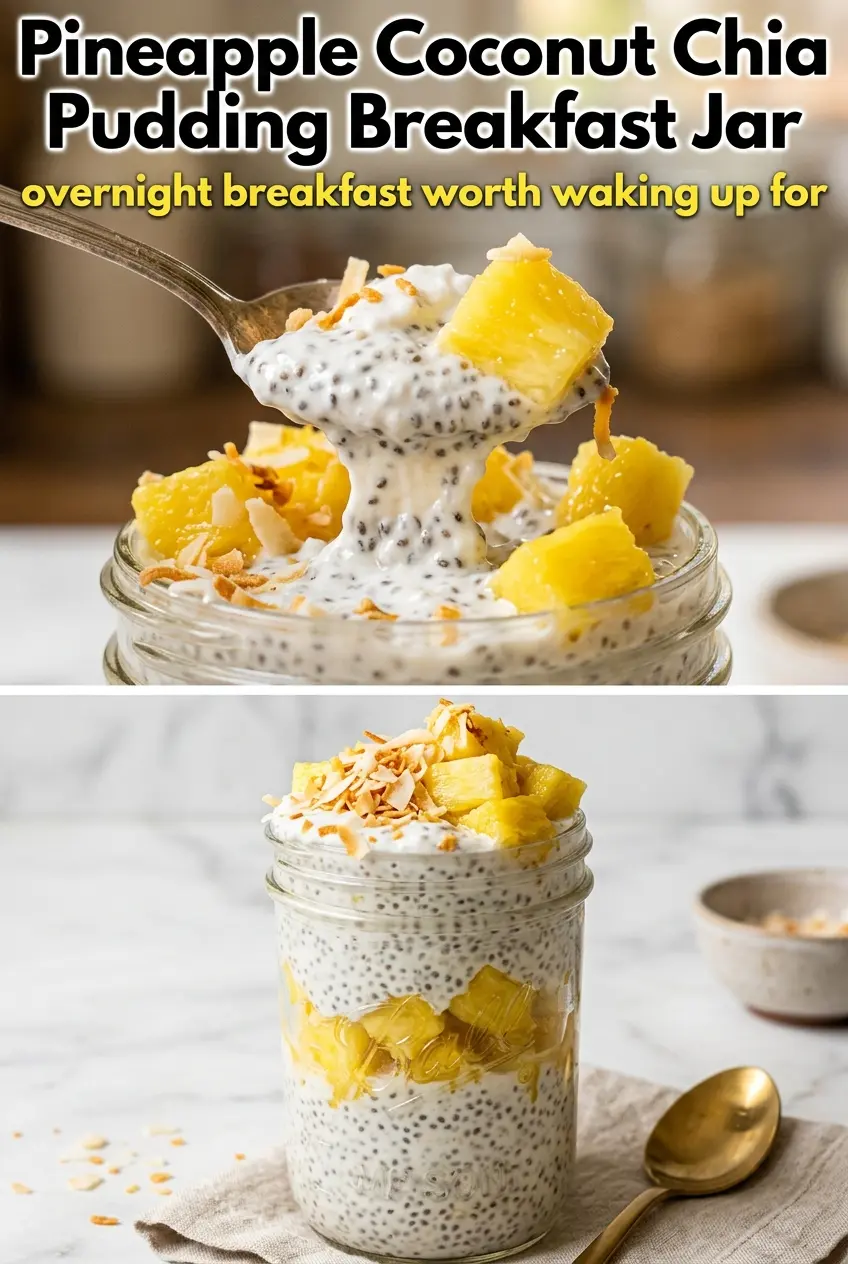
Pineapple Coconut Chia Pudding Breakfast Jar
Ingredients
Equipment
Method
- Whisk together chia seeds, coconut milk, maple syrup or honey, and vanilla extract in a jar or bowl until fully combined, using a smooth, even motion.
- Let the mixture sit for 5 minutes, then whisk again to prevent clumping and help the pudding thicken uniformly.
- Cover and refrigerate for at least 4 hours or overnight to set the chia pudding into a thick, creamy texture.
- In the morning, stir the pudding well; it should be thick and creamy, and if it’s too thick, stir in 1–2 tablespoons of coconut milk to loosen to a spoonable consistency.
- Spoon half of the chia pudding into each jar or bowl, then layer on half the pineapple chunks.
- Add the remaining chia pudding on top to create a second creamy layer.
- Top each jar with the rest of the pineapple chunks, a generous handful of toasted coconut flakes, granola, and macadamia nuts if using.
- Serve immediately, or refrigerate covered for up to 24 hours before topping; add granola just before eating so it stays crunchy.