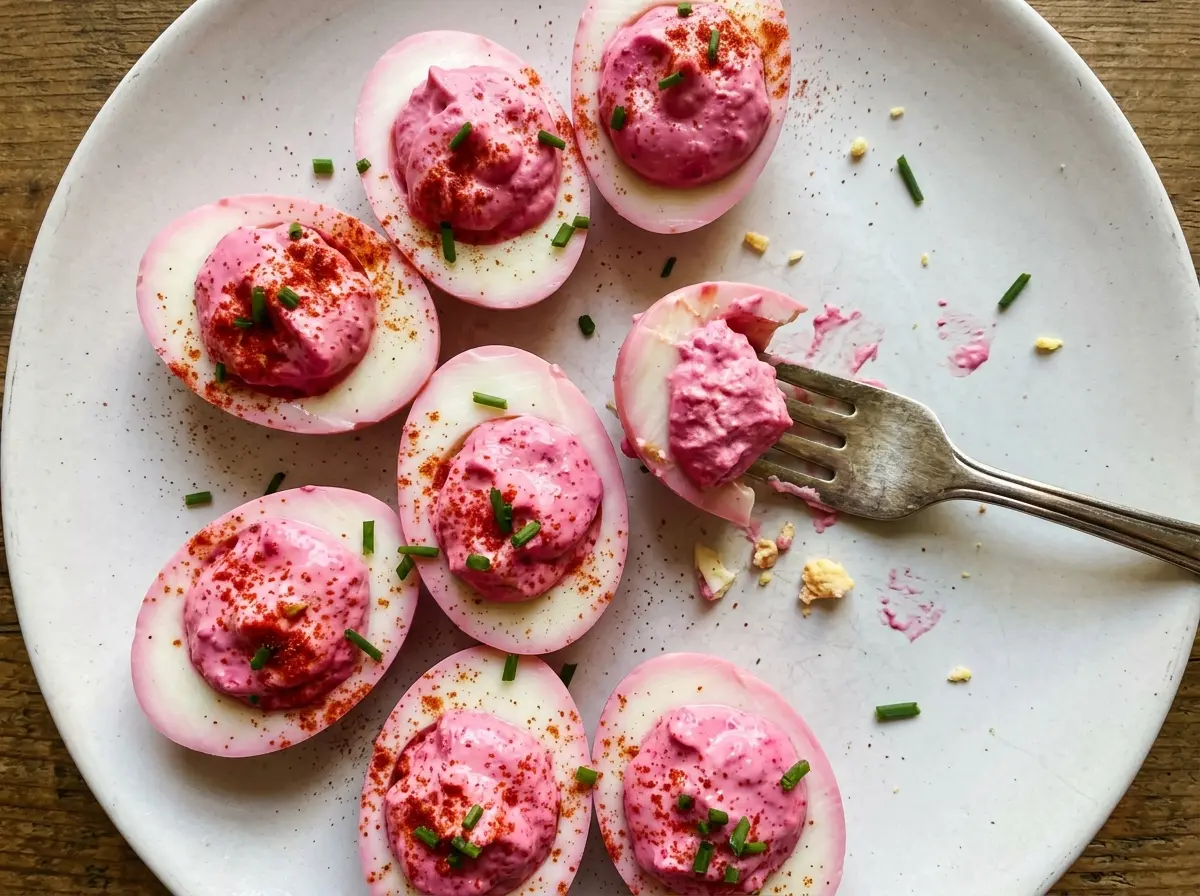
When the beet liquid reaches the peeled eggs, it stains the whites a bright pink while the yolks stay golden. I like that the color comes from the same sweet-tart mixture that gives these Pink Deviled Eggs their gentle pickled edge, not from food coloring. They make a familiar deviled egg platter look a little different without changing the creamy filling everyone expects.
The part that takes patience is cooling the beet mixture before it goes over the eggs, then giving the eggs time in the refrigerator to take on the color. I keep them fully submerged so the pink stays even around each egg, and pat them dry before cutting so the filling sits neatly in the halves. A little paprika on top finishes each one with a warm, savory note against those vivid pink whites.
Kitchen Note
Let the beet mixture cool all the way to room temperature before pouring it over the eggs. If it’s still warm, the eggs won’t be starting their refrigerated soak from a properly cooled brine.
Save these Pink Deviled Eggs for a party platter with a bright beet-pink finish and a creamy, tangy center.
Why Every Egg Needs to Stay Below the Beet Brine
The color only reaches the parts of the egg that touch the beet mixture. If an egg floats with its top exposed, you can end up with a pale patch or a sharp line where the brine stopped. That’s why I use a tall container: it lets the eggs sit close together under the liquid instead of spreading out across a wide dish.
Use a small, clean plate to hold them down if they bob up. The brine should cover the eggs completely, not just pool around their lower halves. While the eggs take on color, the vinegar also gives the whites a mild pickled tang, so the finished egg tastes more considered than a plain hard-cooked one. A full, even soak makes each half look consistent when you slice them open, with a pink border around the yellow yolk.
Why the Canned Beet Liquid Matters More Than the Slices

- Canned beets and their liquid — The liquid supplies the pink color and is part of the pickling mixture, so don’t drain it away. Sliced canned beets make this straightforward; fresh beets won’t provide the same ready-made liquid or predictable brine. The beet slices can vary in size without affecting the eggs.
- White vinegar, sugar, and kosher salt — White vinegar brings a clean, direct tang, while sugar rounds its sharpness and salt seasons the brine. Keep the vinegar type consistent; a differently flavored vinegar will change the taste and color of the mixture. Kosher salt is the choice here, and it dissolves into the simmering liquid.
- Large eggs — Similar-sized eggs cook and color more evenly together. Handle the cooled eggs gently while peeling; ragged whites show more once they’re stained pink and halved.
- Mayonnaise, Dijon, and lemon juice — Mayonnaise gives the yolks a smooth, creamy texture; Dijon adds a little sharpness, and lemon juice keeps the filling from tasting heavy. A dairy-free mayonnaise works in place of regular mayonnaise if needed, though its flavor can vary by brand. Use a smooth mayonnaise rather than a thick, chunky spread so the filling pipes or spoons neatly.
- Paprika and black pepper — Black pepper seasons the filling, while paprika adds a warm finish on top. Freshly opened paprika tends to have a livelier color and aroma, but an older jar still works if it smells fragrant.
From Covered-Pot Eggs to Neat Pink Halves
Set the Yolks Without Boiling the Eggs Hard
Place the eggs in a 4-quart saucepan and add 3 quarts of water. Bring the water to a boil over high heat, cover the pan, then remove it from the heat and let it stand for 12 minutes. This covered, off-heat rest cooks the eggs without keeping them at a rolling boil. Drain them and rinse under cold running water until they’re cool enough to handle.
Simmer the Beet Brine, Then Cool It
While the eggs cook, combine the sliced beets and their liquid with the white vinegar, 2 cups of water, sugar, and 1/4 teaspoon of the kosher salt in a 2-quart saucepan. Bring the mixture to a simmer over medium heat and cook for 5 minutes, stirring until the sugar and salt dissolve. Take it off the heat and let it cool to room temperature, about 30 minutes. Don’t pour it over the eggs while it’s warm.
Peel and Submerge for an Even Pink
Peel the cooled eggs and arrange them in a tall 2-quart glass container. Pour the cooled beet mixture over them, checking that every egg is submerged; use a small clean plate to hold them under if needed. Cover the container and refrigerate for 8 to 12 hours. If an egg rises above the liquid, reposition the eggs or use the plate rather than settling for a partly colored surface.
Mash the Filling Until It’s Smooth
Lift the eggs out of the brine and pat them dry before cutting them lengthwise. Transfer the yolks to a bowl and mash them with the mayonnaise, Dijon mustard, lemon juice, remaining 1/4 teaspoon kosher salt, and black pepper. Keep mashing until no large yolk pieces remain and the mixture looks smooth. Spoon or pipe the filling into the whites, then sprinkle the tops with paprika.
Small Changes for a Different Pink Deviled Egg Platter
Make the Filling Dairy-Free
Use dairy-free mayonnaise in place of the regular mayonnaise. The filling stays creamy and the mustard and lemon still give it its tang, though the finished taste will depend on the mayonnaise you choose.
Give the Filling a Sharper Edge
For a more pronounced tang, increase the Dijon and lemon juice slightly. The filling will taste brighter and more assertive, with a little less of the mayonnaise coming through; add them gradually so the mixture stays thick enough to mound in the whites.
Use the Beet Slices as a Garnish
Set a small piece of one of the pickled beet slices on each filled egg for a more obvious beet accent. It adds a tender, tangy bite and makes the platter’s color story clear, though the garnish will taste more intensely pickled than the egg white.
Make-Ahead and Serving
- Refrigerator: Keep the filled eggs covered and refrigerated; they’re best within 2 days. The whites may continue to deepen in color, and the filling can dry slightly over time.
- Freezer: Don’t freeze these. Cooked egg whites turn watery or rubbery after freezing, and the yolk filling loses its smooth texture.
- Serving: Arrange the eggs on a chilled platter shortly before serving, and return leftovers to the refrigerator promptly. Keep the platter out of direct heat so the filling stays cool and firm.
Questions That Come Up When Making Pink Deviled Eggs
Pink Deviled Eggs
Ingredients
Equipment
Method
- Place the eggs in a 4-quart saucepan and add 3 quarts water.
- Bring to a boil over high heat, cover, remove from the heat, and let stand for 12 minutes.
- Meanwhile, combine the beets and their liquid, vinegar, 2 cups water, sugar, and 1/4 teaspoon salt in a 2-quart saucepan.
- Bring to a simmer over medium heat and cook for 5 minutes, stirring until the sugar and salt dissolve.
- Remove the beet mixture from the heat and cool to room temperature, about 30 minutes.
- Drain the eggs and rinse under cold running water until cool enough to handle, then peel.
- Arrange the peeled eggs in a tall 2-quart glass container and pour the cooled beet mixture over them.
- Keep the eggs submerged, using a small clean plate to hold them under if needed; cover and refrigerate for 8 to 12 hours.
- Remove the eggs from the beet mixture and pat dry.
- Halve them lengthwise and transfer the yolks to a bowl.
- Mash the yolks with the mayonnaise, Dijon, lemon juice, remaining 1/4 teaspoon salt, and black pepper until smooth.
- Spoon or pipe the filling into the egg whites and sprinkle with paprika.