The beef needs room in the skillet to brown, and the smell of those browned edges is the first sign this stew is headed in the right direction. I cook it in batches rather than crowding the pan, then let the slow cooker take over for the long, gentle stretch. That’s what makes this Pioneer Woman Crockpot Beef Stew practical for a day when you want dinner waiting at the end of it.
The flour coating and the final cornstarch slurry do different jobs. Flour helps coat the beef before it browns, while the slurry thickens the cooking liquid near the end, after the beef and vegetables are tender. Adding the thickener at that point keeps the stew from spending hours with a heavy, pasty texture.
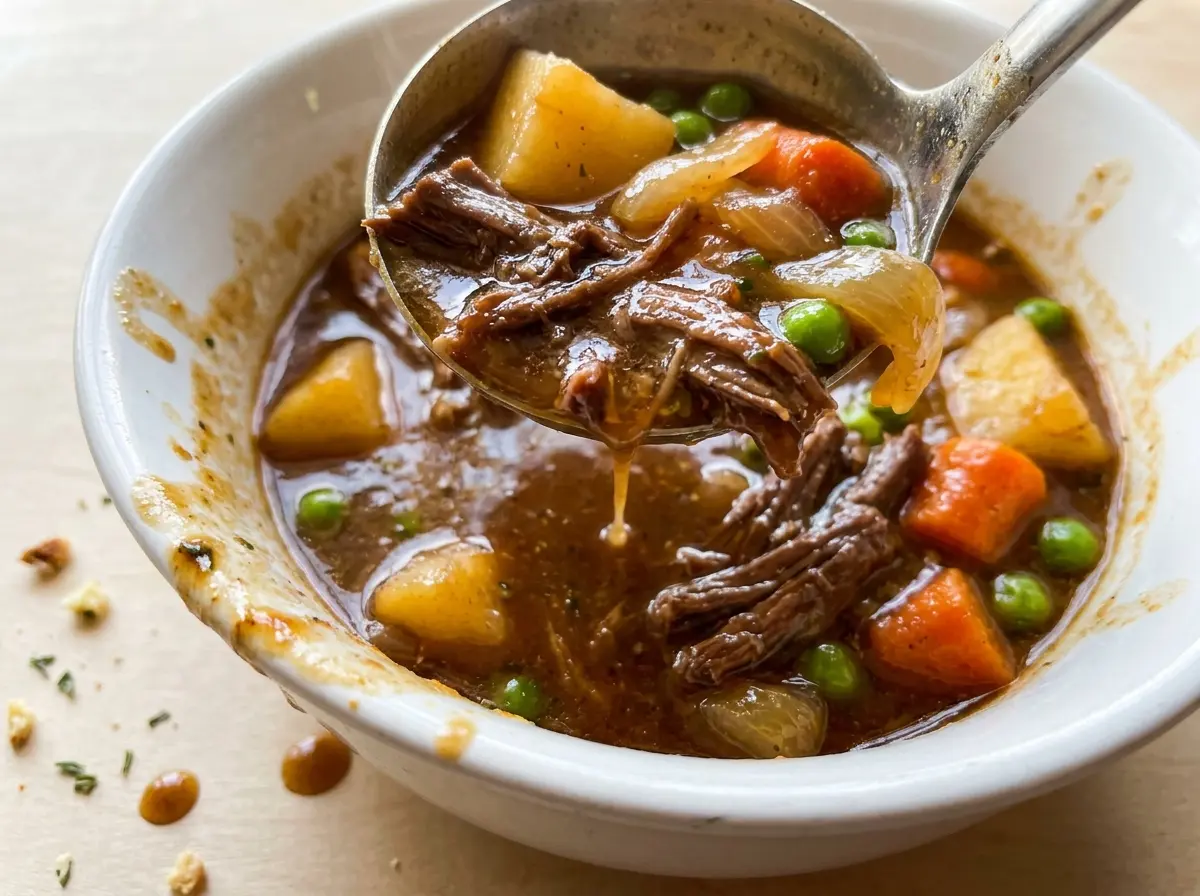
Dry red wine lifts the browned bits from the skillet, and the beef broth carries that savory base into the slow cooker. By the time the potatoes and carrots are tender, the gravy has soaked up all of it: rich, beefy, and just thick enough to cling to a spoon.
Kitchen Note
Give the beef space in the skillet so it browns instead of steaming. Work in batches, and let each piece sit against the hot pan long enough to build a deep brown crust before turning it.
Save this Pioneer Woman Crockpot Beef Stew for its fork-tender beef, savory red-wine gravy, and vegetables that cook right alongside it.
Why the Thickener Goes In After the Beef Is Tender
A slow cooker gives the beef time to soften, but it isn’t the best place to thicken the gravy from the start. The flour on the beef is a light coating, not enough to turn the cooking liquid into a finished sauce. Adding cornstarch at the end gives you control over the texture, after the liquid has collected flavor from the beef, vegetables, herbs, and skillet fond.
That late addition also keeps the potatoes and carrots from sitting in an overly thick mixture for hours. Whisking cornstarch with cold water first disperses it into a smooth slurry, so it can thicken evenly once it meets the hot stew. Give it the final covered stretch on HIGH; the gravy should look glossy and lightly coat the vegetables rather than stay thin and broth-like.
If the stew looks loose before the slurry goes in, don’t try to fix it by adding extra flour directly to the slow cooker. Dry flour can clump and leave a raw taste. The smooth slurry, followed by the final cook, is the reliable way to bring the liquid together.
What Gives This Stew Its Deep, Beefy Base

- Beef chuck — Chuck has enough connective tissue to become tender during the long cook, while leaner cuts are more likely to turn dry. Cut the pieces evenly so they finish at a similar pace; well-marbled chuck is worth choosing when the option is available.
- Dry red wine — Wine loosens the browned bits in the skillet and gives the gravy a little depth. Use a dry wine you’d be comfortable drinking; an expensive bottle isn’t needed for a slow-cooked stew.
- Yukon Gold potatoes — These hold their shape while becoming tender, and their creamy texture suits a thick stew. Keep the chunks close to the same size so smaller pieces don’t soften much sooner than larger ones.
- Tomato paste, Worcestershire sauce, and thyme — Together they add savory depth without making the broth taste overtly tomatoey or sweet. Stir the paste into the onion and garlic until it’s worked into the pan before adding the wine.
- All-purpose flour and cornstarch — The flour coats the beef for browning; the cornstarch is reserved for thickening at the end. For a gluten-free adaptation, replace the flour with a gluten-free all-purpose flour blend in the same amount and use gluten-free Worcestershire sauce. Cornstarch already works as the finishing thickener.
- Frozen peas — They go in near the end, so they keep their color and don’t cook down during the long slow-cooker time. There’s no need to thaw them first.
Build the Skillet Base Before the Slow Cooker Takes Over
Coat and Brown the Beef
Mix the flour, kosher salt, and black pepper in a large bowl, then toss the beef until the pieces are coated. Heat the vegetable oil in a 12-inch skillet over medium-high heat and brown the beef in batches for 2 to 3 minutes per side, adding the remaining oil as needed. Transfer each batch to a 6-quart slow cooker. If the skillet is crowded, the meat releases moisture and steams instead of developing browned surfaces.
Cook the Aromatics and Lift the Fond
Add the diced onion to the same skillet and cook for 3 minutes, stirring. Stir in the minced garlic and tomato paste and cook for 1 minute; the garlic should smell fragrant, not scorched. Pour in the red wine and scrape the skillet bottom to release the browned bits. Simmer for 2 minutes, then stir in the beef broth, Worcestershire sauce, and dried thyme.
Layer the Slow Cooker
Pour the skillet mixture over the beef, then add the bay leaves, potato chunks, and carrot pieces. Cover and cook on LOW for 8 to 9 hours or on HIGH for 4 to 5 hours. The beef should give easily when pierced with a fork, and the vegetables should be tender without collapsing. Slow cookers vary, so use that tenderness cue along with the time range.
Thicken and Finish with Peas
Remove and discard the bay leaves, then stir in the frozen peas. In a small bowl, whisk the cornstarch and cold water until smooth, then stir the slurry into the stew. Cover and cook on HIGH for 15 to 20 minutes, until the gravy has thickened and the peas are hot. Keep the lid on during this last stretch so the stew heats evenly.
Simple Swaps for a Different Pot of Stew
Make the stew gluten-free
Use the same amount of gluten-free all-purpose flour to coat the beef, and choose gluten-free Worcestershire sauce. Keep the cornstarch-and-water slurry; it thickens the stew without wheat. The coating may brown a little differently depending on the flour blend, but the slow-cooked beef and gravy still make a satisfying stew.
Cook without red wine
Replace the wine with an equal amount of beef broth. You’ll still scrape up the browned bits from the skillet, though the gravy will taste a little less layered and won’t have the wine’s mild acidity. Keep the rest of the ingredients and cooking method the same.
Use red potatoes for firmer pieces
Swap in red potatoes cut to the same size as the Yukon Gold chunks. They tend to hold their shape well, with a slightly firmer, less creamy bite. Keep the cuts even so the potatoes soften together with the carrots.
Storage and Reheating
- Refrigerator: Store covered in an airtight container for 3 to 4 days. The gravy may thicken as it chills, and the potatoes will soften a little.
- Freezer: Freeze in airtight containers for up to 3 months. The potatoes can turn softer after thawing, but the beef and gravy freeze well.
- Reheating: Warm gently in a saucepan over medium-low heat, stirring occasionally, until the center reaches 165°F. Avoid a hard boil, which can break up the vegetables and make the beef feel dry.
Questions That Come Up While the Stew Cooks
Pioneer Woman Crockpot Beef Stew
Ingredients
Equipment
Method
- In a large bowl, combine the flour, salt, and pepper; add the beef and toss to coat.
- Heat 2 tablespoons of the oil in a 12-inch skillet over medium-high heat, then brown the beef in batches for 2 to 3 minutes per side, adding the remaining oil as needed.
- Transfer the beef to a 6-quart slow cooker.
- Add the onion to the skillet and cook for 3 minutes, stirring.
- Add the garlic and tomato paste and cook for 1 minute.
- Pour the wine into the skillet and scrape up the browned bits; simmer for 2 minutes.
- Stir in the broth, Worcestershire sauce, and thyme, then pour the mixture over the beef.
- Add the bay leaves, potatoes, and carrots.
- Cover and cook on LOW for 8 to 9 hours or HIGH for 4 to 5 hours, until the beef is fork-tender and the vegetables are tender.
- Discard the bay leaves and stir in the frozen peas.
- In a small bowl, whisk the cornstarch with the cold water until smooth.
- Stir the slurry into the stew.
- Cover and cook on HIGH for 15 to 20 minutes, until the stew has thickened and the peas are hot.