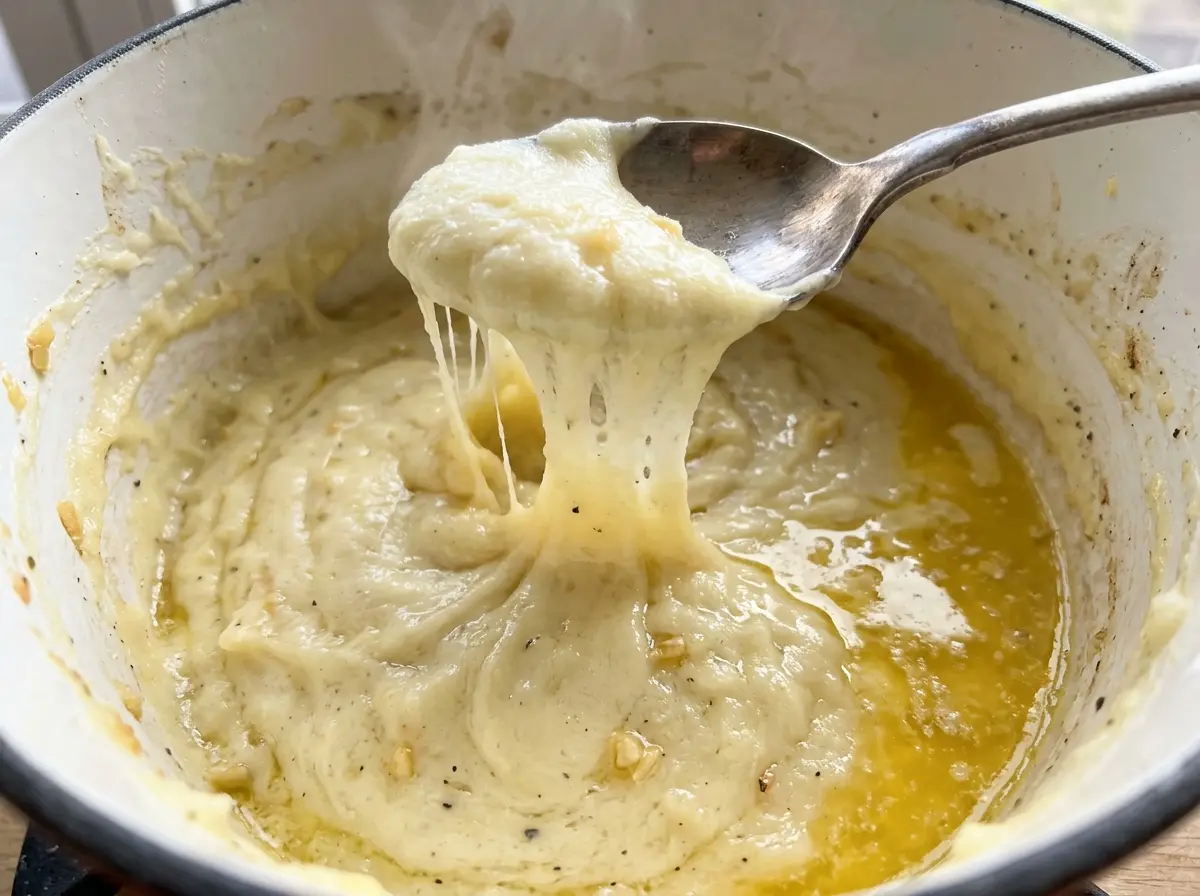
The first handful of cheese disappears into the potatoes, then the spoon starts meeting a little resistance. Keep stirring and the mixture changes: it turns glossy, elastic, and pulls into ribbons instead of sitting like a bowl of ordinary mashed potatoes. That transformation is what makes Pommes Aligot Cheesy Whipped Potatoes such a showstopper, and it happens right on the stovetop.
I like this version because the potato base is kept simple and the two cheeses each have a job. Gruyère brings a savory, nutty flavor, while low-moisture mozzarella helps create that signature stretch. The potatoes need to be completely smooth before the cheese goes in; once you have that base, add the cheese gradually and give each handful a vigorous stir. Serve it straight from the pot while the ribbons are long and the texture is at its silkiest.
Kitchen Note
Warm the cream, garlic, and butter until the mixture is steaming, not bubbling. If it boils, the cream can reduce before it reaches the potatoes, so keep the saucepan over low heat and pull it off once the butter has melted.
Save Pommes Aligot for its glossy, stretchy cheese ribbons and that rich Gruyère-and-mozzarella pull.
The Dry-Potato Pause Is What Keeps Aligot From Turning Watery
Aligot starts with potatoes, but it doesn’t behave like a typical mash once the cheese goes in. Extra water left clinging to the potatoes dilutes the base, making it harder to get that cohesive, elastic texture. Draining thoroughly and giving the potatoes a short turn over low heat lets surface moisture evaporate before you add anything creamy.
There’s another reason to get the texture right before the cheese: lumps don’t vanish into long ribbons. Rice the hot potatoes into the pot for a fine, even base, or mash them until completely smooth. Then stir in the warm cream mixture so the potato mixture is uniform before you begin adding cheese. That order gives the cheese a smooth surface to melt into, rather than asking it to cover dry pockets or break up lumps.
Once the cheese is in, the goal isn’t to keep whipping the potatoes forever. Stir vigorously as each handful melts, then stop when the whole mixture looks glossy and stretches into long ribbons. A smooth, dry potato base gives you a much better chance of reaching that point without a watery or lumpy result.
Why Gruyère and Low-Moisture Mozzarella Need Each Other

- Russet potatoes — Their starchy, fluffy texture makes a smooth foundation for the cream and cheese. Yukon Gold potatoes can work if that’s what you have, but the finished mash will be denser and less fluffy.
- Gruyère — This is where the savory, nutty flavor comes from. Grate it coarsely from a block so it melts in manageable handfuls; Comté is a close, well-melting swap with a similar savory character.
- Whole-milk low-moisture mozzarella — It adds the stretchy quality without bringing the extra moisture of fresh mozzarella. Low-moisture provolone can stand in for it, though its flavor is more pronounced.
- Heavy cream and butter — Together they soften and enrich the potatoes before the cheese goes in. Half-and-half can replace the heavy cream for a lighter base, but the result won’t be as rich.
- Fresh garlic — Finely grating the clove lets its flavor disperse through the warm cream instead of leaving you with a large bite of garlic. A fine grater is useful here; there’s no need to cook the garlic separately.
How to Turn a Smooth Potato Base Into Long Cheese Ribbons
Simmer the potatoes until the center is tender
Put the peeled, chunked russets in a 6-quart pot with cold water and 1 teaspoon of the salt. Bring the water to a boil over high heat, then lower the heat and simmer for 15–20 minutes. Check the largest piece with a knife; it should slide in easily, without a firm spot in the middle. If it still resists, give the potatoes more time rather than pulling them while the centers are undercooked.
Warm the garlic, cream, and butter gently
While the potatoes simmer, combine the cream, finely grated garlic, and butter in a small saucepan over low heat. Warm for 3–4 minutes, until the butter has melted and the mixture is steaming. Keep the heat gentle so it doesn’t boil. Having this mixture ready means it can be stirred into the potatoes while they’re still hot.
Drain, dry, and smooth the potatoes
Drain the cooked potatoes thoroughly, then return them to the pot over low heat for 1 minute. Rice them into the pot, or mash until completely smooth. The brief drying time helps drive off moisture clinging to the potatoes, while the smooth texture keeps lumps from interrupting the cheese pull. Don’t move on until the base is even.
Stir in the warm cream mixture
Pour the warm cream, garlic, and butter into the potatoes and add the remaining 1/2 teaspoon of salt. Stir until the mixture is combined and there are no streaks of cream left. This is the last chance to get the potato base evenly mixed before the cheese makes it thicker and more elastic. Keep the pot over low heat.
Add the cheese slowly and serve at the stretch
Add the Gruyère and mozzarella a handful at a time, stirring vigorously after each addition. Keep the heat low and continue for 5–8 minutes, until the cheese has melted and the potatoes look glossy and elastic. If the mixture still looks like separate cheese and potato, keep stirring over low heat rather than turning up the burner. Stop when it pulls into long ribbons, and serve immediately.
Three Ways to Change the Flavor Without Losing the Cheese Pull
A sharper Comté version
Replace the Gruyère with the same amount of coarsely grated Comté. It keeps the dish in the same savory, melty family while giving the potatoes a slightly different nutty edge.
A mellow roasted-garlic batch
Use a soft, roasted garlic clove in place of the finely grated raw clove, stirring it into the warm cream and butter. The garlic flavor turns sweeter and less sharp, while the potato-and-cheese method stays the same.
A richer Gruyère-only blend
Replace the mozzarella with the same amount of Gruyère for a stronger, more savory cheese flavor. The potatoes will still melt together, but the pull won’t be quite as stretchy as it is with mozzarella in the blend.
Storage and Reheating
- Refrigerator: Store leftovers in an airtight container for 3–4 days. They’ll firm up as they chill.
- Freezer: Freezing isn’t recommended; the potatoes and melted cheese may separate and turn grainy when thawed.
- Reheating: Warm gently in a saucepan over low heat, stirring in a small splash of cream to loosen the potatoes. Heat leftovers to 165°F, and avoid high heat, which can make the cheese oily.
Questions That Come Up While the Cheese Is Stretching
Pommes Aligot Cheesy Whipped Potatoes
Ingredients
Equipment
Method
- Put the potatoes in a 6-quart pot with the cold water and 1 teaspoon of the kosher salt. Bring to a boil over high heat, then reduce the heat and simmer for 15–20 minutes, until a knife slides easily into the largest piece.
- While the potatoes cook, warm the heavy cream, garlic, and butter in a small saucepan over low heat for 3–4 minutes, until the butter melts and the mixture is steaming; do not let it boil.
- Drain the potatoes thoroughly, return them to the pot, and set the pot over low heat for 1 minute to dry them. Rice the potatoes into the pot, or mash until completely smooth.
- Stir in the warm cream mixture and the remaining 1/2 teaspoon salt until combined.
- Over low heat, add the Gruyère and mozzarella a handful at a time, stirring vigorously after each addition for 5–8 minutes, until the cheese is melted and the potatoes are glossy, elastic, and pull into long ribbons. Serve immediately.