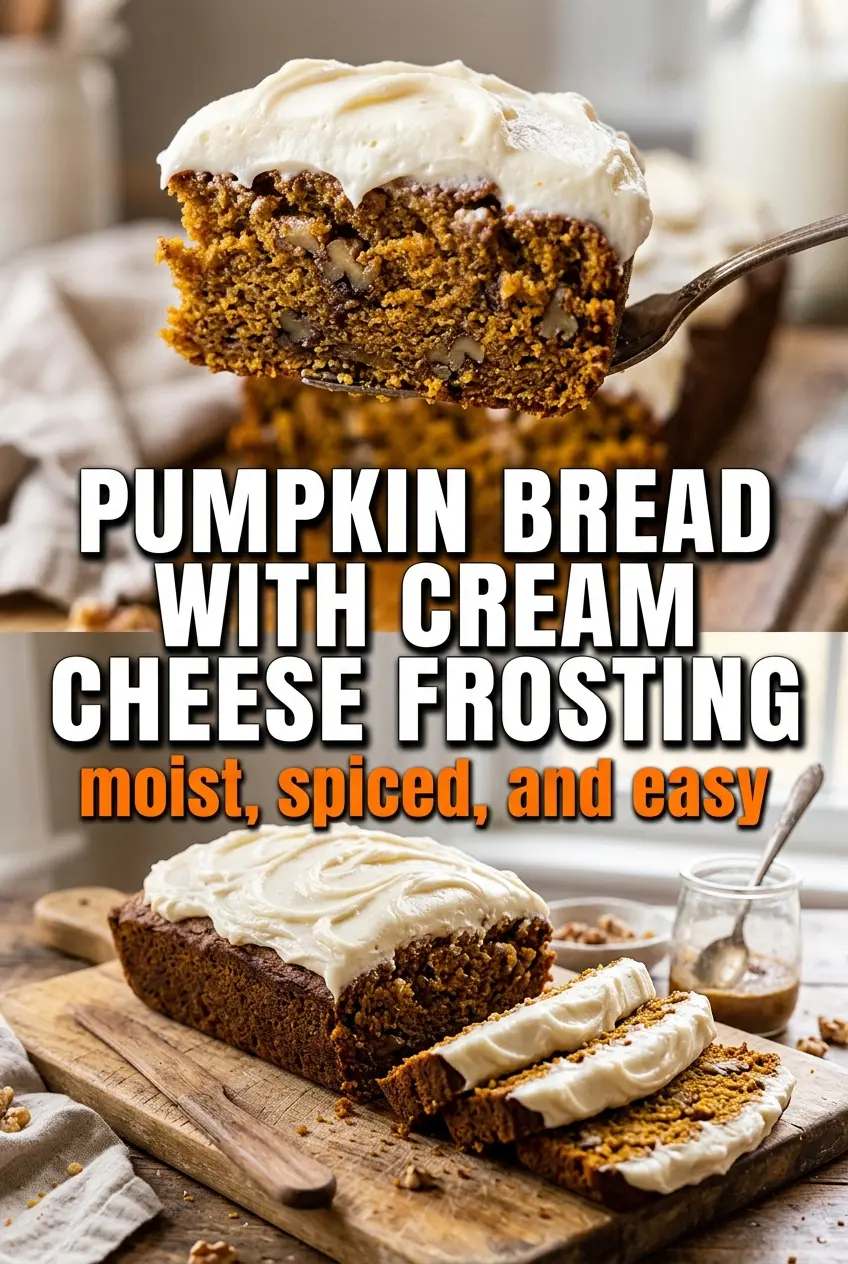
Pumpkin bread with cream cheese frosting lands in that sweet spot between breakfast loaf and dessert. The crumb stays soft and moist without turning heavy, and the tangy frosting gives each slice a cool, creamy finish that keeps the pumpkin spice from feeling flat. It’s the kind of loaf people slice once, then keep coming back to until the pan is gone.
What makes this version work is the balance: enough pumpkin puree for flavor and tenderness, but not so much that the bread turns dense or gummy. The oil keeps the crumb supple for days, and the spice blend leans on cinnamon with smaller amounts of nutmeg and cloves so the loaf tastes warm rather than muddy. The frosting goes on only after the bread is completely cool, which keeps it thick and spreadable instead of melting into the top.
Below, I’m walking through the small details that matter here, including how to keep the loaf from baking up tough and how to get frosting that tastes rich instead of overly sweet.
The bread came out incredibly moist and the frosting set up thick enough to slice cleanly. I baked it right at 58 minutes, and the cinnamon-pumpkin flavor was even better the next day.
Save this pumpkin bread with cream cheese frosting for a loaf that bakes up tender, slices cleanly, and tastes just as good on day two.
The Small Mistake That Makes Pumpkin Bread Heavy
Pumpkin bread only turns out light when you stop stirring the second the batter comes together. Once the flour goes in, the goal is to hydrate it, not whip it. Overmixing builds structure fast, and that’s what gives you a loaf that bakes up tight instead of tender.
The other common problem is packing in too much pumpkin or baking it hot and fast. Pumpkin puree adds moisture, but it also adds weight. This loaf uses just enough to keep the crumb plush, then relies on oil and eggs for lift and richness. Bake it until a toothpick comes out clean or with a few moist crumbs, not wet batter. If the top looks done but the center still smears, keep going and tent loosely if the edges are browning too quickly.
What Each Ingredient Is Doing in This Loaf
- All-purpose flour — This gives the loaf its structure without making it cakey. I wouldn’t swap in whole wheat flour at a 1:1 ratio here unless you want a denser result; if you do use some, replace no more than half.
- Baking soda — Pumpkin bread needs a lift, and baking soda helps the loaf rise while also softening the crumb. It works here because pumpkin puree has enough natural acidity to activate it.
- Spices — Cinnamon leads, while nutmeg and cloves stay in the background. That balance matters, because too much clove can take over fast and make the bread taste sharp instead of warm.
- Pumpkin puree — Use plain canned pumpkin, not pumpkin pie filling. Pie filling already has sugar and spices mixed in, and that throws off both texture and flavor. If your puree looks watery, stir it well before measuring.
- Vegetable oil — Oil keeps this bread moist longer than butter does. Melted butter brings flavor, but it also sets firmer once cooled, which works against the soft, plush crumb this loaf needs.
- Cream cheese and butter — This frosting needs both. Cream cheese brings tang, while butter keeps it smooth and spreadable so it doesn’t taste overly sharp. Soften both fully before beating or you’ll end up with little lumps that won’t disappear.
Mixing the Batter, Baking the Loaf, and Frosting It Cold
Whisk the Dry Ingredients First
Start by whisking the flour, baking soda, salt, and spices together until the color looks even. That step keeps the spices from clumping in one bite and helps the baking soda distribute evenly through the batter. If you skip this, you can end up with pockets that taste a little bitter or oddly spice-heavy.
Build the Wet Base Until It Looks Smooth
Whisk the pumpkin, sugar, oil, eggs, and vanilla until the mixture looks glossy and fully combined. You’re not trying to aerate it heavily; you just want the sugar mostly dissolved and the eggs blended in. If the eggs streak through the batter at this stage, they’ll leave uneven pockets in the finished loaf.
Stop Stirring the Moment the Flour Disappears
Pour the wet mixture into the dry ingredients and stir just until you no longer see streaks of flour. A few small lumps are fine. What you don’t want is a smooth, beaten batter, because that extra mixing develops the gluten and tightens the crumb. The batter should be thick and scoopable, not pourable like cake batter.
Bake Until the Center Springs Back
Scrape the batter into a greased 9×5-inch loaf pan and bake until a toothpick comes out clean from the center. The top should be deeply golden and slightly domed, and the center should spring back when touched lightly. Let it cool completely in the pan or the frosting will melt right off and slide into the cracks.
Spread the Frosting on a Fully Cool Loaf
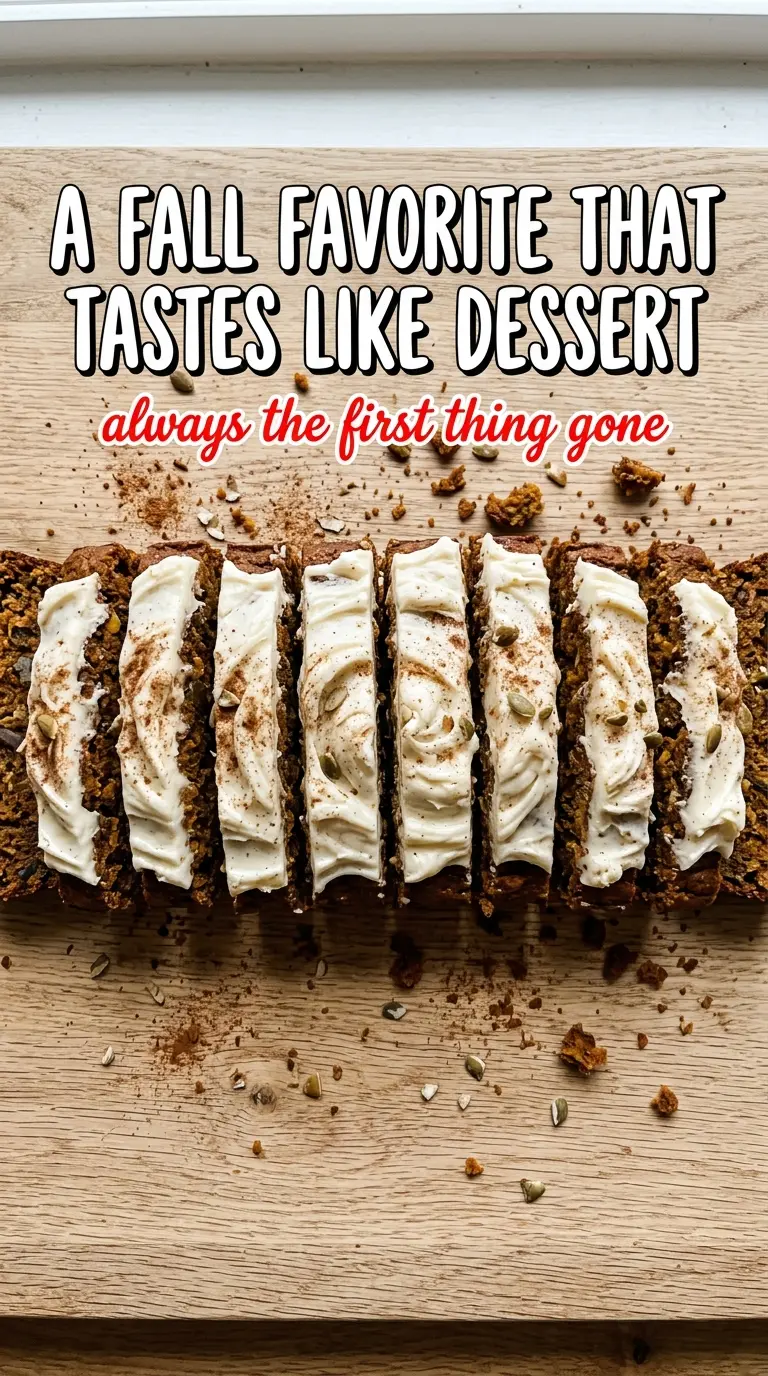
Beat the cream cheese, butter, and powdered sugar until the frosting is smooth and thick. If it seems loose, it probably needs a minute more beating, not more sugar right away. Spread it over the cooled loaf in an even layer, then let it sit a few minutes before slicing so it holds its shape better.
How to Adapt This for a Different Pantry
Dairy-Free Frosting
Use a dairy-free cream cheese and a plant-based butter block for the frosting. The texture will be a little softer than the classic version, so chill it for 15 to 20 minutes before spreading if it seems loose. The tang will still carry through, which matters because it keeps the frosting from tasting like plain powdered sugar.
Less Sweet, More Breakfast-Forward
Cut the frosting layer in half and spread it thinly over the top instead of piling it on. The loaf itself already has enough sweetness to stand on its own, and a lighter layer keeps the pumpkin and spice more pronounced. This version slices neatly for breakfast or brunch without feeling like cake.
Gluten-Free Version
A good 1:1 gluten-free baking blend can work here, but the loaf may need a few extra minutes in the oven. The batter should still look thick, and the center needs to set fully before you pull it out. Let it cool completely before slicing or the crumb can seem gummy while it’s still warm.
Storage and Reheating
- Refrigerator: Store covered for up to 5 days. The frosting stays best chilled, but the bread itself will firm up slightly in the fridge.
- Freezer: Freeze the unfrosted loaf wrapped tightly in plastic and then foil for up to 3 months. Frosted slices can be frozen, but the topping softens a bit after thawing.
- Reheating: Warm slices briefly at room temperature or for 10 to 15 seconds in the microwave. Don’t heat them long enough to melt the frosting into a puddle; that’s the quickest way to lose the clean, creamy finish.
Answers to the Questions Worth Asking
Pumpkin Bread With Cream Cheese Frosting
Ingredients
Equipment
Method
- Preheat the oven to 350°F and grease a 9x5-inch loaf pan, so the batter bakes evenly and releases cleanly.
- Whisk together the all-purpose flour, baking soda, ground cinnamon, ground nutmeg, ground cloves, and salt in a bowl until the spices are evenly distributed.
- Whisk the canned pumpkin puree, granulated sugar, vegetable oil, eggs, and vanilla extract in another bowl until smooth.
- Pour the wet ingredients into the dry ingredients and stir just until combined, keeping the batter from becoming tough.
- Pour the batter into the prepared pan and bake for 55–60 minutes at 350°F, until a toothpick comes out clean.
- Cool completely before frosting so the frosting stays thick and doesn’t melt.
- Beat the cream cheese, unsalted butter, and powdered sugar until smooth, aiming for a thick, spreadable texture.
- Spread the frosting over the cooled bread before slicing.