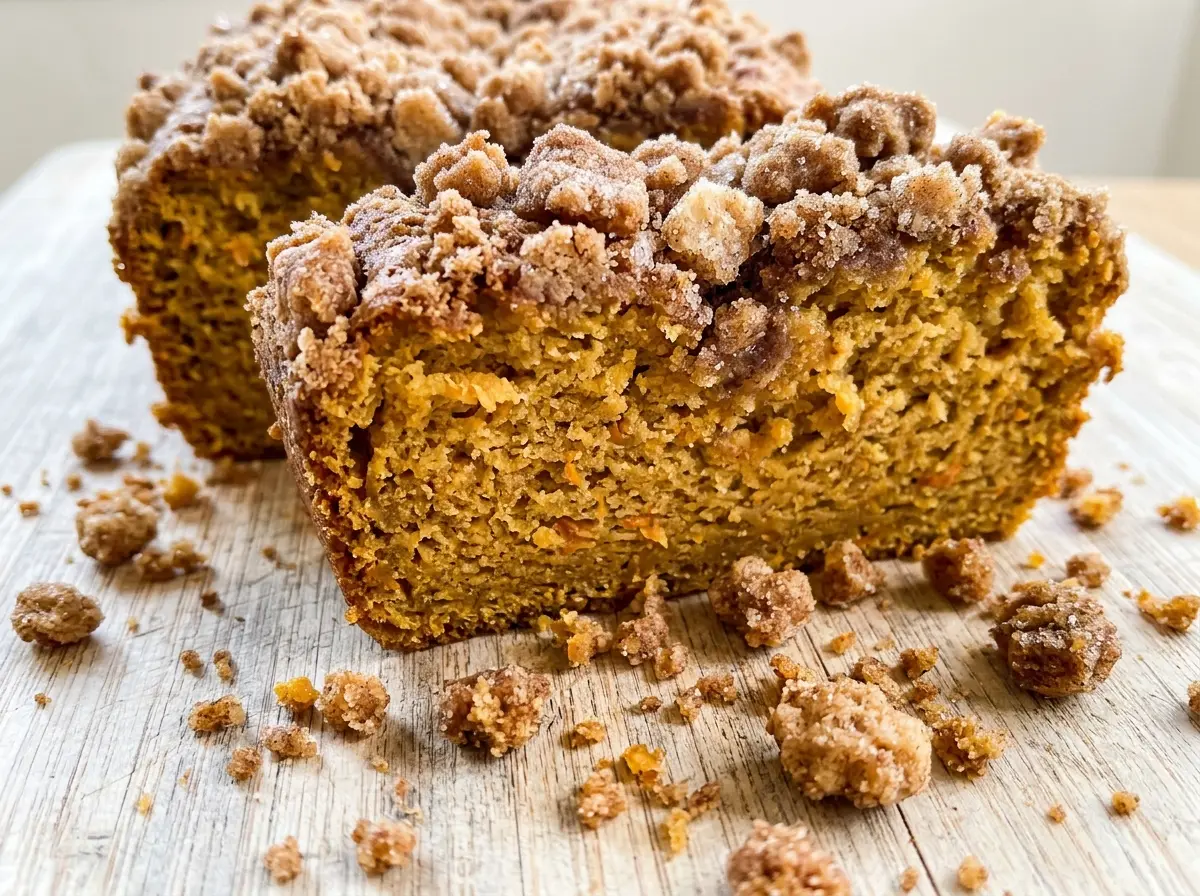
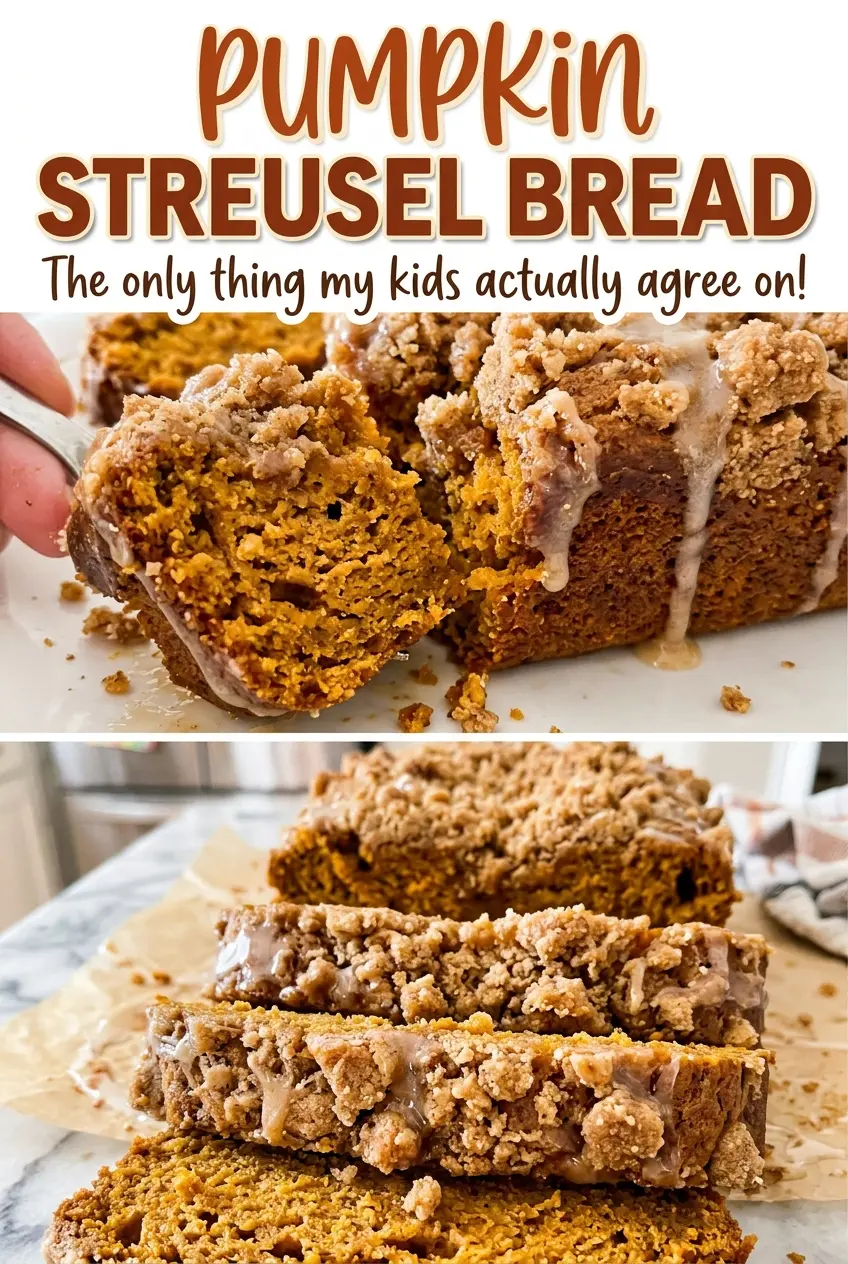
When the loaf is nearly done, the oat topping turns golden and the pumpkin-spice smell fills the kitchen before the center is baked through. That contrast is part of what makes Pumpkin Streusel Bread worth the wait: a tender, moist crumb under a buttery oat topping that has just enough crunch. I watch the top as it bakes, because the streusel can brown ahead of the middle.
The batter comes together with a whisk and a light hand. Once the flour goes in, I stir only until the dry patches disappear; mixing longer can make quick bread tough. Then the batter goes straight into the pan, with the streusel scattered over the top. The finished loaf is gently spiced, easy to slice, and especially good once it has cooled completely.
Kitchen Note
Don’t rush the first cut. The loaf is still setting as it cools, and slicing too soon can compress the middle and make a moist crumb seem gummy. I let it cool completely on the rack before reaching for a knife.
Save Pumpkin Streusel Bread for a cozy bake with a soft pumpkin crumb and a crisp oat-brown sugar topping.
Why the 9×5 Pan Matters More Than It Looks
Quick bread is sensitive to how deep the batter sits. The specified 9×5-inch loaf pan gives this amount of batter room to bake through without making a very tall loaf, and the broad top leaves a good surface for the streusel. A smaller pan would hold the batter deeper, which can leave the center needing more time while the topping continues to brown. A larger pan spreads the batter thinner, changing both the loaf’s height and how quickly it bakes.
That pan size also makes the doneness cues more useful. The top can look ready before the center is; the toothpick test belongs in the middle of the loaf, not near an edge. If you use a different pan, expect the baking time and finished shape to change rather than relying on the same clock. Keeping the loaf in the 9×5 pan gives you the most dependable balance between a baked center and a streusel top that hasn’t gone too far.
What Gives This Bread Its Moist Crumb and Oat Topping
- Canned pumpkin puree — Plain puree brings moisture and pumpkin flavor to the batter. Choose a can labeled pumpkin puree, not pumpkin pie filling, which is already sweetened and seasoned. The canned version is consistent from batch to batch; fresh puree varies in moisture, so it isn’t a dependable one-for-one swap here.
- Vegetable oil and eggs — Oil keeps the crumb tender after cooling, while eggs give the loaf structure so it can hold together when sliced. A neutral vegetable oil is a good, inexpensive choice; canola oil works in the same way. Large eggs are the size this batter is balanced around.
- All-purpose flour and leaveners — All-purpose flour gives the loaf enough structure without making it bread-like or chewy. Baking soda and baking powder work together to lift the moist batter. Whisk them thoroughly with the flour so the rise is even, and measure the flour without packing it into the cup.
- Old-fashioned oats, brown sugar, and butter — Rolled oats stay distinct in the topping, and brown sugar adds a deeper sweetness than granulated sugar alone. Melted butter coats the oats and sugar so they gather into crisp clumps as they bake. Standard rolled oats and everyday butter work well; there’s no need for a specialty brand.
- Cinnamon, ginger, and nutmeg — These ground spices make the pumpkin taste warm and rounded without burying it. Fresh, fragrant spices give the clearest flavor, but ordinary pantry jars are fine if they still smell aromatic when opened. Keep the amounts balanced so the topping remains part of the flavor, not an afterthought.
Getting the Streusel and Batter Into the Oven at the Right Moment
Set Up the Loaf Pan
Heat the oven to 350°F before mixing, and line a 9×5-inch loaf pan with parchment. Leave an overhang on both long sides so you can lift the baked loaf out cleanly. Press the paper into the corners and along the base; a snug lining helps the batter sit evenly rather than bunching the parchment underneath.
Make Oat Clumps for the Top
Stir the rolled oats and packed light brown sugar together, then mix in the melted butter. Keep stirring until the butter is distributed and small clumps form instead of leaving dry sugar at the bottom of the bowl. The topping doesn’t need to be one solid layer; scatter the clumps across the batter so you get oats and crunch in each slice.
Mix the Pumpkin Batter Gently
Whisk the flour, baking soda, baking powder, salt, cinnamon, ginger, and nutmeg in a medium bowl. In a larger bowl, whisk the eggs, pumpkin puree, vegetable oil, and granulated sugar until the mixture looks smooth. Add the flour mixture to the pumpkin mixture and stir just until no dry flour remains. Stop there; a few strokes too many can develop the flour and make the crumb tougher.
Bake Until the Center Tests Cleanly
Spread the batter evenly in the lined pan, then sprinkle the streusel over it. Bake for 55 to 65 minutes, checking the center with a toothpick; it should come out with a few moist crumbs, not wet batter. If the topping browns too quickly while the middle still needs time, tent the loaf loosely with foil. Cool it in the pan for 15 minutes, lift it out using the parchment, and cool on a rack for at least 1 hour before slicing.
Three Ways to Change the Loaf Without Losing What Makes It Work
Add Pecans to the Oat Topping
Stir 1/3 cup finely chopped pecans into the finished streusel before scattering it over the batter. The nuts add a toasty crunch and make the topping more substantial; chop them fairly small so the topping still sits in an even layer.
Make the Streusel Dairy-Free
Use an equal amount of dairy-free vegan butter in place of the unsalted butter, melted as usual. The pumpkin bread itself uses vegetable oil, so this swap changes only the topping; choose a firm baking-style vegan butter for oat clumps that hold together.
Use a Gluten-Free Baking Blend
Replace the all-purpose flour with an equal amount of a 1:1 gluten-free baking blend that contains xanthan gum. The loaf will be a little more delicate and may not have quite the same springy crumb, so let it cool fully before slicing.
Storage and Reheating
- Refrigerator: Keep the fully cooled loaf or slices in an airtight container for up to 5 days. The crumb firms in the refrigerator, so let a slice sit at room temperature briefly before eating.
- Freezer: Freeze the whole cooled loaf or individual slices, wrapped tightly and placed in a freezer-safe container, for up to 2 months. Thaw wrapped slices in the refrigerator or at room temperature.
- Reheating: Warm an individual slice in the microwave for about 10 seconds, then add a few seconds if needed. Avoid heating it for too long; the crumb can dry out before the topping warms through.
Answers to Pumpkin Bread Questions That Come Up Mid-Bake
Pumpkin Streusel Bread
Ingredients
Equipment
Method
- Heat the oven to 350°F.
- Line a 9x5-inch loaf pan with parchment paper, leaving an overhang on the two long sides.
- Stir together the oats and brown sugar.
- Mix in the melted butter until clumps form.
- In a medium bowl, whisk together the flour, baking soda, baking powder, salt, cinnamon, ginger, and nutmeg.
- In a large bowl, whisk the eggs, pumpkin puree, oil, and granulated sugar until smooth.
- Add the flour mixture to the pumpkin mixture and stir just until no dry flour remains.
- Spread the batter evenly in the prepared pan.
- Sprinkle the streusel evenly over the batter.
- Bake for 55 to 65 minutes, tenting loosely with foil if the topping browns too quickly, until a toothpick inserted into the center comes out with a few moist crumbs.
- Cool the bread in the pan for 15 minutes.
- Lift it out using the parchment and cool on a rack for at least 1 hour before slicing.