The first cubes of beef hit the hot Dutch oven with a soft sizzle, and the smell changes as they brown: savory, a little toasty, and far better than a pot of meat simmered without that first step. Red wine beef stew with potatoes and carrots takes a bit of attention up front, but once the beef is covered and gently simmering, the stove does most of the work.
I use chuck because its marbling and connective tissue turn tender during the long braise, while Yukon Gold potatoes and carrots go in later so they don’t spend the whole afternoon in the pot. That timing gives the beef a head start without leaving you with vegetables that have disappeared into the broth. The finished stew has fork-tender beef, soft-edged potatoes, and a deep wine-and-beef broth that’s just right for a cold evening.
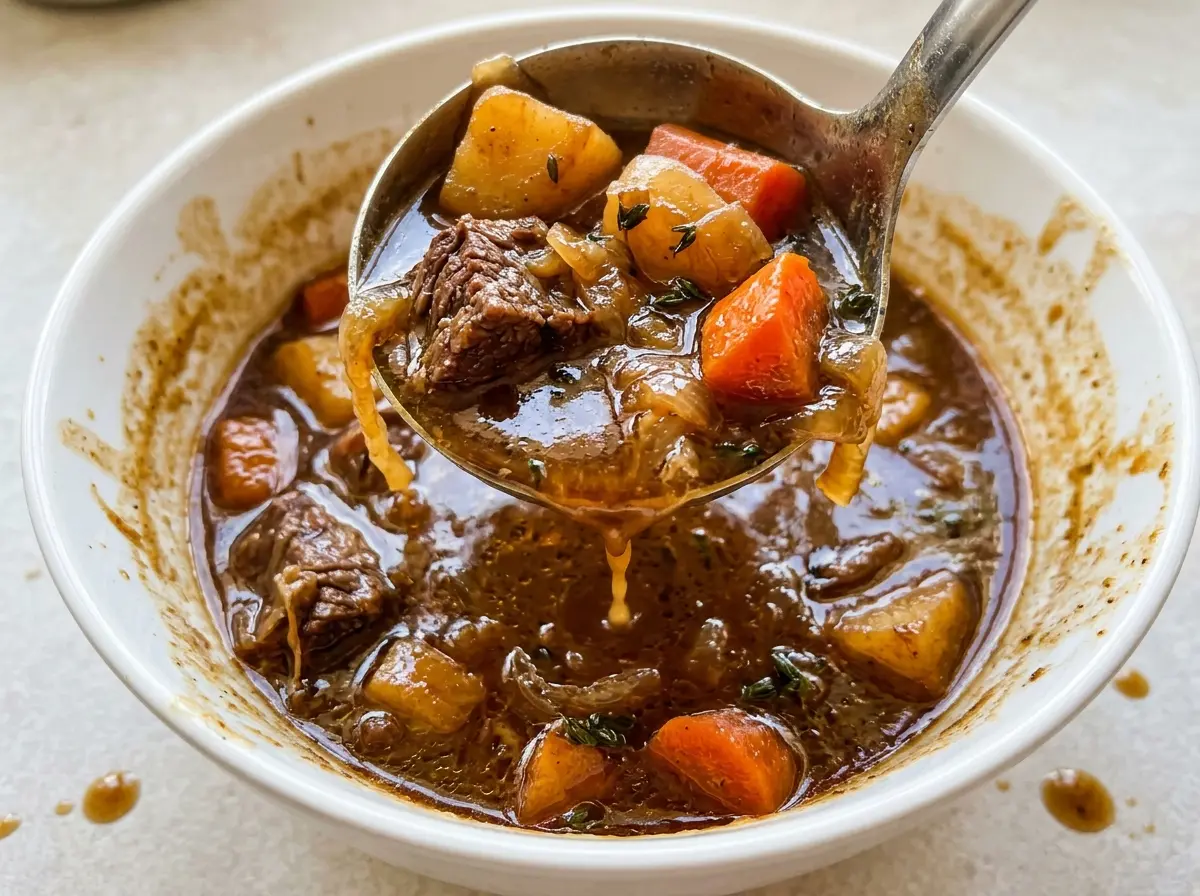
Kitchen Note
After the potatoes and carrots are tender, take the pot off the heat and give it the full 10 minutes to rest. That short pause lets the broth settle around the beef and vegetables instead of sloshing onto the bowls.
Save this red wine beef stew for a slow-simmered dinner with tender chuck, potatoes, carrots, and a rich savory broth.
Why the Red Wine Gets Five Minutes Before the Broth
Wine needs a little time in the pot before the broth goes in. After you pour it over the onion mixture, scrape the bottom of the Dutch oven so the browned bits loosen into the liquid, then let the wine simmer on its own for five minutes. That brief reduction takes the raw edge off and concentrates the wine before it becomes part of the braising liquid.
Adding the broth right away dilutes the wine before it has had a chance to simmer, and the finished stew can taste sharper and less integrated. You don’t need an expensive bottle for this. Choose a dry red wine you’d be comfortable drinking; a sweet wine can push the broth in the wrong direction. The smell will soften as it simmers, and the liquid will pick up the dark, savory traces left from browning the beef.
What Chuck, Dry Wine, and Yukon Golds Bring to This Pot
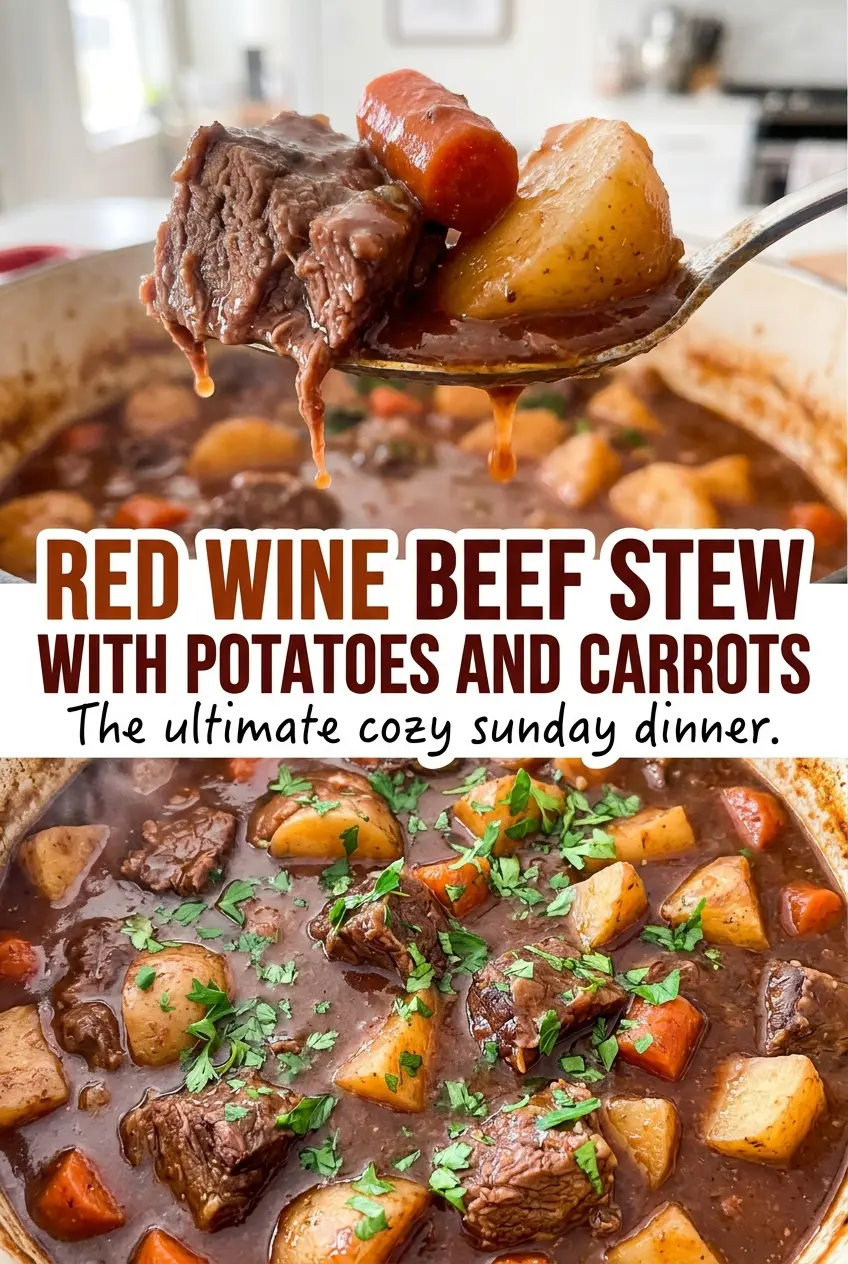
- Beef chuck — Chuck has enough marbling and connective tissue to become tender during a long, gentle braise. Choose evenly sized pieces and trim away any unusually large, hard pieces of fat; patting the cubes dry helps them brown instead of steaming. A lean cut won’t give the broth the same body.
- All-purpose flour — The thin coating clings to the beef and contributes a little body to the broth as the stew cooks. A cup-for-cup gluten-free all-purpose flour blend is the most useful swap if you need to avoid wheat; use it in place of the flour for coating the meat.
- Dry red wine — The wine adds acidity and depth that beef broth alone won’t quite reproduce. You don’t need a premium bottle, but skip anything sweet or labeled cooking wine; a basic dry red from the grocery store works well.
- Low-sodium beef broth — Low-sodium broth gives you more control over the final seasoning, especially since the beef is salted before browning. A standard store-brand carton is fine here; save a pricier stock for a dish where its character won’t be simmered for hours.
- Yukon Gold potatoes and carrots — Yukon Golds turn creamy while holding their shape better than a floury baking potato, and carrots bring sweetness as they soften. Cut the vegetables to the sizes listed so they cook evenly; peeling the carrots also gives their pieces a more tender finish.
- Onion, garlic, tomato paste, thyme, and bay leaf — These build the savory base without needing specialty products. Fresh garlic is worth using because it’s minced into the onion mixture, while dried thyme and a single bay leaf do their work quietly during the braise.
The Stovetop Stages That Give the Beef a Head Start
Coat the Beef and Brown It in Batches
Season the beef with 1 teaspoon of kosher salt and the black pepper, then toss it with the flour until each piece is coated. Heat 1 tablespoon of vegetable oil in a 6-quart Dutch oven over medium-high heat. Brown the beef in batches for 2 to 3 minutes per side, adding more oil as needed, and transfer each batch to a plate. If the pieces are crowded together, they’ll release moisture and steam instead of forming browned surfaces.
Soften the Onion Before Adding the Garlic
Reduce the heat to medium and add the chopped onion to the pot. Cook for about 5 minutes, stirring occasionally, until it has softened; the onion will pick up some of the browned bits as you stir. Add the minced garlic and tomato paste, then cook for 1 minute while stirring so the paste coats the onion. Keep the heat at medium here, since garlic can scorch if the pot is still running at the higher browning temperature.
Simmer the Wine, Then Start the Braise
Pour in the red wine and scrape up the browned bits from the bottom of the pot. Simmer for 5 minutes, then add the beef broth, dried thyme, bay leaf, and remaining 1/2 teaspoon of salt. Return the beef and any juices on the plate to the pot. Bring the liquid to a gentle simmer, cover, and cook over low heat for 1 1/2 to 2 hours, until the beef is beginning to become tender.
Add the Vegetables When the Beef Is Close
Stir in the potatoes and carrots, cover the pot again, and simmer for 30 to 40 minutes. Keep the heat low enough for a gentle simmer rather than a rolling boil; vigorous bubbling can break up the vegetables before the beef is tender. Check a piece of beef with a fork near the end: it should be fork-tender, and the potatoes and carrots should yield easily when pierced. Remove the bay leaf, then let the stew rest for 10 minutes before serving.
Simple Swaps for a Different Pot of Beef Stew
Make the coating gluten-free
Replace the all-purpose flour with a cup-for-cup gluten-free all-purpose flour blend when coating the beef. The stew keeps its familiar savory character, though the broth may have a slightly different body depending on the blend.
Use red potatoes for firmer pieces
Swap the Yukon Golds for the same amount of red potatoes, cut into the same size pieces. Their waxier texture holds a firmer shape in the stew, with less of the creamy softness Yukon Golds bring.
Trade some sweetness for parsnips
Replace the carrots with an equal amount of peeled parsnips cut into 1-inch pieces. They bring a more earthy, gently sweet taste; add them with the potatoes, knowing they may soften more than the carrots.
Storage and Reheating
- Refrigerator: Cool and refrigerate within 2 hours; keep leftovers covered for 3 to 4 days. The potatoes will absorb some broth as they sit.
- Freezer: Freeze in airtight containers for up to 3 months. The beef freezes well, though the potatoes may be softer or a little grainy after thawing; thaw overnight in the refrigerator.
- Reheating: Warm the stew in a covered saucepan over low to medium-low heat, stirring gently until it reaches 165°F. Avoid a hard boil, which can break up the potatoes and carrots.
Questions That Come Up While Making Beef Stew
Red Wine Beef Stew with Potatoes and Carrots
Ingredients
Equipment
Method
- Season the beef with 1 teaspoon of the salt and the pepper.
- Toss the beef with the flour until coated.
- Heat 1 tablespoon of the oil in a 6-quart Dutch oven over medium-high heat.
- Brown the beef in batches for 2 to 3 minutes per side, adding more oil as needed.
- Transfer the browned beef to a plate.
- Reduce the heat to medium and add the onion.
- Cook for about 5 minutes, stirring occasionally, until softened.
- Add the garlic and tomato paste and cook for 1 minute, stirring.
- Pour in the wine, scraping up the browned bits.
- Simmer for 5 minutes.
- Add the broth, thyme, bay leaf, and remaining 1/2 teaspoon salt.
- Return the beef and any accumulated juices to the pot.
- Bring the stew to a gentle simmer, cover, and cook over low heat for 1 1/2 to 2 hours, until the beef is beginning to become tender.
- Stir in the potatoes and carrots.
- Cover and simmer for 30 to 40 minutes, until the beef is fork-tender and the vegetables are tender.
- Remove the bay leaf.
- Let the stew rest for 10 minutes before serving.