Scalloped sweet potatoes bake up soft and silky underneath a browned, salty cheese crust that crackles at the edges. The maple cream slips between every layer, so each bite lands somewhere between savory gratin and holiday-worthy side dish. It’s the kind of pan that disappears fast because it tastes rich without being heavy, and it holds its shape on the plate instead of turning watery or loose.
What makes this version work is the balance in the cream mixture. Sweet potatoes need enough fat to turn tender without drying out, but they also need acid-free, steady heat so the dairy doesn’t split before the potatoes are done. A little maple syrup deepens the natural sweetness without making the dish taste like dessert, while Gruyere brings a nutty melt and parmesan gives the top that crisp, salty finish.
Below, I’ll walk through the layering method that keeps the potatoes tender all the way through and the topping browned instead of greasy. There’s also a simple way to hold this dish for a gathering so the top stays intact when you serve it.
The sweet potatoes turned tender all the way through and the Gruyere topping browned into this gorgeous crust. I was worried the maple would make it too sweet, but it just gave the sauce a warm depth.
Love the golden Gruyere crust and maple-kissed layers? Save these scalloped sweet potatoes for the side dish that steals the whole table.
The Cream Layer Has to Stay Loose Until the Potatoes Finish
Sweet potatoes are more forgiving than white potatoes, but they still need enough liquid to steam through without the bottom layers scorching. The trap is thickening the cream mixture before it goes into the oven. That sounds helpful, but it actually works against you here because the potatoes need time to release starch and soften while the sauce stays fluid around them.
Layering matters too. If the slices are too thick, the top will brown before the center turns tender. If they’re too thin, the dish can collapse into mush. Aim for thin, even slices and overlap them in neat rows so the cream can move between the layers instead of pooling on top.
What Each Ingredient Is Actually Doing in This Dish
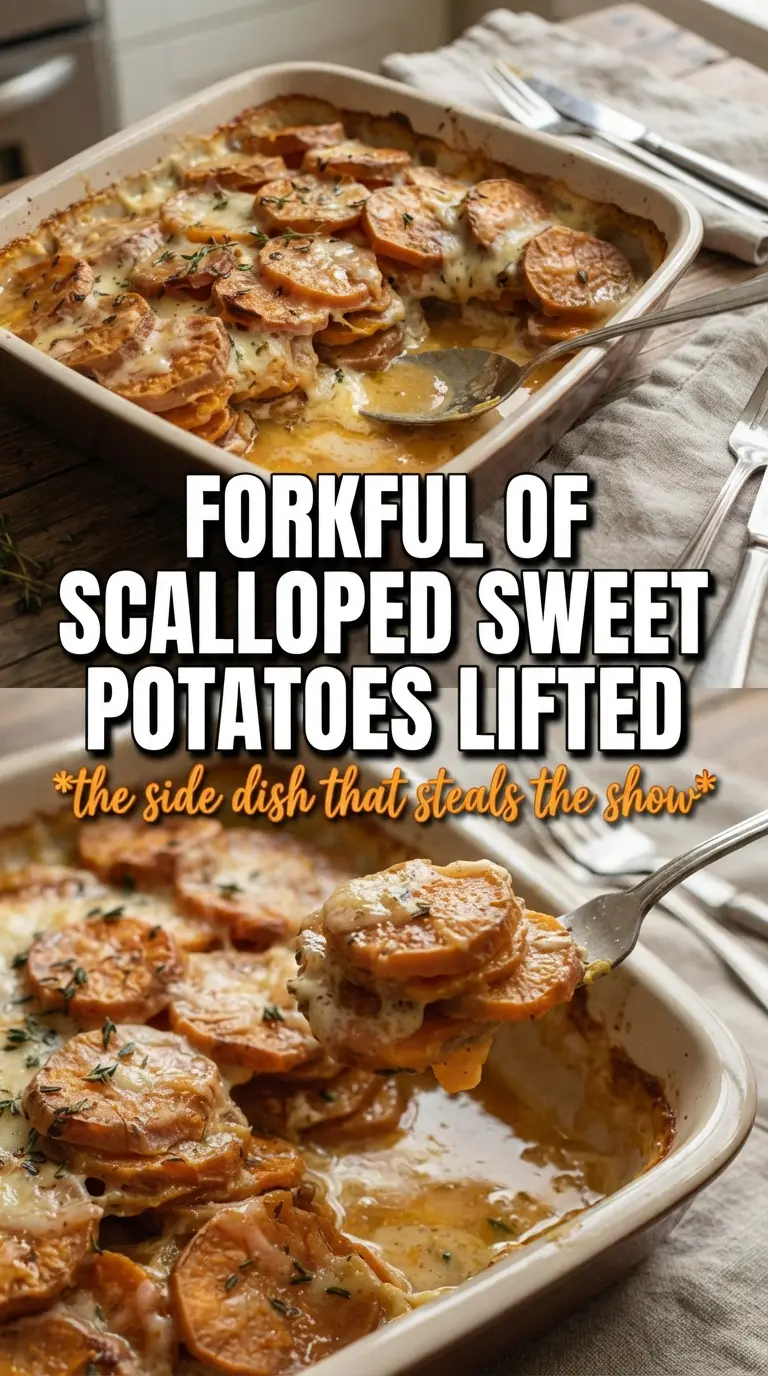
- Sweet potatoes — These are the backbone of the dish, so slice them evenly. A mandoline gives you the most consistent results, and that consistency is what keeps the bake from turning patchy with some slices done and others still firm.
- Heavy cream and whole milk — The cream brings richness and helps the dish bake into a silky sauce, while the milk keeps it from feeling too heavy. If you need to lighten it a little, don’t swap in low-fat milk alone; use the milk already in the recipe and keep the cream, or the sauce can turn thin and split.
- Gruyere — This is the cheese that gives you that nutty, stretchy top. Fontina works if you need a substitute, but it tastes milder and won’t give quite the same depth.
- Parmesan — Parmesan sharpens the top and helps it brown into a crisp crust. Use the real grated kind if you can, since shelf-stable finely shredded parmesan doesn’t melt and brown as cleanly.
- Maple syrup — Just enough to round out the sweetness in the potatoes without making the dish taste sugary. Skip it only if you want a more savory gratin; if you do, the flavor will be flatter and you may want an extra pinch of salt.
- Garlic, thyme, cinnamon, and nutmeg — This is the seasoning set that keeps the dish from tasting one-note. The garlic and thyme anchor it in savory territory, while the cinnamon and nutmeg add warmth that plays well with the sweet potatoes without turning the whole pan into dessert.
Layering, Baking, and Letting the Gratin Set
Build the cream before the oven heats the potatoes
Whisk the cream, milk, garlic, maple syrup, thyme, cinnamon, nutmeg, salt, and pepper together until the seasoning looks evenly suspended. That mixture should taste a little too seasoned on its own, because the potatoes will mellow it out as they bake. If you pour in the dairy cold from the fridge, it still works, but letting it sit at room temperature for a few minutes helps the bake start more evenly.
Overlap the slices so they cook at the same rate
Arrange the sweet potatoes in tight, overlapping rows in the buttered dish. The goal is a mostly even surface with small gaps for the cream to flow through. If the slices are tossed in randomly, the top browns before the center softens, and you end up with a dish that looks done but still cuts with resistance in the middle.
Cover first, then uncover for the crust
Bake covered until the potatoes are nearly tender. That trapped steam is what softens the slices without evaporating the cream too early. When you remove the foil and add the cheeses, the sauce should still be visible around the edges; if it looks dry before the cheese goes on, the heat has been too high or the dish sat uncovered too long.
Rest before serving
Give the pan at least 10 minutes on the counter before scooping. That short rest lets the cream settle back into the layers so the dish slices instead of slumping. If you cut in too early, the sauce runs loose and the layers separate on the plate.
How to Adapt This for Different Tables and Different Diets
Dairy-Free Version That Still Browns Well
Use full-fat canned coconut milk instead of the cream and milk, then top with a dairy-free shredded cheese that melts well. The flavor shifts a little sweeter and less nutty, but the texture stays rich if you keep the slices thin and don’t overbake it.
More Savory, Less Sweet
Cut the maple syrup in half and add a little extra thyme plus a pinch of black pepper. You’ll lose some of the rounded sweetness, but the sweet potatoes will taste more like a classic gratin and pair better with rich mains like roast chicken or ham.
Gluten-Free by Default
This dish is naturally gluten-free as written, so the only thing to watch is your cheese and seasonings if you’re using packaged versions. The result is the same creamy center and crisp top, with no flour needed to thicken the sauce.
Make-Ahead for a Busy Day
Assemble the dish up to the point of baking, cover it tightly, and refrigerate for up to a day. Add about 10 extra minutes to the covered bake since it’s starting cold, and wait to add the cheese until the potatoes are nearly tender so the top doesn’t overbrown.
Storage and Reheating
- Refrigerator: Store covered for up to 4 days. The sauce thickens as it chills, so the texture turns a little denser after day one.
- Freezer: It freezes, but the cream sauce can turn grainy after thawing. If you do freeze it, cool it completely, wrap it well, and thaw overnight in the refrigerator before reheating.
- Reheating: Rewarm covered at 325F until heated through, then uncover for a few minutes to re-crisp the top. The common mistake is blasting it at high heat, which dries out the edges before the center warms.
Answers to the Questions Worth Asking
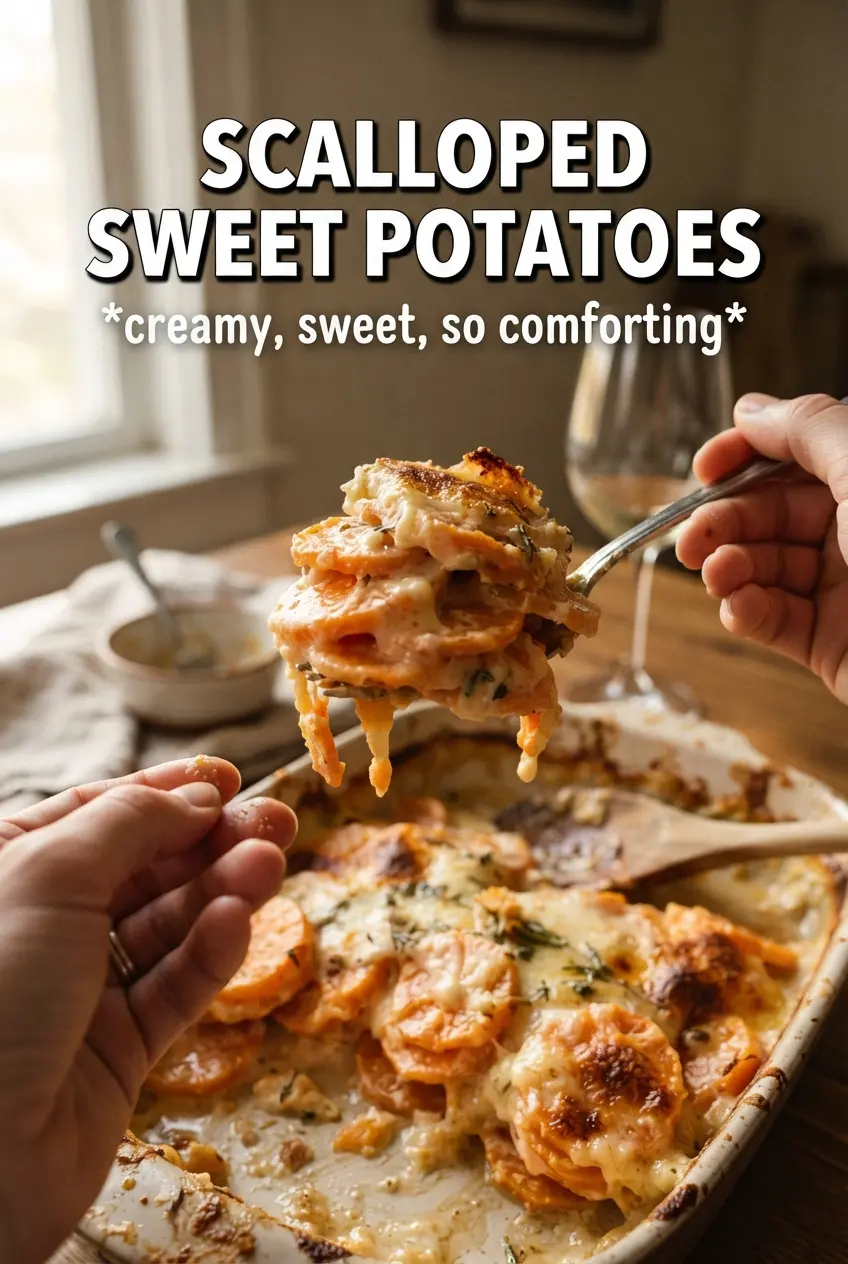
Scalloped Sweet Potatoes
Ingredients
Equipment
Method
- Preheat oven to 375F and butter a 9x13 baking dish with the unsalted butter. Grease the bottom and sides so the layers release cleanly.
- Whisk heavy cream, whole milk, minced garlic, maple syrup, fresh thyme, cinnamon, nutmeg, salt, and pepper until smooth. Mix until the seasonings are evenly dispersed.
- Layer sweet potato slices in overlapping rows inside the baking dish. Pack them in snugly so the cream can coat every layer.
- Pour the cream mixture over the sweet potatoes evenly. Add slowly so it seeps between layers.
- Cover tightly with foil and bake for 40 minutes at 375F. Look for the edges to start bubbling under the foil.
- Uncover the dish, then scatter Gruyere and parmesan over the top. Spread into an even layer so the crust browns throughout.
- Bake uncovered for 20-25 minutes at 375F until sweet potatoes are completely tender and the topping is golden and bubbly. Check that a knife slides easily through the center layers.
- Rest the scalloped sweet potatoes for 10 minutes before serving. The sauce will thicken slightly for cleaner slices.