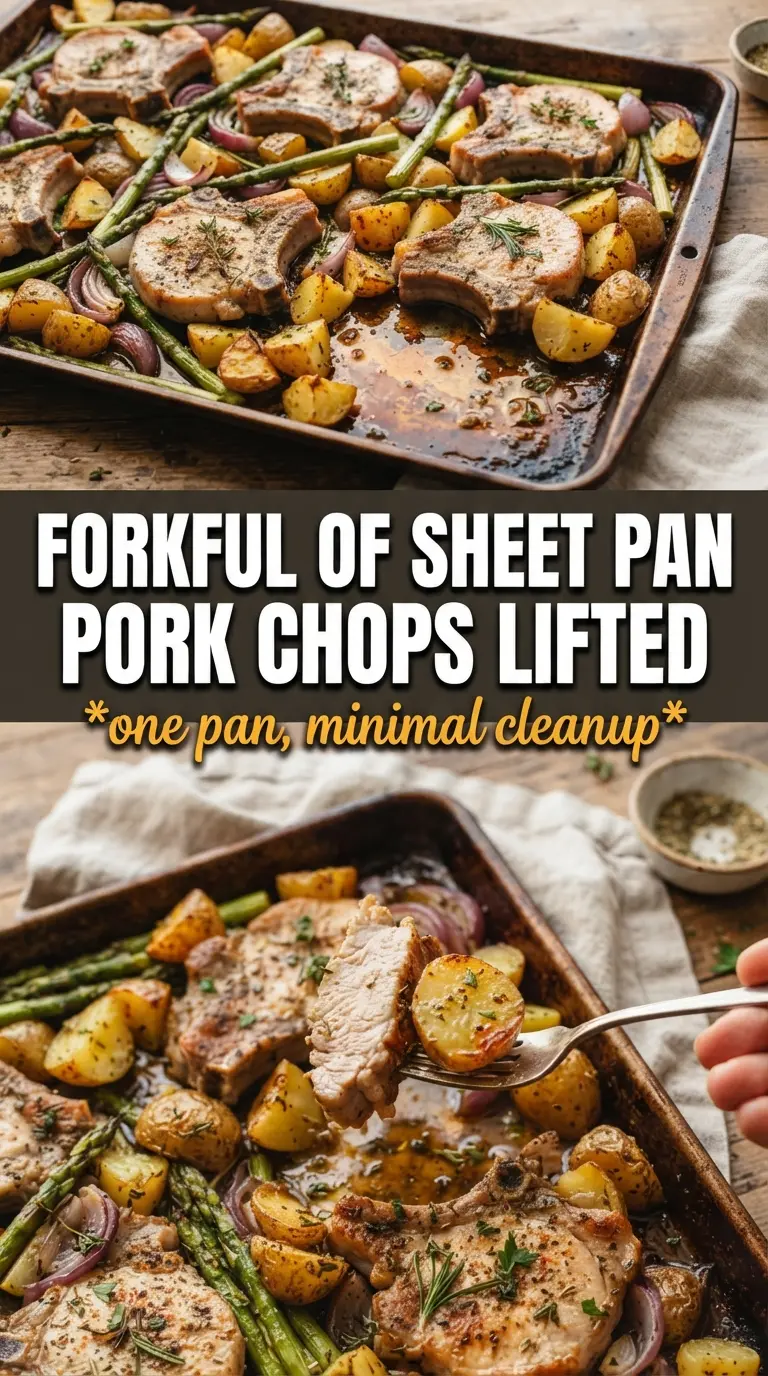
Golden pork chops, caramelized potatoes, and crisp-tender green beans all on one pan make this the kind of dinner that earns a permanent spot in the rotation. The pork stays juicy because it gets a quick sear before finishing in the oven, and the potatoes pick up enough oven time to turn deep brown at the edges instead of soft and pale. The garlic butter drips into everything at the end, which pulls the whole pan together without turning it greasy.
The trick here is staging the ingredients so nothing overcooks. Potatoes need a head start because they take longer than pork chops, and the sear on the chops gives you flavor before they finish roasting. I also like bone-in chops for this because they hold onto moisture better than thin boneless ones, especially when they go back into the oven with the vegetables.
Below, I’ll walk through the timing that keeps the pork tender, what to watch for when the potatoes are ready to move aside, and a few easy swaps if you want to change up the vegetables or seasoning.
The potatoes got those crisp, browned edges and the pork stayed juicy at 145, which never happens for me on a sheet pan. The garlic butter at the end made the green beans taste like they belonged there too.
Love the crispy potatoes and garlic butter finish? Save these sheet pan pork chops and potatoes for a dinner that feels complete without extra dishes.
The Trick to Keeping Pork Chops Juicy While the Potatoes Finish
Most sheet pan pork chop recipes fail for one simple reason: everything goes into the oven at the same time. Pork chops cook fast, but potatoes need time to soften and brown. If you start both together, the chops end up dry before the potatoes are ready. The staggered timing here fixes that by giving the potatoes a head start, then adding the pork only when they can finish together.
The other piece that matters is the skillet sear. That quick hit of high heat builds a browned crust on the outside, which protects the meat a little during the final roast and gives you better flavor than oven-only cooking. Keep the pork at 145F and pull it the moment it gets there. If you wait for the center to look fully firm on the cutting board, it’s already gone past juicy.
- Bone-in pork chops — These hold moisture better than thin boneless chops and stay more forgiving during the final roast. If you use boneless, keep them on the thicker side so they don’t dry out before the potatoes are done.
- Baby potatoes — Their small size helps them roast quickly and evenly. Halve them so the cut sides can brown; whole potatoes will still be hard when the pork is ready.
- Green beans — They go in late because they only need a short roast. Add them too early and they lose their snap and turn drab.
- Garlic, rosemary, thyme, and smoked paprika — This combination gives the pan a savory, woodsy backbone with a little warmth from the paprika. Dried herbs work fine here because they have time to bloom in the oil and butter.
What Each Ingredient Is Actually Doing in This Recipe
- Primary ingredient (the star) — Quality matters most. Choose the best you can find.
- Cooking medium (oil, butter, or broth) — This carries flavors and prevents dryness.
- Seasonings (salt, pepper, spices, herbs) — Layer flavors so nothing overpowers. Build depth gradually.
- Aromatics (garlic, onion, herbs) — Cook with fat to bloom flavors. Become the foundation.
- Supporting ingredients — Complement the main ingredient without overpowering it.
- Sauce or liquid (if applicable) — Brings flavors together. Balance richness with acid.
- Acid (lemon, vinegar, wine, or other) — Brightens and prevents flat-tasting results.
- Final finish (garnish, glaze, or sauce) — Prevents one-dimensional taste and adds visual appeal.
How to Stage the Pan So Everything Finishes at the Same Time
Roasting the Potatoes First
Heat the oven to 425F and spread the seasoned potatoes on a parchment-lined sheet in a single layer. Give them the full 15-minute head start so they can soften and start to brown before the pork goes in. If the potatoes are crowded, they steam instead of caramelize, so use a large pan and keep them in a loose layer.
Getting a Fast Sear on the Pork Chops
Season the chops well, then sear them in a hot skillet for about 2 minutes per side. You want a deep golden crust, not a fully cooked center. If the pan isn’t hot enough, the pork will gray before it browns, and that missing crust is the flavor you can’t get back later.
Finishing Everything in the Oven
Push the potatoes outward, place the pork chops in the center, and tuck the green beans around the edges. Drizzle the garlic butter over everything, then roast until the pork hits 145F and the vegetables are tender with browned spots. Pull the pan as soon as the pork reaches temperature; carryover heat will finish the job while the juices settle back into the meat.
What to Change When You Want a Different Pan Dinner
Make It Dairy-Free
Skip the butter and finish the pan with a little extra olive oil plus a spoonful of minced garlic. You lose the richer, rounder finish that butter gives, but the garlic still perfumes the pan and the vegetables stay glossy instead of dry.
Swap the Green Beans for Another Quick Vegetable
Broccoli florets, asparagus, or Brussels sprouts all work, but the timing changes. Use broccoli or sprouts for the last 15 minutes so they brown a little, and add asparagus in the final 8 to 10 minutes so it stays crisp at the tips.
Use Boneless Pork Chops
Boneless chops will work, but they cook faster and dry out more easily. Keep them thick, watch the temperature closely, and start checking a few minutes earlier than you would with bone-in chops.
Storage and Reheating
- Refrigerator: Store leftovers in an airtight container for up to 3 days. The potatoes soften a little, but the flavor holds well.
- Freezer: The pork chops freeze decently, though the potatoes turn mealy after thawing. If you plan ahead, freeze the chops separately from the vegetables for the best texture.
- Reheating: Warm in a 325F oven, covered loosely with foil, until the pork is heated through. The common mistake is blasting everything in the microwave, which tightens the meat and makes the potatoes rubbery.
Answers to the Questions Worth Asking
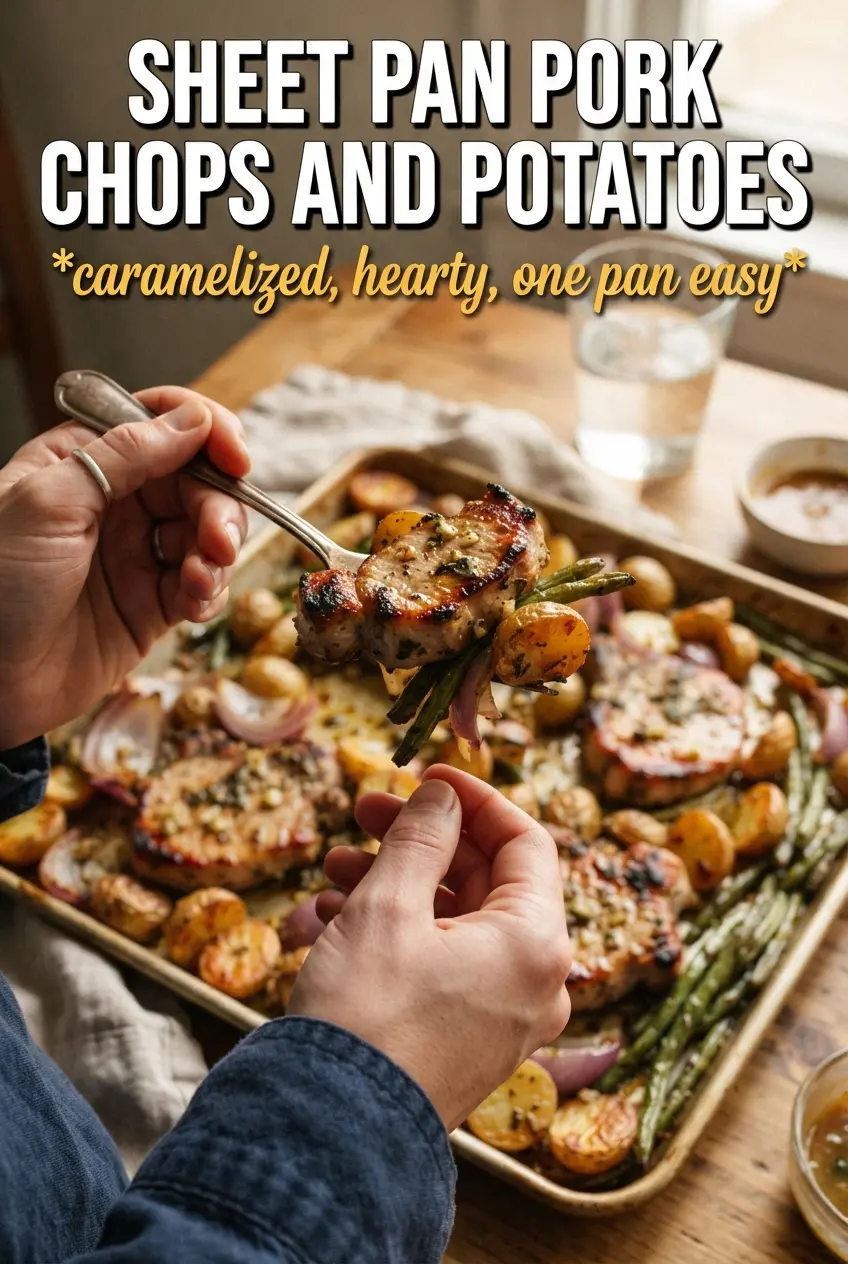
Sheet Pan Pork Chops and Potatoes
Ingredients
Equipment
Method
- Preheat oven to 425F and line a large rimmed baking sheet with parchment so the potatoes don’t stick.
- Toss the potatoes with 2 tablespoons olive oil, rosemary, thyme, garlic powder, salt, and pepper, then spread them in an even layer on the pan.
- Roast the potatoes for 15 minutes at 425F until they start to turn golden around the edges.
- Season the pork chops with smoked paprika, salt, and pepper.
- Heat the remaining 1 tablespoon olive oil in a hot skillet and sear the pork chops for 2 minutes per side to brown them.
- Push the potatoes to the edges, place pork chops in the center, and nestle the green beans around the sides of the chops.
- Mix minced garlic with melted butter and drizzle it over the potatoes, pork, and green beans.
- Roast at 425F for 18-20 more minutes until the pork reaches 145F and garnish with fresh parsley before serving.