Caramelized sausage rounds, tender butternut squash, and Brussels sprouts with crisp edges are exactly the kind of sheet pan dinner that earns repeat status. The apple softens just enough to turn sweet and jammy in the oven, while the balsamic-mustard glaze ties everything together with a glossy finish that clings instead of pooling on the pan.
What makes this version work is the balance of cut size and heat. The vegetables need to be close enough in size to roast at the same pace, and the sausage goes in sliced so it can brown on the edges instead of steaming in whole links. The glaze is mixed before it hits the pan, which helps it coat every piece evenly and keeps the maple from burning too early.
Below, I’ve included the little details that keep the pan from turning soggy, plus the easiest swaps if you need to work with what’s already in your kitchen.
The vegetables roasted up with those browned edges I was hoping for, and the sausage picked up the glaze without getting greasy. I also liked that the apple held its shape instead of turning to mush.
Save this sheet pan sausage and fall veggies dinner for the nights when you want caramelized edges, a sweet-savory glaze, and one pan to clean.
The Pan Needs Space, Or Everything Steams
The biggest reason sheet pan dinners disappoint is crowding. When the vegetables are piled too close together, they trap steam and come out soft instead of browned. This recipe depends on high heat and open space so the butternut squash can caramelize, the Brussels sprouts can blister at the edges, and the sausage can brown where it touches the pan.
Stirring once halfway through matters here, but only once. Too much tossing knocks off the glaze and slows down the browning. You want the pan to sit undisturbed long enough for the vegetables to pick up color, then get just enough movement to expose the pale sides to the heat.
- Butternut squash — Cut it into even cubes so it softens at the same pace as the Brussels sprouts. Larger chunks stay firm while the sausage finishes, and tiny pieces can scorch before the rest of the pan is ready.
- Brussels sprouts — Halving them gives you flat cut sides that can caramelize against the pan. If some of the outer leaves fall off during prep, keep them; those crisp up fast and add great texture.
- Italian sausage links — Slicing the sausage before roasting creates more browned surface area and lets the glaze cling to each round. If you use chicken sausage, the dish will still work, but the pan will be a little less rich.
- Apple — A firm sweet-tart apple like Honeycrisp or Pink Lady holds its shape better than a softer one. It should soften at the edges, not disappear into the glaze.
What Each Part of the Glaze Is Doing Here
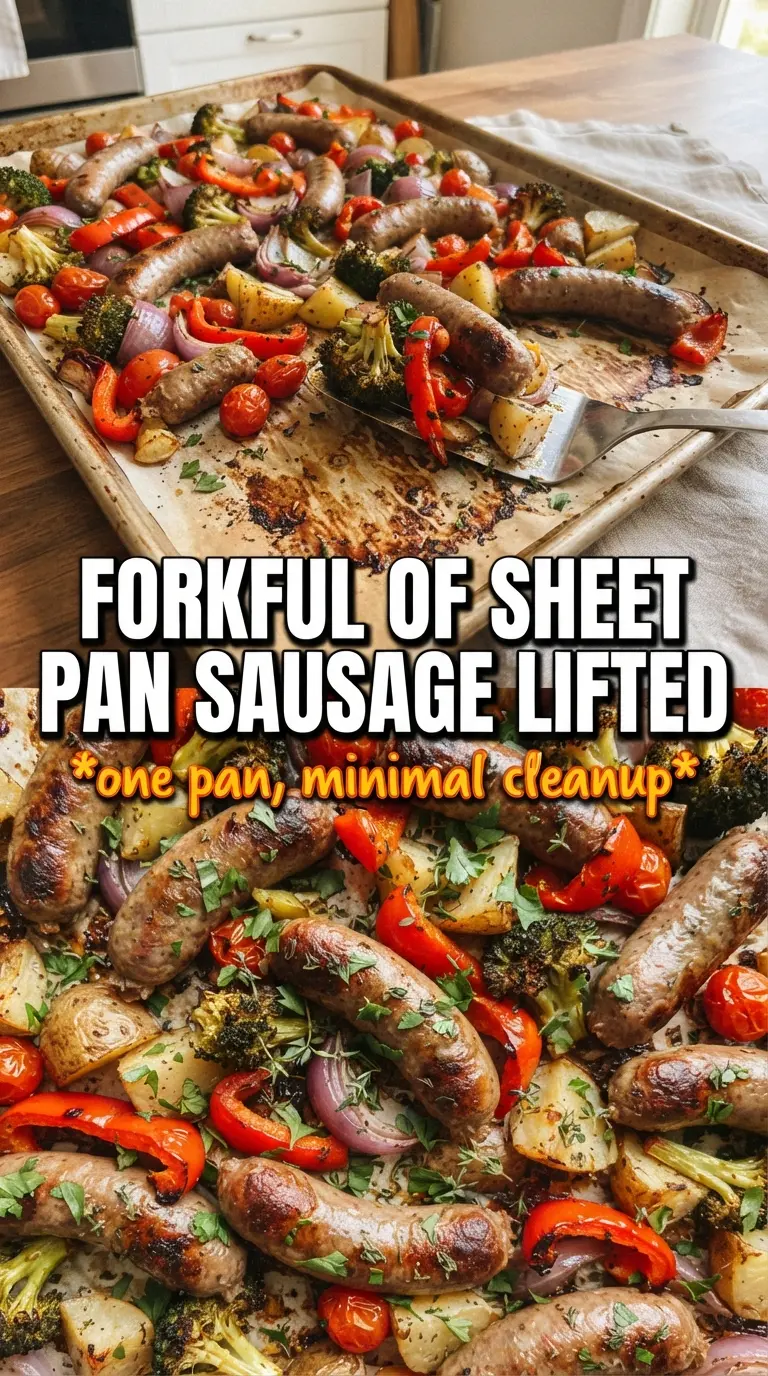
- Olive oil — Coats the vegetables so they roast instead of drying out, and it helps the seasoning spread evenly. Use a regular olive oil here; extra-virgin is fine, but there’s no reason to use your most expensive bottle.
- Balsamic vinegar and maple syrup — This is the sweet-tangy base that gives the pan its glossy finish. The maple softens the vinegar’s sharpness, while the balsamic deepens as it roasts, so the glaze tastes more rounded by the time it comes out of the oven.
- Dijon mustard — Dijon helps the glaze emulsify so it coats instead of separating. It also adds a little sharpness that keeps the dish from leaning too sweet.
- Fresh rosemary — Rosemary is strong enough to stand up to sausage and squash, especially when it hits the hot oven. If you swap in dried rosemary, use less and crush it between your fingers first so it doesn’t stay woody.
- Garlic and Italian seasoning — Garlic gives the glaze a savory edge, while the seasoning mix fills in the background without making you measure six separate herbs. If your Italian seasoning blend is salt-heavy, taste before adding extra salt to the bowl.
Roasting the Pan in the Right Order
Mix the glaze before anything hits the tray
Whisk the oil, balsamic, maple syrup, Dijon, garlic, rosemary, Italian seasoning, salt, and pepper until it looks slightly thick and unified. If you drizzle the ingredients separately, the seasoning clumps and the sweet ingredients run to the bottom of the pan. A quick whisk keeps the coating even from the first toss.
Spread everything out in a single layer
Arrange the sausage, squash, Brussels sprouts, onion, bell peppers, and apple with some breathing room between pieces. Overlap is the enemy of browning, especially with squash and sprouts. If your pan looks crowded, split the mixture across two pans instead of forcing it all onto one.
Roast until the edges turn deep gold
Bake at 425°F for 30 to 35 minutes, stirring once halfway through, until the sausage is cooked through and the vegetables are browned at the edges. You’re looking for the squash to be tender enough to cut with a fork and the Brussels sprouts to have dark, crisped leaves. If the pan looks done but still pale, give it the broiler for 2 to 3 minutes and watch it closely so the maple in the glaze doesn’t tip from caramelized to burnt.
How to Adapt This for What’s in Your Kitchen
Make It Dairy-Free Without Losing Anything
This dish is naturally dairy-free as written, which is one reason it works so well for a mixed crowd. The glaze still comes out rich because the sausage and olive oil carry enough body on their own.
Use Chicken Sausage for a Lighter Pan
Chicken sausage works well here if you want less fat in the final dish. You’ll lose a little of the deep, savory richness that pork sausage brings, so the glaze becomes more important for adding body and contrast.
Swap the Vegetables Based on What’s Left in the Fridge
Sweet potatoes, carrots, or parsnips can stand in for the squash if you cut them to a similar size. Cauliflower also works, but it roasts faster, so add it if you like more char and a little less sweetness.
Storage and Reheating
- Refrigerator: Store leftovers in an airtight container for up to 4 days. The vegetables soften a little as they sit, but the flavor holds up well.
- Freezer: It freezes, but the vegetables lose some texture after thawing, especially the Brussels sprouts and apple. Freeze only if you’re okay with a softer result.
- Reheating: Reheat on a sheet pan in a 375°F oven until hot, about 10 to 15 minutes. The skillet or microwave will warm it faster, but they tend to make the vegetables limp instead of bringing back that roasted edge.
Questions I Get Asked About This Recipe
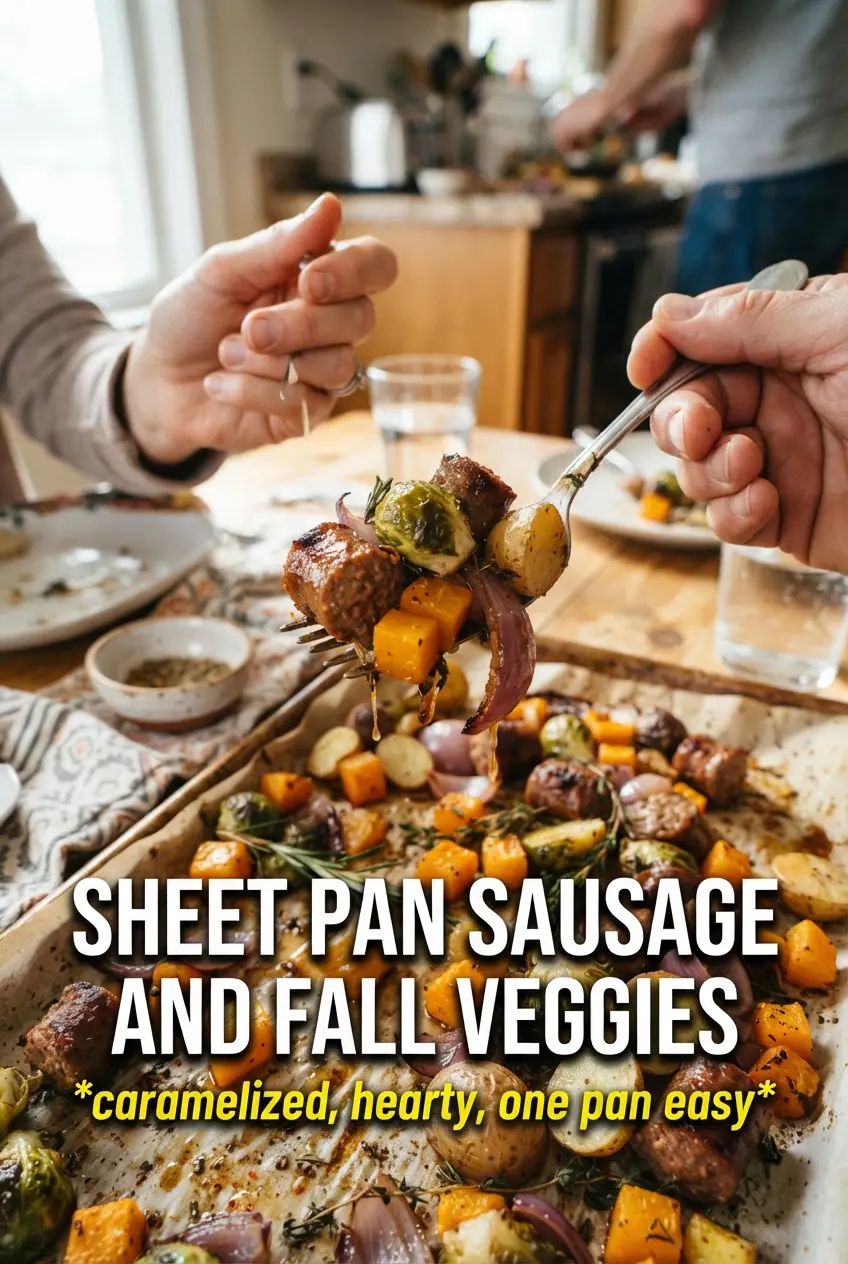
Sheet Pan Sausage And Fall Veggies
Ingredients
Equipment
Method
- Preheat the oven to 425F and line a large rimmed baking sheet with parchment, ensuring it covers the surface for easy cleanup.
- Whisk olive oil, balsamic vinegar, maple syrup, Dijon mustard, minced garlic, fresh rosemary, Italian seasoning, salt, and pepper until the glaze looks uniform.
- Arrange the sliced Italian sausage, butternut squash, Brussels sprouts, red onion wedges, bell pepper chunks, and sliced apple in an even layer on the sheet pan.
- Drizzle the glaze over everything, then toss gently just until all vegetables and sausage are coated.
- Roast at 425F for 30-35 minutes, stirring once halfway through, until the vegetables are caramelized and the sausage is cooked through.
- Broil at 425F for 2-3 minutes for extra caramelization, watching closely so the edges brown without burning.