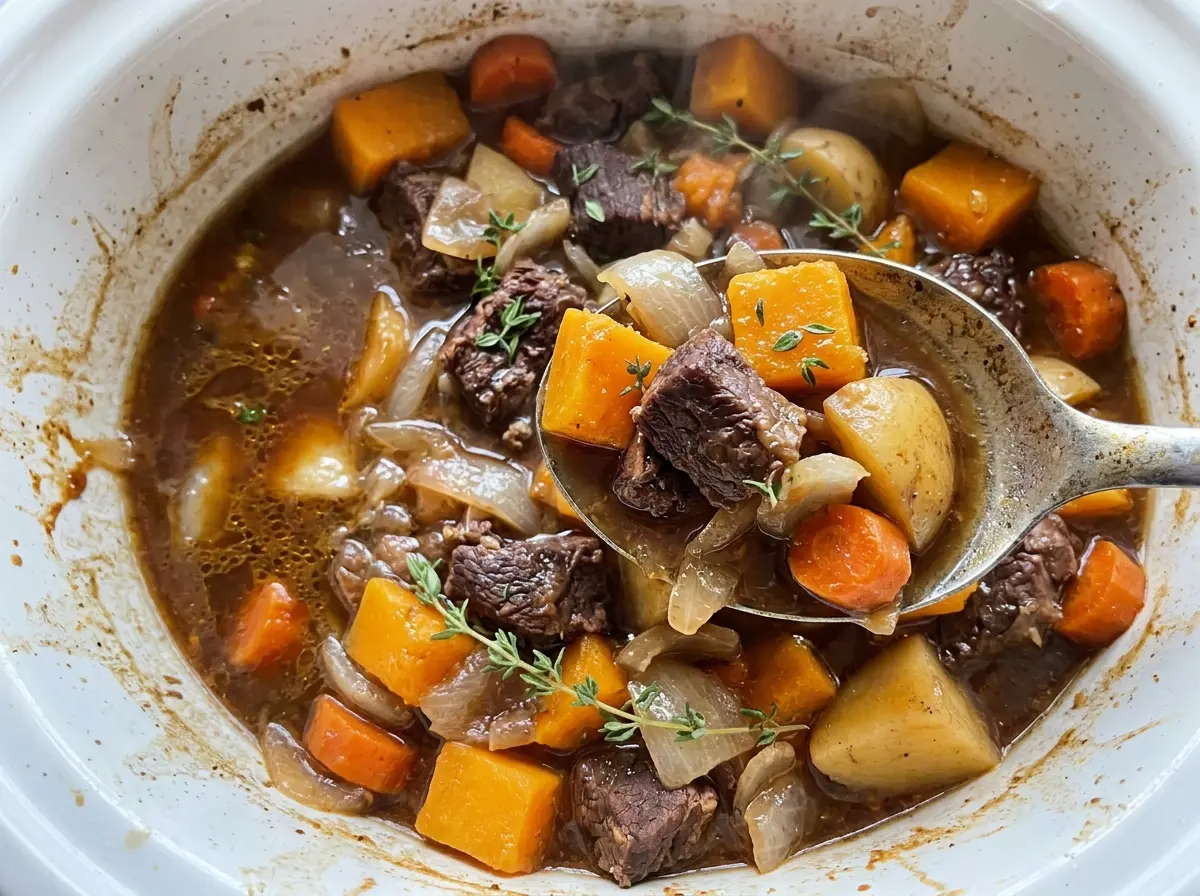
The broth can look thin when you first lift the slow cooker lid, but a spoonful tells a different story once it’s coated with the beef’s flour-thickened juices. I brown the chuck first, then use the same skillet to loosen the savory bits left behind. That small bit of stovetop work gives this slow cooker beef stew with butternut squash a deeper, fuller base than you’d get by adding everything straight to the cooker.
Butternut squash needs a different amount of time than potatoes and carrots. Adding it after the beef has already started to soften keeps the squash tender without letting it collapse into the broth. The finished stew has fork-tender beef, soft potatoes, and distinct pieces of squash in a hearty broth that’s just right for a bowl and a spoon.
Kitchen Note
Keep the squash pieces close to the size of the beef cubes. Smaller pieces soften sooner and are more likely to lose their shape by serving time.
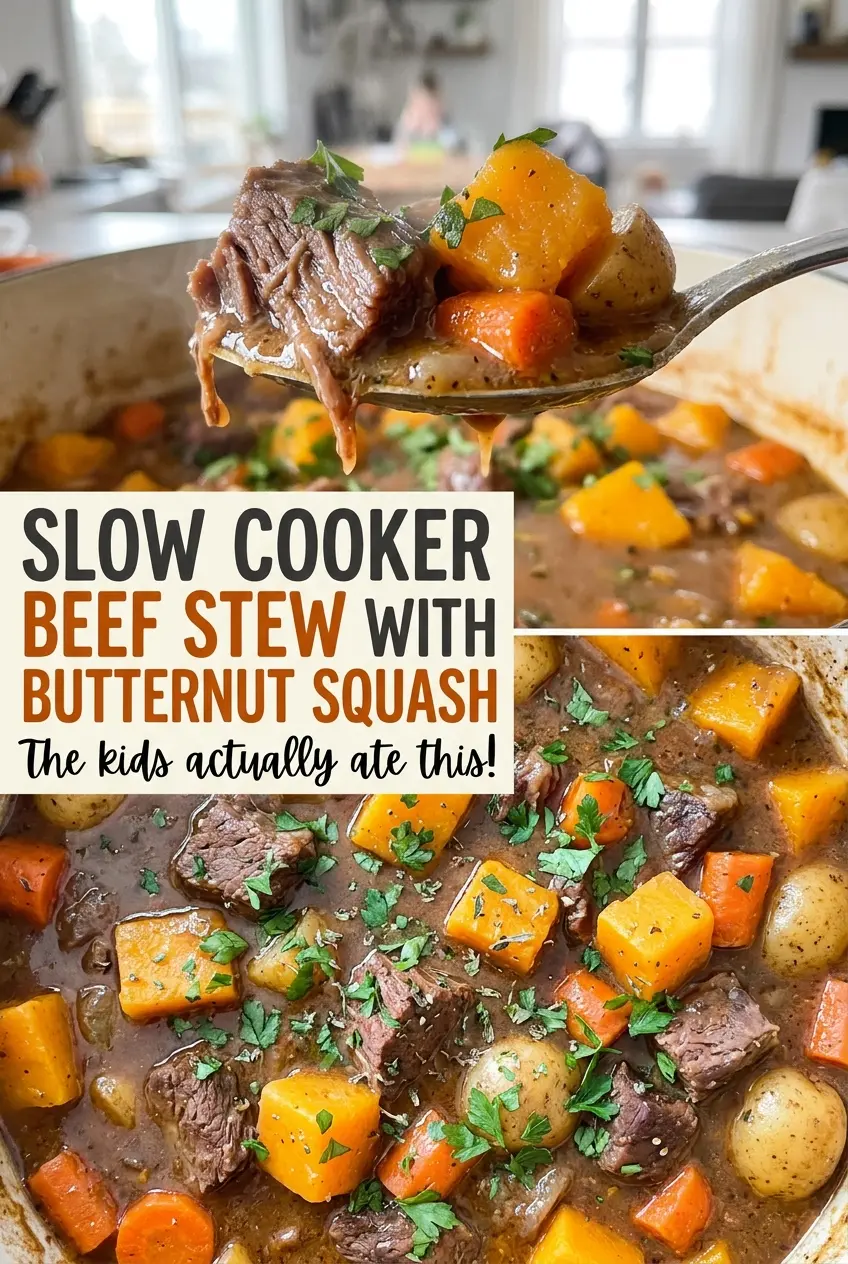
Save this slow cooker beef stew with butternut squash for its tender beef and hearty, flour-thickened broth.
Why Browning the Beef Changes the Whole Pot
Slow cooking makes chuck tender, but it doesn’t brown meat. That’s why I take a few minutes to sear the beef in a skillet before it goes into the cooker. The browned surfaces bring a deeper, roasted taste to the stew, and the bits left on the skillet become part of the broth instead of being left behind.
The flour coating has a job beyond helping the beef brown. As it cooks with the broth, it gives the liquid body, so the finished stew feels substantial without a separate thickening step. Patting the thawed beef dry first helps the flour cling in a light coating; wet surfaces can turn it pasty. Brown the cubes in batches, too. If the skillet is crowded, the beef releases moisture and steams instead of developing browned edges. You don’t need to brown every side until dark—several well-colored sides are enough to build that savory base.
What the Chuck, Flour, and Squash Bring to This Stew
- Beef chuck — Chuck has enough connective tissue to turn tender during the long cook, while leaner cuts are more likely to feel dry. Trim it and cut it into even cubes so the pieces cook at a similar pace.
- All-purpose flour — It coats the seasoned beef and helps the broth thicken as the stew cooks. For a flour-free version, leave it out; the beef won’t have the same coating and the broth will be thinner.
- Yukon Gold potatoes — Their creamy texture suits a stew, and cutting them into even pieces helps them become tender together. Keep the pieces around the same size as the carrots and celery.
- Butternut squash — Fresh squash adds a tender, gently sweet contrast to the beef and potatoes. Choose a squash that feels firm, then peel, seed, and cube it evenly for predictable cooking.
- Tomato paste — A short cook in the skillet takes away its raw taste before the broth goes in. Stir it across the pan so it warms evenly rather than scorching in one spot.
- Low-sodium beef broth and Worcestershire sauce — The broth carries the stew, while Worcestershire adds savory depth. Low-sodium broth gives you more control over the finished seasoning, especially since the beef is salted before browning.
- Onion, carrots, celery, garlic, thyme, and bay leaf — Together, they build the familiar aromatic base. Mince the garlic so it disperses through the liquid, and remember to remove the bay leaf before serving.
Build the Broth in the Skillet, Then Let the Cooker Work
Season and coat the chuck
Pat the thawed beef dry, then season it with kosher salt and black pepper. Toss the cubes with the flour until they have a light, even coating; shake off any thick clumps. A dry surface helps the coating stay on the meat as it browns. Transfer the prepared beef to the skillet in batches rather than piling it all in at once.
Brown the beef in batches
Heat the vegetable oil in a large skillet over medium-high heat. Add a batch of beef and turn the pieces to brown several sides, then transfer them to the 6-quart slow cooker. The skillet should stay hot enough to brown the surfaces; if the meat is crowded and giving off liquid, work in smaller batches. Add the remaining beef and repeat.
Turn the skillet drippings into broth
Add the chopped onion, carrots, celery, potatoes, and minced garlic to the slow cooker with the beef. Put the tomato paste in the skillet and cook it for 1 minute, stirring, then pour in the beef broth and Worcestershire sauce. Scrape the browned bits from the bottom of the skillet, and stir in the dried thyme and bay leaf. Pour this mixture into the cooker and stir gently to combine.
Cook the base, then finish with squash
Cover and cook on LOW for 6 to 6 1/2 hours or HIGH for 3 1/2 to 4 hours, until the potatoes are nearly tender and the beef is starting to soften. Stir in the butternut squash, cover again, and cook on LOW for 1 1/2 to 2 hours or HIGH for 45 to 60 minutes. The squash should be tender and the beef fork-tender at the end. Remove the bay leaf before serving.
Simple Ways to Adjust the Stew Without Losing Its Character
A flour-free, thinner-broth version
Leave out the flour before browning. The beef will lack its light coating, and the broth won’t thicken as much, but the rest of the stew can be cooked the same way. This makes the dish flour-free, not automatically gluten-free, since Worcestershire sauce can vary by brand.
Leave out the squash for a classic beef-and-potato stew
Skip the butternut squash and keep the beef, potatoes, carrots, and celery. The stew will have a more traditional savory profile and won’t have the squash’s gentle sweetness; the other ingredients and cooking schedule stay the same.
Make it more broth-forward by skipping the potatoes
Omit the Yukon Gold potatoes for a lighter bowl with more room for the beef, carrots, and squash. The broth will feel less starchy and the stew won’t be as filling, so this is a good fit when you want the vegetables and meat to take the lead.
Storage and Reheating
- Refrigerator: Store in a covered container for 3 to 4 days. The potatoes and squash soften a little as they sit.
- Freezer: Freeze in airtight portions for up to 2 to 3 months. The vegetables may be softer after thawing, but the stew freezes well.
- Reheating: Warm gently on the stovetop, stirring carefully until the stew reaches 165°F. Avoid a hard boil, which can break up the squash and potatoes.
Questions That Come Up Before the Slow Cooker Goes On
Slow Cooker Beef Stew with Butternut Squash
Ingredients
Equipment
Method
- Pat the thawed beef dry.
- Season the beef with the salt and pepper.
- Toss the beef with the flour to coat.
- Heat the oil in a large skillet over medium-high heat.
- Brown the beef in batches, turning to brown several sides, then transfer it to a 6-quart slow cooker.
- Add the onion, carrots, celery, potatoes, and garlic to the slow cooker.
- Add the tomato paste to the skillet and cook for 1 minute, stirring.
- Pour in the broth and Worcestershire sauce, and scrape up the browned bits.
- Stir in the thyme and bay leaf.
- Pour the broth mixture into the slow cooker and stir gently to combine.
- Cover and cook on LOW for 6 to 6 1/2 hours or HIGH for 3 1/2 to 4 hours, until the potatoes are nearly tender and the beef is starting to soften.
- Stir in the butternut squash.
- Cover and cook on LOW for 1 1/2 to 2 hours or HIGH for 45 to 60 minutes, until the squash is tender and the beef is fork-tender.
- Remove the bay leaf before serving.