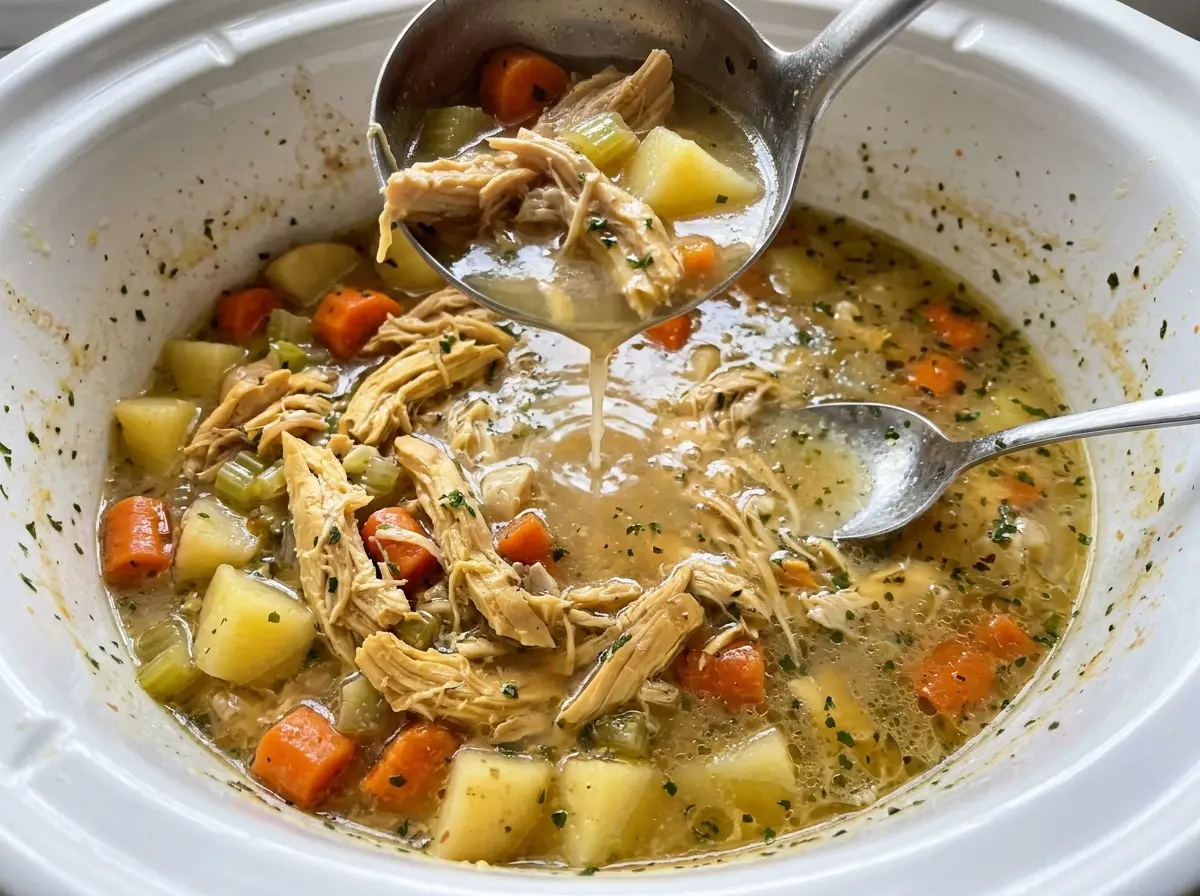
The potatoes and carrots go into the slow cooker first because they need the long, gentle heat to turn tender without losing their shape. When the chicken is layered over them, the whole pot cooks evenly, and the broth turns into a cozy base for Slow Cooker Chicken Stew without a separate pan or a fussy prep step.
I like this version for the balance of hands-off cooking and a proper stew texture. Yukon Gold potatoes stay pleasantly intact, chicken thighs bring plenty of savory flavor, and frozen peas go in near the end so they keep their color. A quick cornstarch slurry thickens the broth just before serving, leaving it spoonable rather than thin and watery.
Kitchen Note
Cut the thighs into even 1½-inch pieces before they go in. Smaller pieces can lose their distinct bite over a long cook, while uniform chunks finish at the same pace.
Save this Slow Cooker Chicken Stew for a hands-off dinner with tender chicken, soft vegetables, and a broth that thickens right before serving.
Why the Vegetable Cuts Matter More Than You Think
Slow cookers give the ingredients hours of steady heat, so pieces that look close in size at the cutting board can behave differently in the pot. Potatoes cut into 1-inch pieces have enough size to hold their shape, while carrots sliced ½ inch thick soften at a similar pace. If the carrots are much thicker or the potatoes are cut very small, one may still feel firm as the other starts to break apart.
Layering helps, too. The potatoes, carrots, celery, onion, and garlic sit at the bottom of the 6-quart cooker, with the chicken arranged above them. That gives the vegetables the longest contact with the warm crock and keeps the chicken from getting buried beneath a pile of ingredients. Keep the cuts reasonably even, and resist the urge to stir everything together before cooking; the layers are there for a reason. Once the broth is added, the slow cooker does the work while the vegetables soften and the chicken cooks through.
What Gives This Stew Its Savory Base and Spoonable Finish
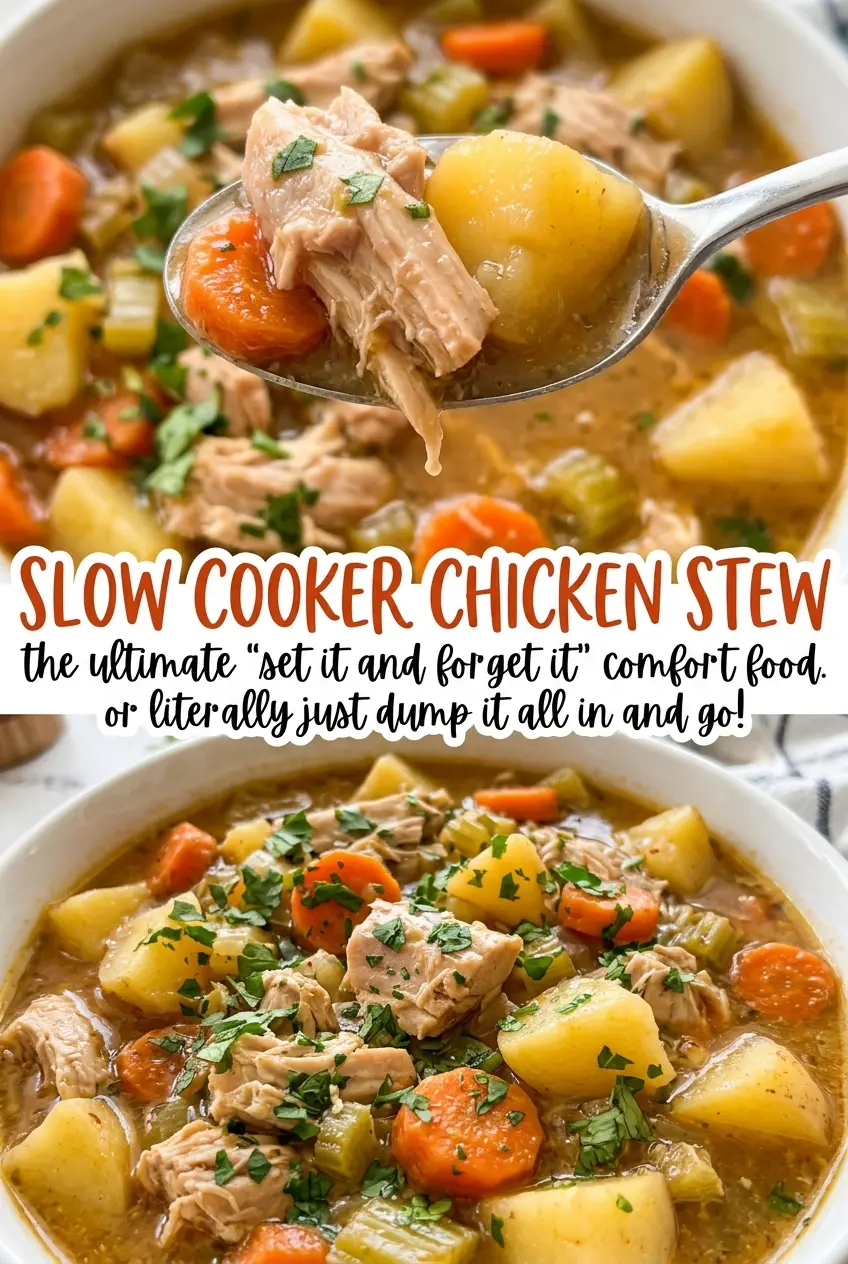
- Yukon Gold potatoes — Their creamy texture holds together better than a floury potato during a long cook. If you can’t find Yukon Golds, yellow potatoes are the closest swap; russets tend to soften and break down more.
- Chicken thighs — Boneless, skinless thighs stay tender and bring a richer, more savory taste than leaner cuts. There’s no need to buy a premium brand here; fresh, properly chilled chicken from your usual store works well.
- Low-sodium chicken broth — It brings the vegetables and chicken together without making the finished pot overly salty. A store-brand carton is fine, and choosing low-sodium broth gives you more control over the seasoning.
- Dried thyme and bay leaves — Thyme seasons the broth throughout the cooking time, while bay leaves add a subtle herbal note. Dried thyme is the right fit for this long cook; remove and discard the bay leaves before adding the peas.
- Frozen peas — They add a little sweetness and a bright green finish. Add them straight from the freezer near the end instead of letting them cook for hours, which would leave them dull and soft.
- Cornstarch — It thickens the broth without needing to simmer the stew on the stove. The cold-water slurry should be smooth before it goes into the cooker; dry cornstarch stirred directly into the stew is much more likely to form lumps.
How to Cook the Chicken and Thicken the Broth Without Guesswork
Build the vegetable layer
Add the potatoes, carrots, celery, onion, and garlic to a 6-quart slow cooker. Spread them out across the bottom rather than leaving one tall mound in the center. They don’t need to be perfectly arranged, but an even layer helps the pieces cook at a similar pace. The chopped onion and garlic settle between the larger vegetables and season the broth as they soften.
Season the chicken on top
Arrange the cut chicken over the vegetables, then sprinkle it with kosher salt, black pepper, and dried thyme. Add the bay leaves and pour in the low-sodium chicken broth. Keep the lid in place once cooking starts; lifting it releases heat and can slow the cook. The chicken should reach 165°F, and the vegetables should be tender before you move on.
Choose the slow-cook window
Cover and cook on LOW for 6 to 7 hours or on HIGH for 3 to 4 hours. The lower setting gives you a wider, gentler cooking window, while HIGH gets the stew ready sooner. Check that a potato piece yields easily when pierced and that the chicken is cooked through. If the vegetables still feel firm, leave the lid on and continue cooking until tender.
Add the peas and finish the thickening
Remove and discard both bay leaves, then stir in the frozen peas. In a small bowl, whisk the cornstarch with cold water until the mixture is completely smooth, and stir it into the stew. Cover and cook on HIGH for 15 to 20 minutes, until the broth thickens and the peas are hot. The stew will look a little loose before this last stretch, so give the slurry time to work before deciding it needs anything else.
Easy Changes for a Lighter or More Straightforward Pot
Use chicken breast for a leaner stew
Swap in an equal amount of boneless, skinless chicken breast, cut into the same-size pieces. The broth will taste a little less rich, and breast meat is leaner, so check it as the cooking window nears its end rather than letting it sit longer than needed.
Leave out the peas for a more savory finish
Skip the frozen peas if you prefer a stew without their gentle sweetness. The chicken, thyme, and vegetables still make a full-flavored pot, though you’ll lose the fresh green color and small bursts of sweetness in each bowl.
Reduce the sodium without changing the stew
Choose no-salt-added chicken broth and leave out the kosher salt. The vegetables and thyme still contribute plenty of savory character, but the broth will taste less seasoned, so this version is best for anyone who wants tighter control over sodium.
Storage and Reheating
- Refrigerator: Store leftovers in a covered container for 3 to 4 days. The broth will thicken further as it chills, and the potatoes soften a little.
- Freezer: Freeze in airtight containers for up to 2 to 3 months. Thaw overnight in the refrigerator; the potatoes may be softer after freezing, but the stew still reheats well.
- Reheating: Warm gently in a saucepan over medium-low heat, stirring until steaming throughout. Add a small splash of chicken broth if the chilled stew is thicker than you like; avoid a hard boil, which can break up the potatoes.
Questions That Come Up When Making Slow Cooker Chicken Stew
Slow Cooker Chicken Stew
Ingredients
Equipment
Method
- Add the potatoes, carrots, celery, onion, and garlic to a 6-quart slow cooker.
- Arrange the chicken on top.
- Sprinkle the chicken with the salt, pepper, and thyme, then add the bay leaves.
- Pour in the chicken broth.
- Cover and cook on LOW for 6 to 7 hours or HIGH for 3 to 4 hours, until the vegetables are tender and the chicken reaches 165°F.
- Remove and discard the bay leaves, then stir in the frozen peas.
- Whisk the cornstarch and cold water in a small bowl until smooth, then stir the mixture into the stew.
- Cover and cook on HIGH for 15 to 20 minutes, until the stew has thickened and the peas are hot.