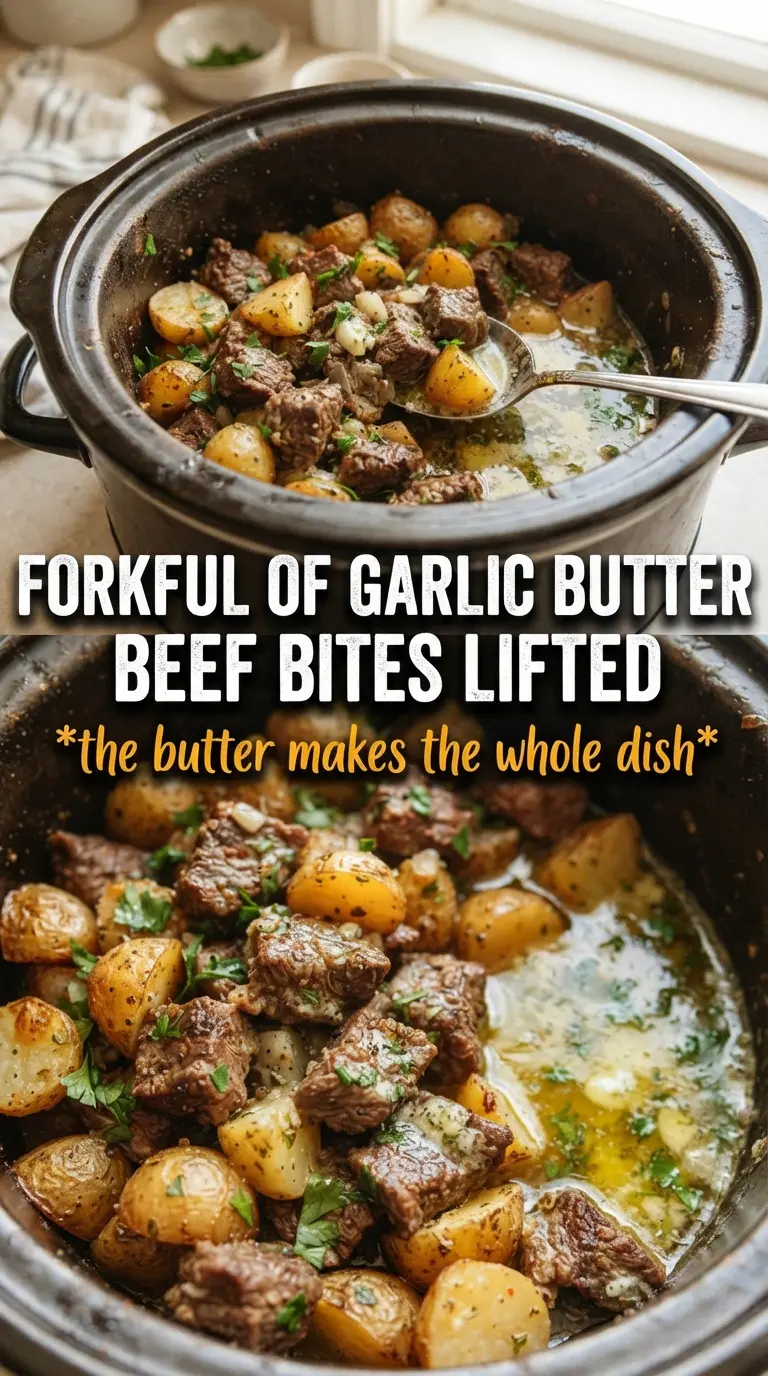
Tender beef bites and baby potatoes soak up a garlic butter sauce that turns rich, glossy, and just a little savory from the Worcestershire. The beef comes out spoon-tender, the potatoes hold their shape, and the whole thing finishes with enough sauce to coat every bite without turning greasy. It’s the kind of slow cooker dinner that tastes like you paid attention all day, even though the pot did most of the work.
What makes this version work is the order. The potatoes sit on the bottom where they get the most steady heat, the beef stays on top so it braises instead of disappearing into the broth, and the butter is added in cubes so it melts slowly into the sauce instead of separating right away. Garlic powder and onion powder season the beef directly, while fresh garlic cooks down into the liquid and gives the finished sauce a stronger, rounder taste.
You’ll find the exact layering order below, along with the one thing that keeps the potatoes from turning mushy and the beef from tasting flat. There are also a few useful swaps if you only have chuck roast or need to stretch the recipe for a bigger table.
The potatoes stayed firm, the beef got melting tender, and the garlic butter sauce thickened up just enough to coat everything. My husband went back for seconds and asked if I could put this in the regular rotation.
Love the rich garlic butter sauce and tender beef bites? Save this one for the slow cooker nights when you want comfort food without babysitting the stove.
The Layering Trick That Keeps the Beef Tender and the Potatoes Intact
Slow cookers are forgiving, but they’re also good at turning everything into the same texture if you pile the ingredients in carelessly. The potatoes need to go in first because they can handle the long cook and benefit from sitting in the broth and butter as they soften. The beef goes on top so it braises gently instead of getting trapped under a wet layer that can make it taste boiled.
The other thing that matters here is the amount of liquid. You’re not making soup. The broth is there to create steam and loosen the butter into a sauce, not to drown the ingredients. If you add much more than the recipe calls for, the garlic butter gets thin and the seasoning tastes washed out.
- Beef sirloin or chuck — Chuck gives you the deepest, most forgiving texture because the connective tissue breaks down over time. Sirloin works too and stays a little leaner, but it can dry out if you push the cook time too far past tender.
- Baby potatoes — These hold their shape better than large potatoes cut into chunks. Halving them gives enough surface area to absorb flavor without turning into mash by the end of the cook.
- Butter — The cubes matter. Scattered butter melts more evenly than melted butter poured in all at once, which helps the sauce emulsify instead of breaking into a slick on top.
- Worcestershire sauce — This is the quiet ingredient that keeps the whole dish from tasting flat. If you don’t have it, a splash of soy sauce plus a tiny bit of balsamic gets close, but Worcestershire has a deeper savory edge you can taste in the finished sauce.
What Each Ingredient Is Actually Doing in This Recipe
- Primary ingredient (the star) — Quality matters most. Choose the best you can find.
- Cooking medium (oil, butter, or broth) — This carries flavors and prevents dryness.
- Seasonings (salt, pepper, spices, herbs) — Layer flavors so nothing overpowers. Build depth gradually.
- Aromatics (garlic, onion, herbs) — Cook with fat to bloom flavors. Become the foundation.
- Supporting ingredients — Complement the main ingredient without overpowering it.
- Sauce or liquid (if applicable) — Brings flavors together. Balance richness with acid.
- Acid (lemon, vinegar, wine, or other) — Brightens and prevents flat-tasting results.
- Final finish (garnish, glaze, or sauce) — Prevents one-dimensional taste and adds visual appeal.
The 6 Hours That Matter More Than Anything Else
Season the Beef Before It Hits the Slow Cooker
Season the beef cubes before they go into the pot so the surface gets a direct hit of salt, garlic powder, onion powder, smoked paprika, and pepper. That early seasoning does more than flavor the meat; it keeps the sauce from carrying all the work. If the beef looks wet after seasoning, that’s fine. The salt will start drawing out a little moisture, which helps the cubes cook more evenly.
Build the Pot in the Right Order
Spread the halved potatoes across the bottom of the slow cooker, then lay the beef on top. Scatter the garlic and butter over everything, then pour the broth and Worcestershire around the sides so you don’t wash the seasoning off the meat. The goal is a gentle braise, not a stirred stew. If you dump everything in and mix it hard at the start, the potatoes break down early and the beef loses its shape.
Cook Until the Beef Gives Easily
Set the slow cooker to Low for 6 to 8 hours, or use High for 3 to 4 hours if you’re short on time. Low heat gives the beef the best texture because the collagen has time to relax slowly. The beef is ready when a fork slides through without resistance and the potatoes are tender at the center but not collapsing at the edges. If the beef still feels tight, it needs more time, not more stirring.
Finish Gently So the Sauce Stays Glossy
When everything is tender, stir gently just once or twice to coat the beef and potatoes in the garlic butter sauce. Don’t beat it with a spoon. A light fold keeps the potatoes intact and helps the butter cling instead of separating. Finish with parsley and parmesan while the food is hot so the cheese melts a little into the sauce.
What to Change When You Need to Stretch or Adapt This Dish
Use chuck roast for the richest texture
If you can’t find beef sirloin, chuck roast is the best swap. It takes the same long cook beautifully and turns even more tender, though the pieces may look a little less tidy when they’re done. Cut it into true 1.5-inch chunks so it doesn’t shred too early.
Make it dairy-free without losing the garlic butter feel
Use a plant-based butter that melts cleanly and choose one with a neutral flavor. The sauce won’t taste exactly the same, but you’ll still get that glossy, rich finish if you keep the rest of the method unchanged. I wouldn’t skip the butter altogether, because the sauce loses body fast without it.
Turn it into a lower-carb dinner
Replace the potatoes with cauliflower florets for a lighter version. Add them during the last 60 to 90 minutes of cooking so they don’t disappear into the sauce. You’ll get the same garlic butter flavor with a softer, more delicate texture and less of the hearty starch.
Scale it up without watering it down
For a bigger group, double everything except the broth, then add just enough extra liquid to keep a shallow layer at the bottom of the cooker. Too much broth is the fastest way to lose the butter-forward sauce. The beef and potatoes need steam, not a bath.
Storage and Reheating
- Refrigerator: Store leftovers in an airtight container for up to 4 days. The potatoes will soften a little more as they sit, but the flavor deepens overnight.
- Freezer: This freezes well for up to 2 months. Cool it completely first, then freeze in portions with some sauce so the beef doesn’t dry out when reheated.
- Reheating: Warm it covered on the stovetop over low heat or in the microwave in short bursts with a splash of broth. Don’t crank the heat high, or the butter can separate and the beef can turn stringy.
Answers to the Questions Worth Asking
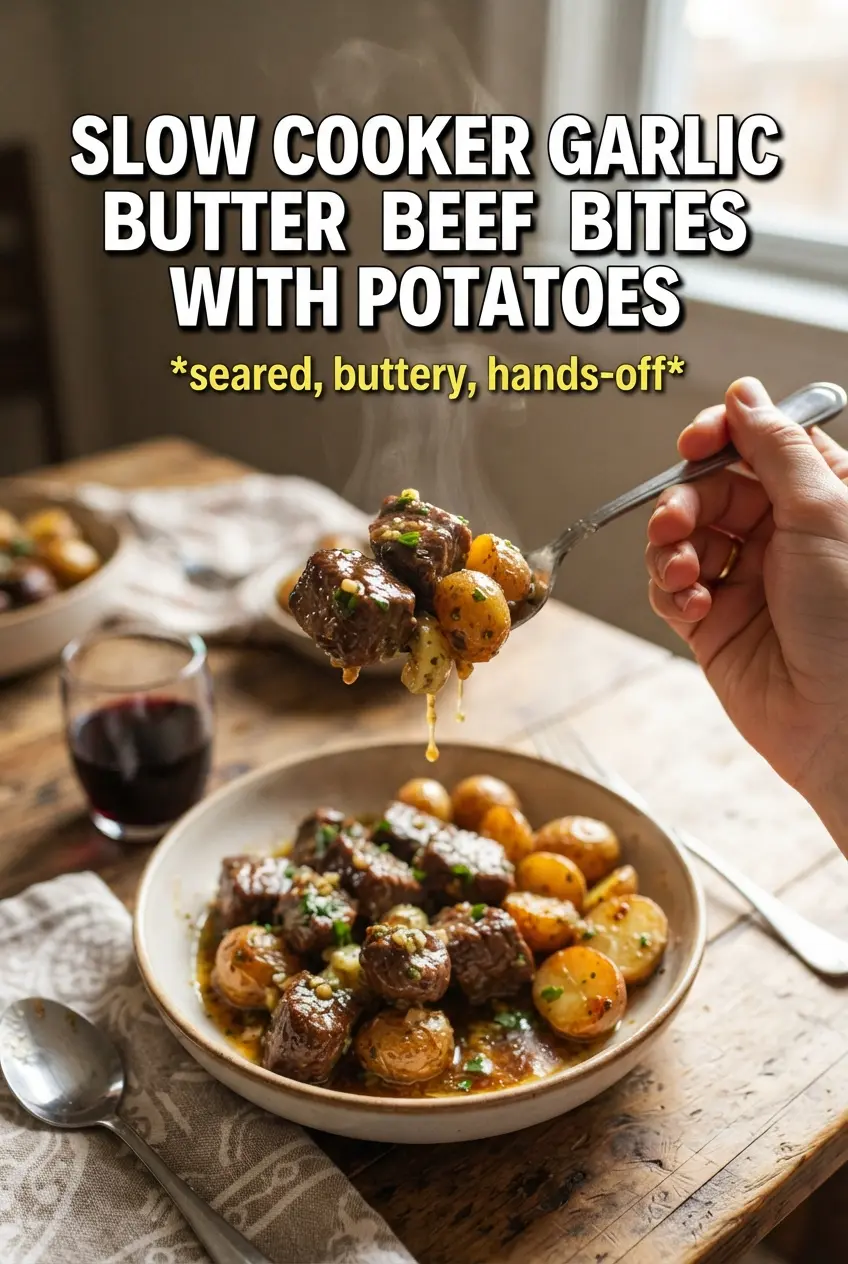
Slow Cooker Garlic Butter Beef Bites With Potatoes
Ingredients
Equipment
Method
- Season the beef cubes with salt, pepper, garlic powder, onion powder, and smoked paprika until evenly coated.
- Place the baby potatoes in the bottom of the slow cooker, then nestle the seasoned beef on top.
- Scatter the minced garlic and cubed butter over everything so it melts into the sauce as it cooks.
- Pour the beef broth and Worcestershire around the sides, then sprinkle Italian seasoning over the top.
- Cook on Low 6-8 hours (or High 3-4 hours) until the beef is tender.
- Stir gently to coat everything in the garlic butter sauce.
- Serve with fresh parsley and parmesan.