The first thing I notice when the beef hits the skillet is how quickly the kitchen starts smelling like dinner. A good sear takes a little attention, but it gives this slow cooker wine braised beef stew a deeper, richer base than putting everything in the cooker raw. I brown the chuck in batches, then use that same skillet to build a smooth sauce from the onion, tomato paste, wine, and broth.
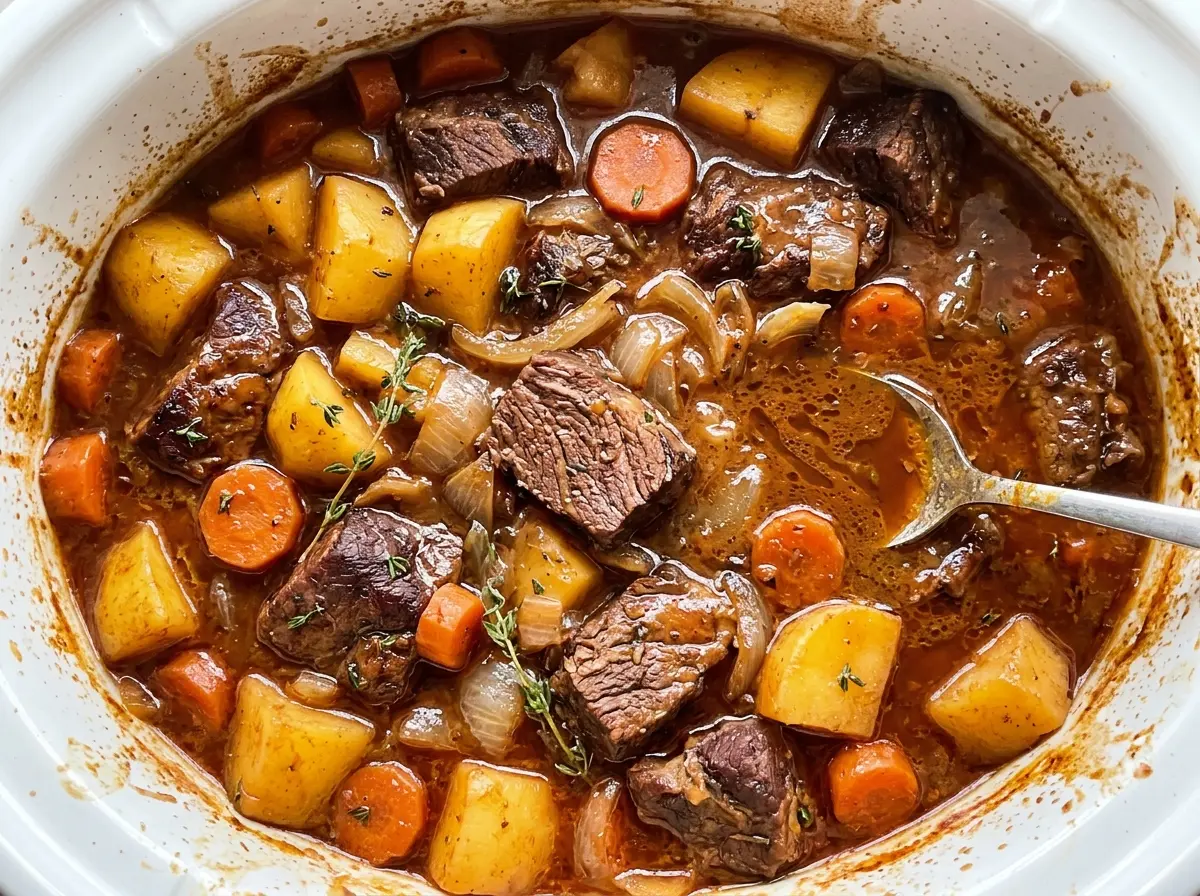
The vegetables go in at the start, where they have hours to soften and share their flavor with the gravy. Yukon Gold potatoes hold their shape through the long cook, while carrots turn tender without disappearing into the sauce. Once the beef pulls apart easily with a fork, the stew is ready: dark, savory gravy around tender beef and vegetables.
Kitchen Note
Pat the beef dry until the surface no longer looks damp before seasoning it. If the pieces are wet, that moisture has to cook off before they can brown, and the meat is more likely to turn gray than develop a deep crust.
Save this slow cooker wine braised beef stew for the days you want fork-tender beef, soft vegetables, and a deeply savory gravy waiting at dinner.
Why the Potatoes and Carrots Go In at the Start
Slow cookers are good at holding a steady, gentle heat, but they don’t give vegetables the quick, controlled cooking you get in a skillet. Putting the potatoes, carrots, and mushrooms in from the beginning gives each one time to become tender while the beef braises. It also lets the mushrooms release their earthy flavor into the cooking liquid instead of leaving them tasting like a separate add-on.
Cut size matters over a long cook. The beef and potatoes are cut into similarly generous pieces, while the carrots are a little smaller; that gives the denser vegetables enough time to soften without turning every piece into mush. Resist the urge to dice them finely. Bigger chunks are easier to lift out with a spoon and keep their shape better over several hours in the slow cooker.
There’s a useful balance here: the vegetables get tender, but the beef still leads the stew. If you cut them much smaller, they’ll soften sooner than the chuck and lose their distinct texture before the meat is ready. Keeping the pieces close to the listed sizes gives you a bowl with recognizable chunks and gravy coating every bite.
What the Chuck, Wine, and Flour Each Bring to the Gravy
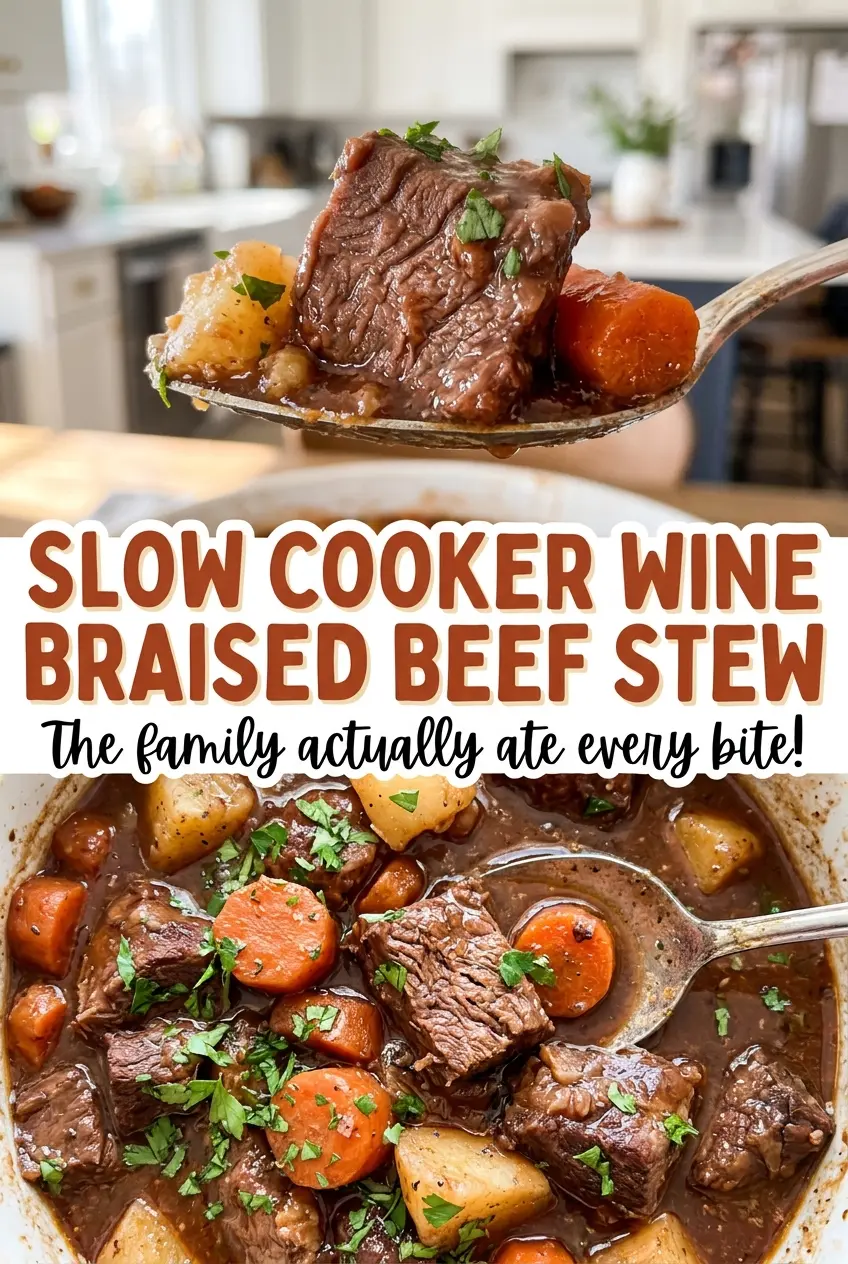
- Beef chuck — Chuck has enough connective tissue to become tender during a long, slow braise, and it gives the cooking liquid a full, beefy body. Choose pieces with some marbling rather than extremely lean stew meat. If you need another cut, boneless short ribs work, though they’ll make a richer, fattier stew.
- Dry red wine — Wine brings acidity and a deep, rounded flavor that broth alone won’t quite reproduce. Use a dry red you’d be happy to drink; there’s no need for an expensive bottle. A light-bodied Pinot Noir or a dry Cabernet Sauvignon both work. For a wine-free version, use broth as described below.
- Tomato paste and flour — Tomato paste adds concentrated savoriness, and flour thickens the sauce before it goes into the cooker. A tube of tomato paste is handy if you cook with it often, but canned paste works just as well. For a gluten-free version, use a cup-for-cup gluten-free flour blend that’s designed to replace all-purpose flour in cooking.
- Yukon Gold potatoes and carrots — Yukon Golds stay more intact than russets during a long braise, and their creamy centers suit the gravy. Red potatoes are a reasonable swap, cut to the same size; russets tend to break down more. Choose firm carrots, then cut them into even pieces so they soften at a similar pace.
- Cremini mushrooms — Creminis bring a deeper, earthier note than white button mushrooms, but button mushrooms can replace them in the same cut. Pick mushrooms that are firm and dry-looking. Quartering them gives the pieces enough size to remain distinct after the long cook.
- Beef broth and Worcestershire sauce — Low-sodium broth gives you room to season the stew without the sauce becoming too salty as it concentrates. Worcestershire adds a savory, tangy note; if you’re cooking gluten-free, use a gluten-free Worcestershire sauce.
How to Build the Wine Gravy Before the Slow Cooker Takes Over
Brown the Chuck in Batches
Season the dried beef with kosher salt and black pepper. Heat the vegetable oil in a 12-inch skillet over medium-high heat, then brown the meat in batches for about 2 to 3 minutes per side. Look for browned surfaces rather than trying to cook the pieces through. Transfer each batch to a 6-quart slow cooker.
Cook the Aromatics and Flour
Reduce the skillet heat to medium and cook the diced onion for 4 minutes, stirring occasionally, until it starts to soften. Stir in the tomato paste and cook it for 1 minute. Add the minced garlic and flour, then cook for another minute, stirring so the flour coats the onion mixture instead of clumping in one spot. This short cook takes away the raw flour taste.
Whisk the Sauce Until Smooth
Gradually whisk in the wine and beef broth, scraping the browned bits from the skillet as the liquid loosens them. Stir in the Worcestershire sauce and dried thyme, then bring the sauce to a simmer. Cook for 2 minutes, stirring, until it looks smooth. If you rush the liquid in all at once, the flour mixture is more likely to leave lumps behind.
Let the Slow Cooker Finish the Braise
Add the potatoes, carrots, mushrooms, and bay leaf to the slow cooker, then pour the sauce over everything. Cover and cook on LOW for 8 to 9 hours or HIGH for 4 to 5 hours. The beef should be fork-tender and the vegetables tender; if the beef still resists a fork, give it more time on the same setting. Discard the bay leaf and stir the stew before serving.
Easy Swaps for Wine-Free, Gluten-Free, or More Herbal Stew
Make It Without Red Wine
Replace the wine with the same amount of low-sodium beef broth. The stew will still have a savory gravy, but it’ll taste less bright and complex because wine’s acidity and fruit notes are missing.
Make the Stew Gluten-Free
Use a cup-for-cup gluten-free flour blend in place of the all-purpose flour, and choose gluten-free Worcestershire sauce. Cook the flour blend with the onion mixture just as you would regular flour. The gravy may have a slightly different finish depending on the blend, but this keeps the same skillet-built method.
Give It a Rosemary Note
Swap the dried thyme for half as much dried rosemary. Rosemary is more assertive and piney, so using less keeps it from taking over the wine and beef. Stir it into the skillet with the Worcestershire sauce.
Storage and Reheating
- Refrigerator: Store leftovers in a covered container for 3 to 4 days. The gravy thickens as it chills, and the vegetables soften a little more.
- Freezer: Freeze in airtight portions for up to 3 months. The beef and gravy freeze well, though the potatoes may be softer after thawing; thaw overnight in the refrigerator.
- Reheating: Warm gently in a saucepan over medium-low heat, stirring now and then, until it reaches 165°F. If the gravy has thickened too much, loosen it with a splash of beef broth; high heat can scorch the bottom before the center warms through.
Questions That Come Up With Slow Cooker Beef Stew
Slow Cooker Wine Braised Beef Stew
Ingredients
Equipment
Method
- Pat the beef dry and season it with the salt and pepper.
- Heat the oil in a 12-inch skillet over medium-high heat.
- Brown the beef in batches, about 2 to 3 minutes per side, then transfer it to a 6-quart slow cooker.
- Reduce the heat to medium, add the onion to the skillet, and cook for 4 minutes, stirring occasionally.
- Stir in the tomato paste and cook for 1 minute.
- Add the garlic and flour and cook for 1 minute.
- Gradually whisk in the wine and broth, scraping up browned bits.
- Stir in the Worcestershire sauce and thyme.
- Bring the sauce to a simmer and cook for 2 minutes, stirring, until the sauce is smooth.
- Add the potatoes, carrots, mushrooms, and bay leaf to the slow cooker.
- Pour the sauce into the slow cooker.
- Cover and cook on LOW for 8 to 9 hours or HIGH for 4 to 5 hours, until the beef is fork-tender and the vegetables are tender.
- Discard the bay leaf and stir the stew before serving.