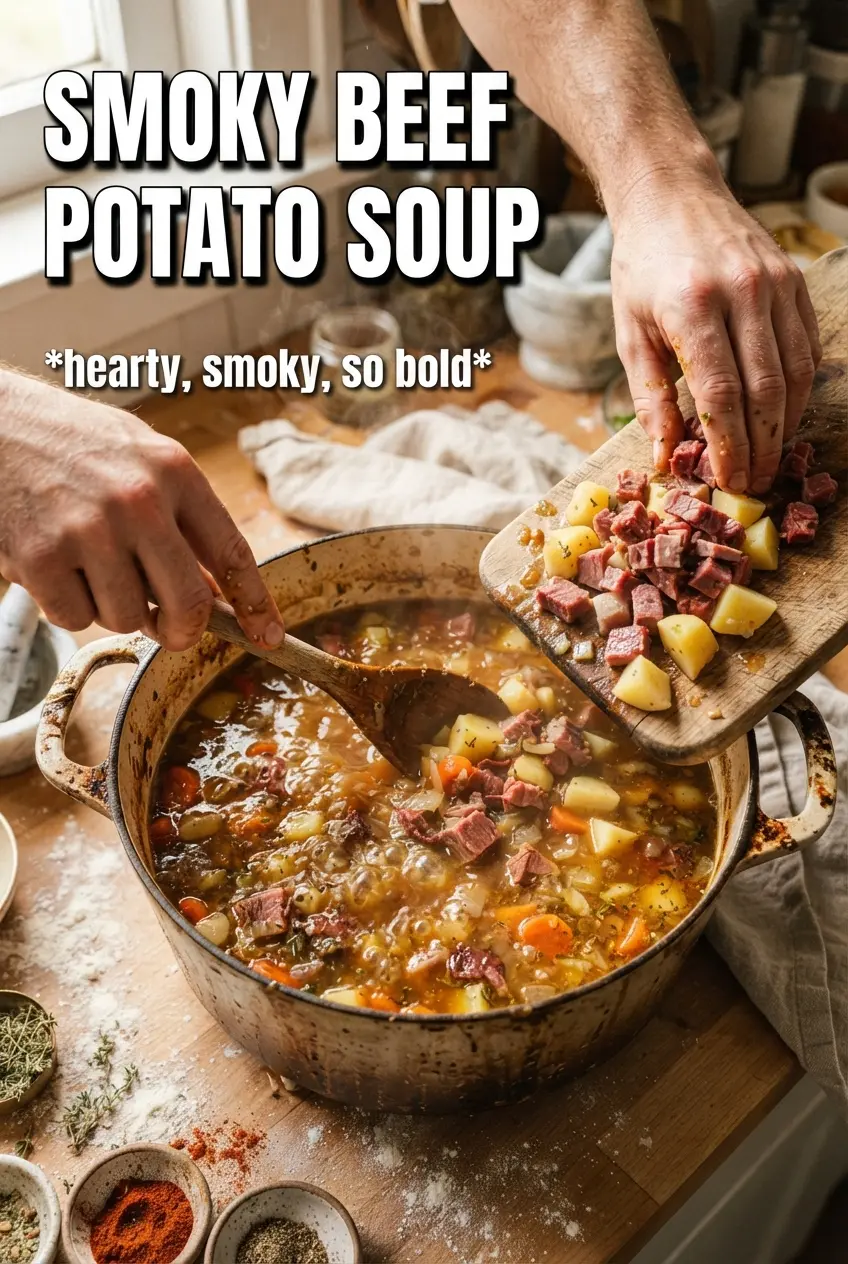
Deep, smoky broth and tender chunks of beef make this soup feel hearty from the first spoonful. The potatoes break down just enough to thicken the pot without turning it gluey, and the fire-roasted tomatoes add a dark, rich base that tastes like it simmered all afternoon. It eats like a full meal, not a starter, which is exactly why it keeps showing up when dinner needs to be filling without being fussy.
The key is building flavor in layers. First, the beef gets a hard sear so the pot starts with browned bits instead of plain broth. Then the smoked paprika, cumin, and chipotle bloom in the hot fat before the liquid goes in, which pulls their flavor deeper into the soup instead of leaving them flat. Yukon gold potatoes work better than starchy russets here because they hold their shape while still making the broth feel silky.
Below you’ll find the searing trick that keeps the beef tasting rich instead of boiled, plus the ingredient swaps that still keep the soup smoky and satisfying. There’s also a storage note for leftovers, because this one reheats beautifully the next day.
The beef got that deep browned edge, and the broth had so much smoky flavor before the potatoes even went in. I loved that the potatoes held their shape and didn’t fall apart after reheating the next day.
Save this smoky beef potato soup for the nights when you want a smoky, hearty one-pot dinner with rich broth and tender potatoes.
The Sear Is Where the Soup Gets Its Depth
If the beef goes into the pot pale, the soup tastes flat no matter how long it simmers. A deep brown crust on the meat gives you the flavor base that broth alone can’t provide, and that browned fond on the bottom of the pot is what makes the whole soup taste layered instead of one-note. Don’t crowd the pot. If the pieces are steaming, they’re not searing, and you’ll lose the rich edge that makes this soup worth making.
After the beef comes out, the vegetables go into the same pot so they pick up all that flavor left behind. The paprika, cumin, and chipotle need that hot fat for just a minute before the broth goes in. That short bloom time wakes them up without burning them, which is what happens when spices sit on high heat too long with no liquid to protect them.
What Each Ingredient Is Doing in This Pot

- Beef stew meat or chuck — Chuck gives you the best balance of richness and tenderness after simmering. Stew meat works fine if the pieces are cut evenly, but any large chunks should be trimmed so they cook at the same pace.
- Yukon gold potatoes — These hold their shape better than russets and bring a naturally buttery texture to the soup. If you swap in russets, the soup will thicken more, but the potatoes will soften faster and can start to break apart.
- Fire-roasted tomatoes — These deepen the broth without making it taste tomato-heavy. Plain diced tomatoes will work in a pinch, but you’ll lose some of that darker, slightly charred note that supports the smoked paprika.
- Smoked paprika, cumin, and chipotle powder — This trio builds the smoky backbone of the soup. Regular paprika won’t give you the same depth, and chipotle powder brings a little heat, so reduce it if you want a milder bowl.
- Worcestershire sauce — It quietly boosts the beefiness and rounds out the tomato acidity. You don’t taste it directly, but the soup feels fuller with it in the pot.
Building the Soup in the Right Order
Brown the Beef First
Season the beef with salt, pepper, and part of the smoked paprika, then sear it in hot oil until the pieces have a dark crust on several sides. The goal is not to cook it through at this stage. If the pan looks crowded or the meat starts releasing a lot of liquid, work in batches so the beef browns instead of steaming.
Cook the Aromatics in the Fond
Add the onion, carrots, and celery to the same pot and stir them through the browned bits until they start to soften and take on color. Garlic goes in at the end because it burns fast and turns bitter if it sits in the pot too long. When the vegetables have picked up the color from the pan, stir in the remaining spices and let them cook for a minute until they smell intense and smoky.
Simmer Until the Beef Starts Relaxing
Pour in the broth, tomatoes, Worcestershire sauce, and browned beef, then bring everything to a boil before dropping the heat to a steady simmer. This first simmer matters because it starts tenderizing the beef before the potatoes go in. Keep the pot at a gentle bubble, not a rolling boil, or the beef can tighten up instead of turning tender.
Add the Potatoes Last
Once the beef has had time to soften, stir in the potatoes and cook until both the beef and potatoes are tender. The potatoes should be easy to pierce, but they shouldn’t collapse the second you touch them with a spoon. If the soup looks too thick near the end, add a splash more broth; if it looks thin, let it simmer uncovered for a few minutes so it tightens up naturally.
How to Adapt This for a Different Table
Make It Dairy-Free Without Changing the Texture
This soup is naturally dairy-free as written, which is one reason it works so well for a crowd. If you want a creamier bowl, add a splash of unsweetened oat milk or coconut cream at the end, but only after the heat is low so it stays smooth.
Use Ground Beef When You Need a Faster Pot
Ground beef shortens the simmering time and gives you a softer, more spoonable soup. Brown it well before adding the vegetables, and drain off excess fat if the pot starts looking greasy. You’ll lose some of the chew from chuck, but the smoky broth still carries the dish.
Make It Milder for Kids or Heat-Sensitive Eaters
Cut the chipotle powder in half or leave it out completely. The soup will still taste smoky from the paprika and browned beef, just without the slow burn at the back of the throat. Add black pepper at the table instead of in the pot if you want separate heat control.
Storage and Reheating
- Refrigerator: Store in an airtight container for up to 4 days. The broth thickens as it sits, and the potatoes will soften a bit more after chilling.
- Freezer: Freeze for up to 3 months, but the potatoes may turn grainier after thawing. For the best texture, cool the soup completely before freezing and leave a little space at the top of the container.
- Reheating: Rewarm gently on the stove over medium-low heat until hot. Don’t boil it hard or the potatoes can break down and the beef can dry out; add a splash of broth if the soup has tightened up in the fridge.
Answers to the Questions Worth Asking
Smoky Beef Potato Soup
Ingredients
Equipment
Method
- Season the beef with salt, pepper, and 1 tablespoon smoked paprika. Heat 2 tablespoons olive oil in a Dutch oven over high heat and sear the beef until deeply browned on all sides, then remove the beef.
- Sauté the onion, carrots, and celery in the same pot for 5 minutes. Add the garlic and cook for 1 minute.
- Stir in the remaining smoked paprika, cumin, and chipotle powder, then cook for 1 minute to bloom the spices.
- Add beef broth, fire-roasted tomatoes, Worcestershire sauce, and the browned beef to the pot, then bring to a boil. Reduce the heat to a simmer and cook for 25-30 minutes.
- Add the potatoes and simmer for 20 minutes more, until the beef and potatoes are tender. Season with salt and pepper to taste, then garnish with fresh parsley.