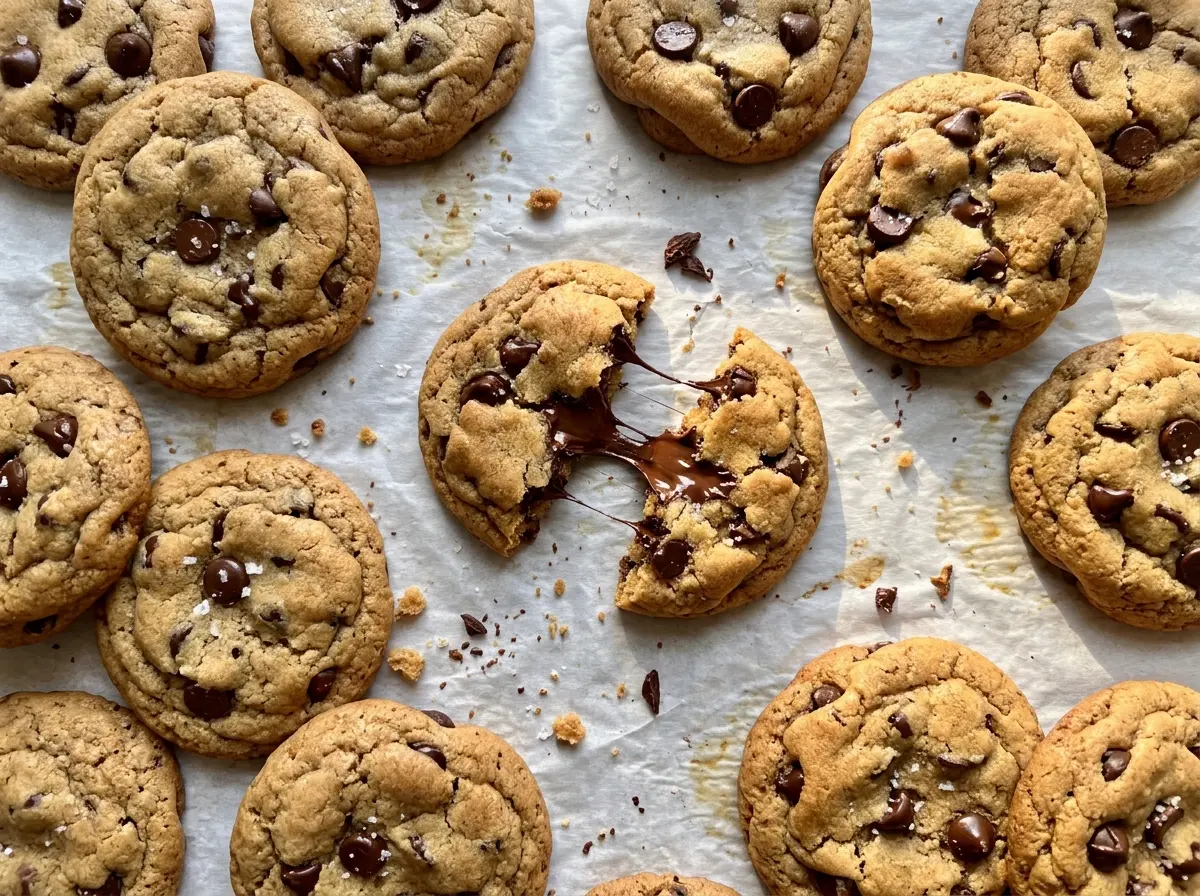
When the edges are golden but the centers still look soft, it’s hard not to leave the cookies in for another minute. Resist that urge. These soft chocolate chip cookies finish setting on the baking sheet, and pulling them at the right moment is what keeps the middle tender instead of dry.
I use both brown sugar and granulated sugar for a cookie that holds its shape but stays soft, and an extra egg yolk gives the centers a richer, more tender texture. A short rest in the refrigerator firms the dough before baking, making it easier to portion neatly. The result is a classic chocolate chip cookie with lightly golden edges, soft centers, and chocolate in every bite.
Kitchen Note
Give the cookies their full five minutes on the baking sheet before moving them. They’re delicate right out of the oven, and that short rest lets the edges firm up without drying out the centers.
Save these soft chocolate chip cookies for a batch with tender centers, golden edges, and plenty of semisweet chocolate.
Why the Extra Yolk Keeps These Cookies Soft
A soft cookie isn’t just an underbaked cookie. It needs enough structure to hold together, with a tender middle that doesn’t turn cakey as it cools. The extra yolk helps strike that balance: it adds richness and tenderness without adding the extra white that comes with another whole egg.
The sugars do different jobs, too. Brown sugar brings moisture and a deeper, caramel-like note, while granulated sugar helps the edges bake up neatly. Together, they give the dough enough structure for a rounded cookie while keeping the centers soft. That balance is why I don’t swap all the brown sugar for white sugar or add extra flour to make the dough easier to handle.
There’s also a small but useful difference between creamy dough and merely blended dough. Beating the butter and sugars until they look lighter gives the mixture a smooth, cohesive start. Once the flour goes in, though, stop as soon as the dry streaks disappear; extra mixing can make the cookies tougher than you want.
What Each Ingredient Brings to the Cookie

- All-purpose flour — It gives the cookies enough structure to stay rounded while still yielding a soft bite. Spoon it lightly into the measuring cup and level the top; packing flour into the cup can leave you with a dry, stiff dough. A standard all-purpose flour is a good choice here.
- Unsalted butter — Softened butter creams smoothly with the sugars and lets you control the salt in the dough. It should give slightly when pressed but shouldn’t look shiny or melted. If it’s too warm, the mixture can become greasy instead of creamy.
- Brown and granulated sugars — Keep both in the mix rather than relying on just one. Packed brown sugar contributes moisture, while granulated sugar helps the cookies hold their shape and gives the edges a little definition.
- Egg and egg yolk — Room-temperature eggs blend more evenly into the creamed butter. Set them out ahead of time so they aren’t cold when they go into the bowl; the yolk is part of what gives the centers their tender texture.
- Semisweet chocolate chips — Semisweet chips balance the sweet dough and hold their shape in the oven, so you get distinct bites of chocolate. Choose chips you like eating on their own; there’s no need for a premium brand if the flavor is good to you.
From Creamed Butter to Soft Centers
Get the Oven and Dry Ingredients Ready
Heat the oven to 350°F and line two 18×13-inch baking sheets with parchment paper. Whisk the flour, baking soda, and fine salt together in a medium bowl so the leavener is distributed before it reaches the dough. Keep this bowl nearby once you start mixing. That makes it easier to add the dry mixture without stopping to measure or search for ingredients.
Cream the Sugars, Then Add the Eggs
Beat the softened butter with both sugars in a large bowl using an electric mixer on medium speed for 2 to 3 minutes. The mixture should look creamy and lighter in color, not like separate butter and sugar granules. Beat in the room-temperature egg and yolk one at a time, then add the vanilla and mix until combined. If the mixture looks a little uneven as you add the eggs, keep mixing just until everything comes together.
Mix Gently and Chill the Dough
Add the flour mixture on low speed and stop as soon as no dry streaks remain. Stir in the chocolate chips until they’re distributed through the dough; scraping the bottom of the bowl helps catch any chips or flour left there. Cover the bowl and refrigerate the dough for 30 minutes. Don’t keep mixing once the flour disappears, since working the dough longer can make the baked cookies less tender.
Scoop, Bake, and Let the Edges Set
Scoop rounded 1 1/2-tablespoon portions onto the prepared sheets, placing 12 on each sheet with about 2 inches between portions. Bake one sheet at a time for 10 to 12 minutes. Look for lightly golden, set edges while the centers still look soft; the cookies will continue to settle as they cool. Leave them on the baking sheets for five minutes, then move them to a wire rack.
Easy Swaps That Keep the Cookie Texture Right
Use chopped semisweet chocolate
Replace the chips with 12 ounces of chopped semisweet chocolate. The uneven pieces melt into a mix of small chocolate flecks and larger pockets, so the cookies look a little more rustic and each one gets a different distribution.
Make them gluten-free
Use a measure-for-measure gluten-free baking flour blend in place of the all-purpose flour. Choose a blend formulated for baking rather than a single-ingredient flour; the cookies may have a slightly more delicate crumb, so let them cool fully before handling.
Choose bittersweet chocolate
Bittersweet chips work in place of semisweet for a deeper, less sweet chocolate bite. The cookie itself stays the same, but the contrast between the sweet dough and chocolate becomes more pronounced.
Storage and Reheating
- Room temperature: Store cooled cookies in an airtight container for up to 4 days. They’ll soften a little as they sit.
- Freezer: Freeze fully cooled cookies in an airtight freezer-safe container for up to 2 months. Thaw at room temperature before serving.
- Reheating: Warm a cookie in the microwave for about 8 seconds if you’d like the chocolate soft again. Longer heating can make the cookie hot and chewy rather than tender.
Questions That Come Up While Baking These Cookies
Soft Chocolate Chip Cookies
Ingredients
Equipment
Method
- Heat the oven to 350°F.
- Line two 18x13-inch baking sheets with parchment paper.
- Whisk the flour, baking soda, and salt together in a medium bowl.
- Beat the butter, brown sugar, and granulated sugar in a large bowl with an electric mixer on medium speed for 2 to 3 minutes, until creamy and lighter in color.
- Beat in the egg and egg yolk, one at a time.
- Beat in the vanilla until combined.
- Mix in the flour mixture on low speed just until no dry streaks remain.
- Stir in the chocolate chips until evenly distributed.
- Cover the dough and refrigerate for 30 minutes.
- Scoop rounded 1 1/2-tablespoon portions onto the prepared sheets, placing 12 portions on each sheet and spacing them about 2 inches apart.
- Bake one sheet at a time for 10 to 12 minutes, until the edges are lightly golden and set but the centers still look soft.
- Cool the cookies on the sheets for 5 minutes.
- Transfer the cookies to a wire rack to cool.