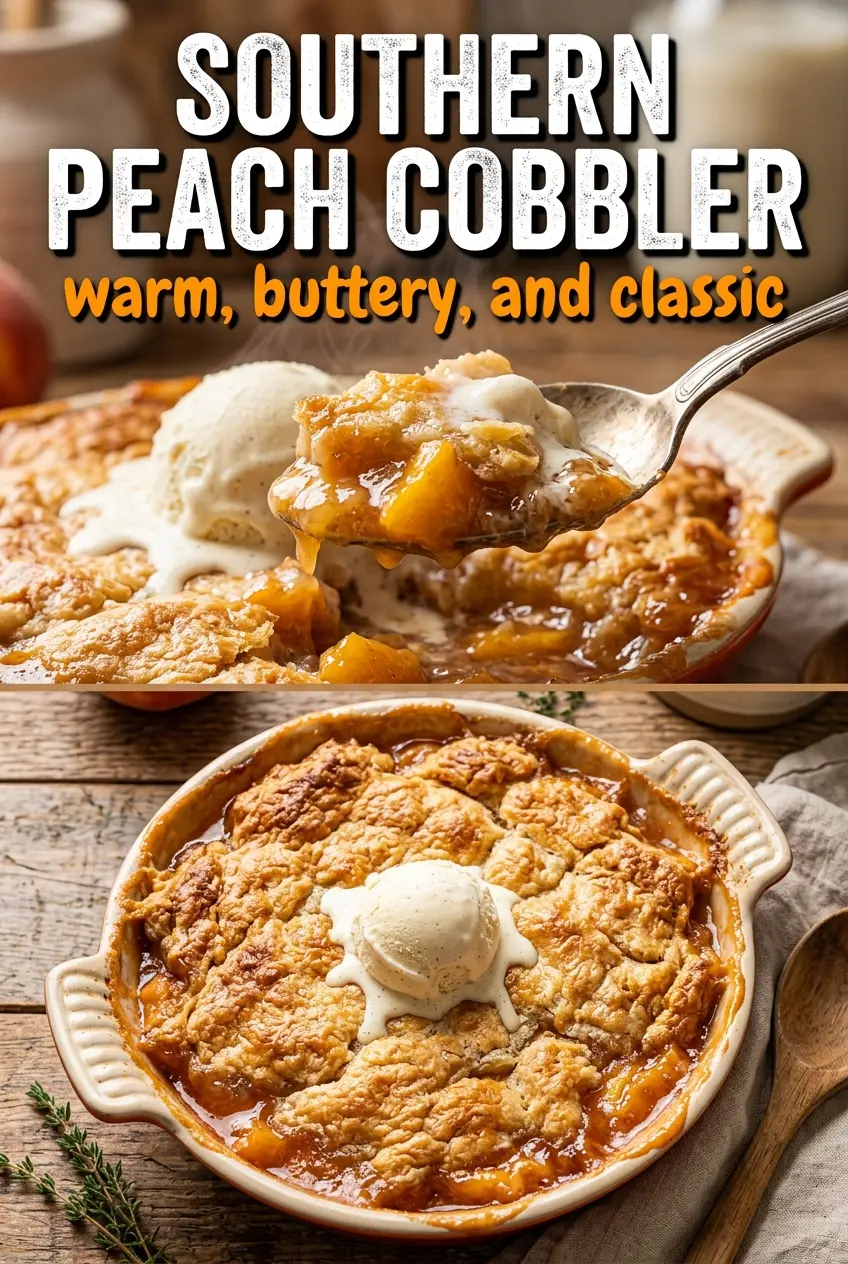
Warm peach cobbler lands with that perfect contrast everyone hopes for and too often misses: juicy fruit under a buttery crust that bakes up golden at the edges and tender in the middle. The best part is the way the topping rises up around the peaches as it bakes, creating pockets of syrupy fruit and crisp, browned corners in the same pan.
What makes this version work is the order of the ingredients. The butter goes in the pan first so the batter can bake into it instead of sitting on top of a dry dish, and the batter itself stays loose enough to climb around the peaches in the oven. A little lemon juice keeps the filling bright, while cinnamon gives the peaches enough warmth without covering up their flavor.
Below, you’ll find the exact timing that keeps the crust from turning gummy, plus a few smart swaps for canned peaches, frozen fruit, and making the dessert a little more your own.
The batter rose right through the peaches and the top baked into the prettiest golden crust. I used canned peaches and it still came out with that old-fashioned, bakery-style texture.
Save this Southern Peach Cobbler for when you want a bubbling peach dessert with a buttery crust that bakes itself around the fruit.
The Batter-and-Butter Trick That Keeps Cobbler From Turning Dense
The biggest mistake with peach cobbler is stirring everything together like a cake batter. That gives you a heavy, uniform crumb instead of the layered texture that makes cobbler worth baking. Here, the melted butter sits in the dish first, then the batter goes on top, and the peaches are added last. In the oven, the batter rises around the fruit and absorbs just enough butter to brown and crisp at the edges.
The other thing that matters is batter thickness. If it looks silky and pourable, it will spread and bake into a tender crust. If it gets overmixed, the baking powder starts losing steam before it reaches the oven, and the topping bakes up tougher than it should. Stir just until the flour disappears.
What Each Ingredient Is Doing in This Cobbler

- Unsalted butter — This is the foundation of the crust. Melting it in the baking dish lets the batter bake directly into the fat, which gives you those crisp, caramelized edges. Salted butter works in a pinch, but the flavor will be a little less controlled.
- All-purpose flour — Regular flour gives the cobbler its tender, cakey structure without making it heavy. Don’t swap in self-rising flour unless you also reduce the baking powder, or the topping can puff oddly and taste too leavened.
- Granulated sugar — Half goes into the batter and half sweetens the peaches. That split keeps the topping balanced so it doesn’t get cloying, especially if your peaches are already ripe and juicy.
- Milk — Milk loosens the batter just enough to pour over the butter. Whole milk gives the richest result, but 2% works fine. Avoid thick cream here; it can make the batter heavy.
- Peaches — Fresh peaches bring the best aroma, but canned peaches are absolutely workable when fresh ones aren’t at their peak. If using canned, drain them well so the cobbler doesn’t turn soupy.
- Cinnamon and lemon juice — Cinnamon gives the filling warmth, while lemon juice keeps the peaches bright and prevents the sweetness from feeling flat. That little hit of acidity matters more than people expect.
Building the Cobbler in the Right Order
Melting the butter first
Set the butter in the baking dish and let the oven melt it as it preheats. You want a glossy pool of melted butter, not browned butter at this stage. If the butter starts to darken before the batter goes in, the oven is running hot and the crust can bake too fast around the edges.
Mixing the batter just until it comes together
Whisk the dry ingredients, then stir in the milk until the batter is smooth and loose. A few small lumps are fine. What you don’t want is a stiff batter, because that won’t rise evenly over the fruit. Overmixing tightens the gluten and gives you a tougher top.
Layering without stirring
Pour the batter over the butter and leave it alone. Do not stir. The separation is what creates the cobbler’s layered texture, with butter underneath, batter in the middle, and peaches on top. Spoon the sugared peaches evenly over the batter and expect the batter to rise up through the fruit as it bakes.
Baking until the top is deeply golden
Bake until the top is golden and the filling is bubbling around the edges, usually 45 to 50 minutes. The center should look set, not wet or sloshy, and the crust should have browned spots where it met the butter. Let it rest for about 10 minutes so the juices thicken slightly before serving.
Three Ways to Make This Peach Cobbler Work for Your Kitchen
Use canned peaches when fresh ones aren’t ready
Drain the peaches well before tossing them with the sugar, cinnamon, and lemon juice. Canned fruit gives you a softer, sweeter filling and a more uniform texture, but it can turn watery if you skip the draining step.
Make it dairy-free
Use a plant-based butter that melts cleanly and an unsweetened non-dairy milk like almond or oat. The crust will still bake up tender, though the flavor will be a little less rich and the edges won’t brown quite as deeply as they do with real butter.
Add a little spice if your peaches are bland
A pinch of nutmeg or a little extra cinnamon gives the filling more depth, especially if the peaches taste mild. Keep the addition light; the fruit should still taste like peaches first.
Storage and Reheating
- Refrigerator: Store covered for up to 4 days. The topping softens a bit as it sits, but the flavor stays good.
- Freezer: It freezes reasonably well for up to 2 months. Wrap tightly after cooling completely, then thaw overnight in the fridge before reheating.
- Reheating: Warm in a 300°F oven until heated through. The oven brings back the best texture; the microwave works, but it softens the crust and can make the fruit syrupy.
Questions I Get Asked About This Recipe
Southern Peach Cobbler
Ingredients
Equipment
Method
- Preheat the oven to 350°F and place the butter in a 9x13-inch baking dish, melting it in the oven as it preheats. Look for the butter to be fully melted and glossy before you proceed.
- Whisk together the flour, ½ cup sugar, baking powder, and salt until evenly combined. Add the milk and stir just until combined with no dry streaks.
- Pour the batter over the melted butter in the baking dish—do not stir. The batter should sit on top of the butter with visible separation.
- Toss the peaches with the remaining sugar, cinnamon, and lemon juice until evenly coated. Make sure each slice is lightly sugared and speckled with cinnamon.
- Spoon the peach mixture evenly over the batter. The batter will lift and rise around the fruit as it bakes.
- Bake for 45–50 minutes at 350°F, until the top is golden and bubbling. You should see active bubbling around the edges and a browned crust on top.
- Let cool for 10 minutes before serving warm. The filling will thicken slightly so it holds together when scooped.
- Serve warm, ideally with a scoop of vanilla ice cream. The contrast of hot cobbler and cool ice cream should be immediate in each spoonful.