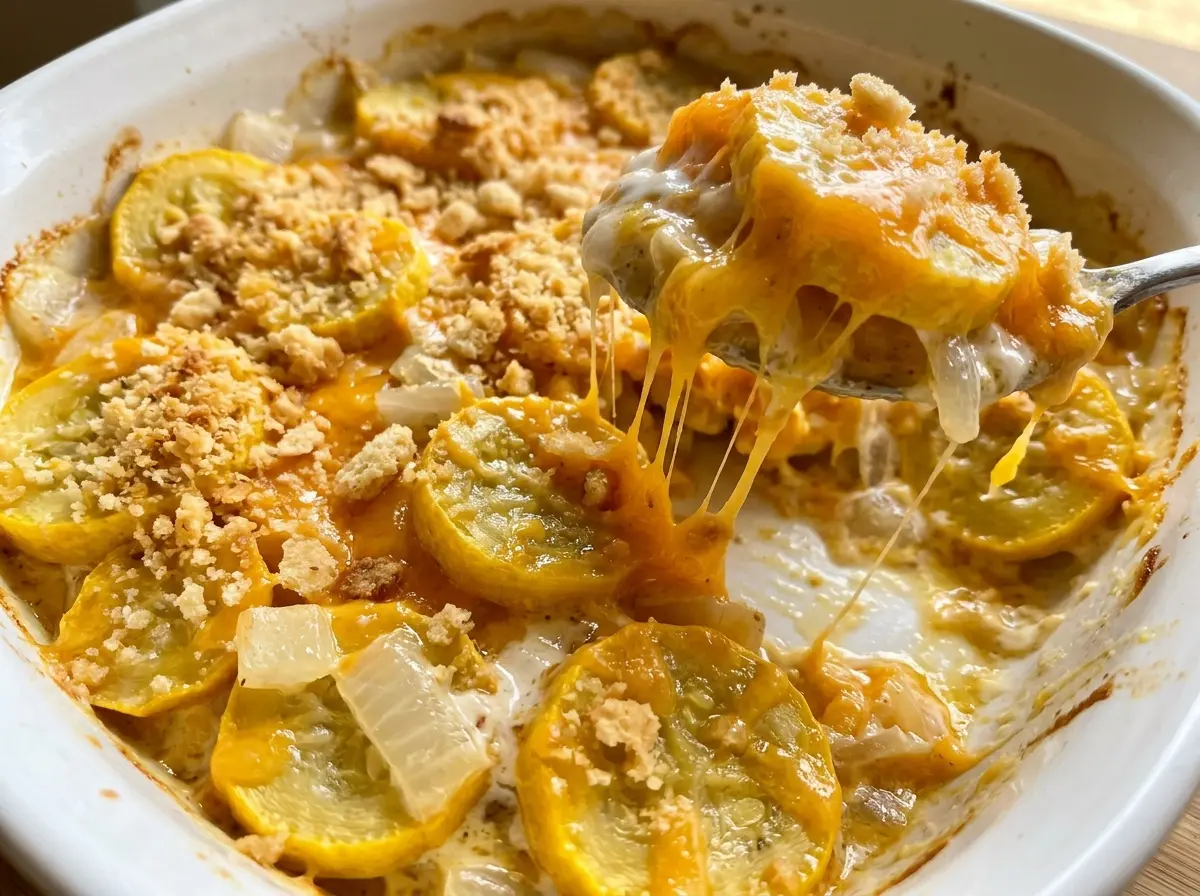
When the lid comes off the pot, the squash is tender and the onion has softened, but a little cooking liquid is still sitting at the bottom. That’s useful while the vegetables cook; it isn’t something I want carried into the baking dish. Southern squash casserole should have a soft, creamy middle beneath its golden cracker topping, not a loose filling that slides apart when you serve it. I keep the squash slices even so they cook at the same pace, and dice the onion small enough to blend into the filling.
The eggs and sour cream bring the vegetables together into a casserole, while sharp cheddar adds a savory note that stands up to the buttery crumbs. I like the contrast of that tender center with a crisp top, so I spread the cracker mixture evenly across the dish rather than leaving bare patches. Let the casserole rest after baking, and the filling settles into neat, hearty scoops.
Kitchen Note
Toss the crushed crackers with the melted butter until there are no dry pockets. That even coating helps the topping brown across the whole casserole instead of leaving pale, dusty patches.
Save this Southern squash casserole for its tender cheddar center and buttery cracker top, baked until golden and set.
Why a Watery Squash Casserole Won’t Set, Even With a Golden Top
Yellow summer squash releases liquid as it cooks, and the covered pot traps some of that steam. The added water helps the slices soften without scorching, but that cooking liquid needs to stay behind when you move on to the filling. If too much follows the squash into the bowl, the eggs and sour cream have to set around extra moisture, and the casserole can remain loose even while the cracker topping looks finished.
Give the squash mixture a thorough drain in a colander before it goes back into the pot to cool. The goal isn’t to dry the vegetables out; it’s to let the free liquid run off so the casserole has a creamy texture rather than a watery layer at the bottom. Because the filling is meant to be tender, don’t try to solve excess liquid by baking it much longer. That can darken the topping before the center has had time to set.
There’s also a useful difference between soft squash and a loose casserole. Tender slices are exactly what you want. What you don’t want is a puddle around them, which can make the serving spoon come up with liquid instead of a cohesive scoop.
The Ingredients That Give This Casserole Its Soft Center and Buttery Crust

- Yellow summer squash — Choose firm squash with smooth, unblemished skin; there’s no need to seek out unusually large or fancy ones. Slicing it evenly matters more than the variety of yellow squash, since pieces cut to the same thickness become tender at about the same time.
- Yellow onion — Finely diced onion softens into the filling and gives the squash a savory backbone without leaving large, crunchy pieces. A regular yellow onion is just right here; take the time to dice it small.
- Large eggs — Eggs help the filling hold together once baked. Stick with large eggs so the balance stays consistent; extra-large eggs add more liquid, while smaller ones contribute less structure.
- Sour cream — Sour cream adds tang and a creamy texture that plain milk won’t provide. If you need a substitute, plain full-fat Greek yogurt works in the same amount, though the filling will taste a little tangier and feel slightly firmer.
- Sharp cheddar — Sharp cheddar gives the filling a distinct cheese flavor rather than disappearing into the squash. A standard grocery-store shredded cheddar works; choose sharp over mild if you want the cheese to come through.
- Buttery round crackers — These bring both crunch and a buttery, lightly salted flavor to the top. Use fresh crackers so they crush cleanly; the inexpensive sleeve from the grocery aisle is a good fit.
- Unsalted butter — Melted butter carries through the crumbs and helps them brown. Unsalted butter keeps the topping’s seasoning from being harder to control, and the regular store brand is fine.
Cook the Squash Before the Egg Mixture Goes Anywhere Near It
Set Up the Baking Dish
Heat the oven to 350°F and coat a 9×13-inch baking dish with nonstick cooking spray. Get the dish ready before you mix the filling, so the squash mixture can go straight into the pan once it’s combined. A complete, light coating across the bottom and sides helps the casserole release cleanly when you serve it.
Soften the Squash and Onion
Combine the sliced squash, finely diced onion, water, and kosher salt in a 5-quart pot. Cover and cook over medium heat for 10–12 minutes, stirring once or twice. The squash should be tender when pierced, not falling apart into a mash. If the pieces are still firm, give them a little more time rather than turning up the heat.
Drain and Cool the Vegetables
Tip the squash mixture into a colander and let it drain well, then return it to the pot. Leave it to cool for 10–15 minutes, until it’s no longer steaming. The vegetables should still feel warm, but they shouldn’t send up a cloud of steam when stirred. Mixing steaming squash into the egg base can cook the eggs unevenly before the casserole reaches the oven.
Mix the Creamy Filling
In a large bowl, whisk the eggs with the sour cream and black pepper until the mixture looks smooth. Stir in the shredded cheddar, then fold in the cooled squash mixture. Use a broad spoon and mix just until the vegetables are coated; breaking up the squash at this point makes the finished filling less distinct.
Top and Bake Until Set
Toss the crushed crackers with the melted butter until evenly coated, then spread the squash mixture in the prepared dish and scatter the crumbs over it. Bake for 30–35 minutes, until the topping is golden brown and the center is set. Check the center with an instant-read thermometer; it should register 160°F. Let the casserole rest for 10 minutes before serving so the filling has a chance to settle.
How to Change the Cracker Crust Without Losing the Casserole’s Balance
Make the topping gluten-free
Replace the buttery round crackers with gluten-free buttery crackers, crushed to about 1 1/2 cups, and coat them with the same melted unsalted butter. The squash filling stays the same; the crumb size and crunch can vary a little by cracker brand.
Use Monterey Jack for a milder cheese flavor
Swap the shredded sharp cheddar for the same amount of shredded Monterey Jack. It melts into the filling and keeps the casserole cheesy, but the flavor will be gentler and less tangy than it is with sharp cheddar.
Storage and Reheating
- Refrigerator: Cover and refrigerate leftovers within 2 hours; they keep for 3–4 days. The squash softens a little more, and the cracker topping loses its crispness.
- Freezer: Freezing isn’t my first choice for this casserole. The squash can turn softer after thawing, and the cracker topping won’t keep its original crunch.
- Reheating: Warm portions in a 350°F oven, loosely covered with foil, until the center reaches 165°F. Uncover near the end if you’d like to bring back some crispness; reheating uncovered the whole time can dry out the edges before the middle is hot.
Answers to the Squash Casserole Questions That Come Up at the Stove
Southern Squash Casserole
Ingredients
Equipment
Method
- Heat the oven to 350°F and grease a 9x13-inch baking dish with nonstick cooking spray.
- Combine the squash, onion, water, and salt in a 5-quart pot. Cover and cook over medium heat for 10–12 minutes, stirring once or twice, until the squash is tender.
- Drain the squash mixture well in a colander, then return it to the pot and let it cool for 10–15 minutes, until it is no longer steaming.
- In a large bowl, whisk the eggs, sour cream, and black pepper, then stir in the cheddar and cooled squash mixture.
- Toss the crushed crackers with the melted butter until evenly coated.
- Spread the squash mixture in the prepared dish and scatter the cracker topping evenly over it.
- Bake for 30–35 minutes, until the topping is golden brown, the center is set, and the center registers 160°F.
- Let the casserole rest for 10 minutes before serving.