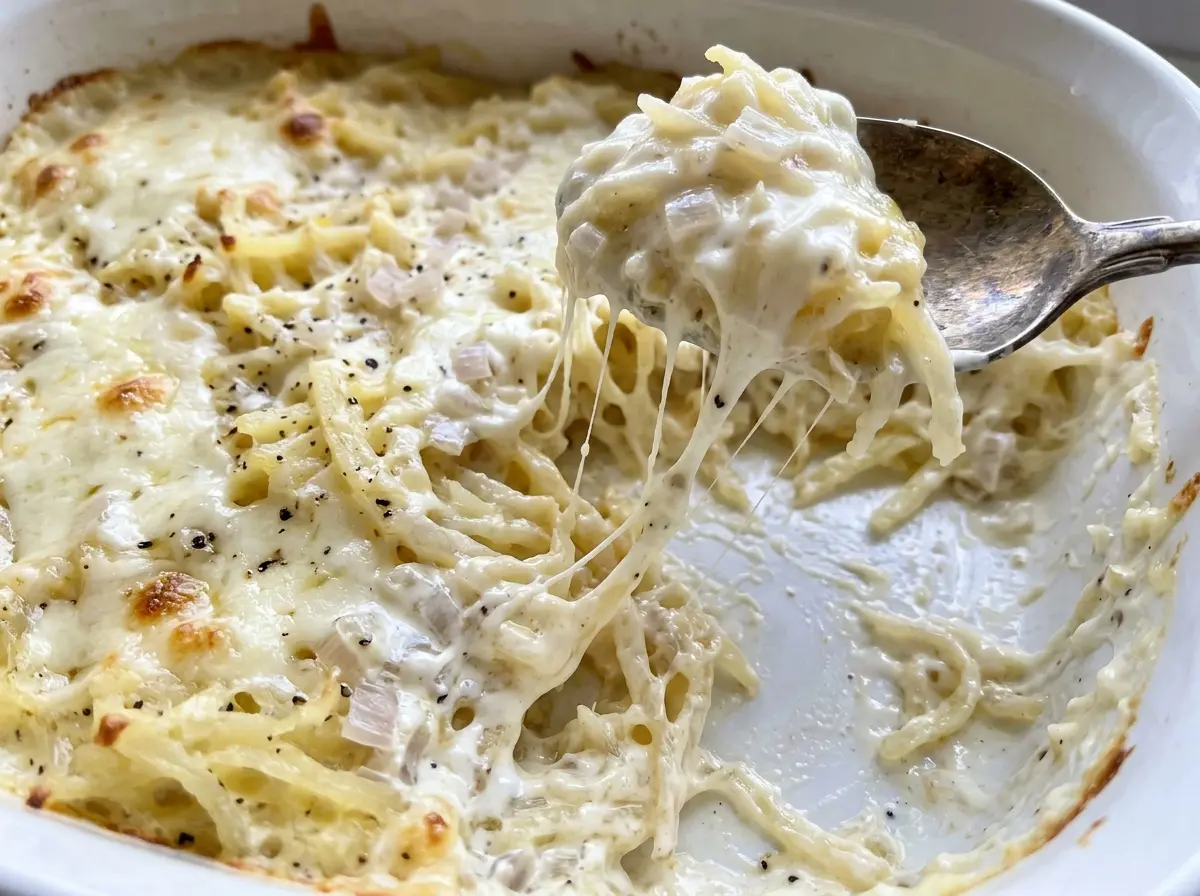
When the cheddar on this casserole turns golden, the edges look ready long before the middle does. I’ve learned to check the center instead of trusting the color alone. Steakhouse Potatoes Romanoff has the familiar comfort of a baked potato, but sour cream and sharp white cheddar turn it into a creamy, scoopable casserole with a browned top.
The russets are baked whole, then grated with their skins for a texture that’s hearty without becoming mashed. Shallots add a mild savory bite, and the cheese melts through the potato rather than sitting only on top. Give the potatoes their long chill before you start assembling, and you’ll have a casserole that’s easy to portion and full of tender, distinct shreds.
Kitchen Note
Fold just until the sour cream and cheese are distributed. If you keep stirring once everything is coated, the grated potatoes start to lose their strands and the casserole turns denser.
Save Steakhouse Potatoes Romanoff for a dinner that needs a creamy, sharp-cheddar side with a crisp golden top.
Why These Potatoes Need a Long Chill Before They Meet the Cheese
Hot baked potatoes are tender, but they’re also steamy and soft. Grating them at that point can turn the shreds into a clump before the sour cream even goes in. Chilling the potatoes completely firms the flesh, so the coarse grater leaves you with separate strands rather than a bowl of mashed potato.
That overnight pause also makes this dish easier to plan. Bake the russets, let them cool on a rack, and refrigerate them until cold; the hands-on work for the casserole comes later. Keep the skins on when you grate. They add a little texture and help the finished dish feel more like a baked potato than a smooth potato purée. The cold, grated russets are the reason each forkful holds together while still showing those potato shreds.
What Russets, Sour Cream, and Sharp Cheddar Each Bring to Romanoff

- Russet potatoes — Their starchy, fluffy flesh is well suited to baking and coarse grating. Choose potatoes that feel firm, without soft spots or green patches; waxier potatoes tend to give a tighter, less fluffy result. Scrub them well before baking since the skins stay on for grating.
- Sour cream — It brings the tang and creamy coating that makes this casserole distinct from plain cheesy potatoes. Regular sour cream gives a fuller texture than a thin, reduced-fat version. For a dairy-free adaptation, use a plain, unsweetened dairy-free sour cream-style product; the finished casserole will be less rich.
- Sharp white cheddar — Sharpness matters here because the cheese has to stand up to the potatoes and sour cream. A block you grate yourself melts into a more cohesive mixture, while packaged shredded cheese is a convenient option and still works. Sharp yellow cheddar is an easy swap if that’s what you have, though it will change the casserole’s color.
- Shallots — Their mild onion flavor adds savory depth without overpowering the cheddar. Mince them finely so they’re spread through the casserole instead of landing in large, sharp-tasting bites. If you prefer a gentler result, you can leave them out.
- Softened butter — It coats the baking dish so the casserole releases more easily and the edges don’t stick as it bakes. Let it soften enough to spread across the bottom and sides of the dish.
From Oven-Baked Russets to a Golden 9-Inch Casserole
Bake the russets until a knife slides through
Heat the oven to 400°F and pierce each potato several times with a fork. Set them directly on the oven rack and bake for 60 to 75 minutes. They’re ready when a knife slides easily into the centers; if the middle still feels firm, give them more time rather than relying on the skin’s appearance.
Cool, then refrigerate until completely cold
Move the baked potatoes to a rack and let them cool for 20 minutes. Refrigerate them until completely cold, at least 8 hours. Don’t try to rush this stage by grating warm potatoes; cold potatoes are much easier to handle and grate.
Grate and fold the filling together
Heat the oven to 350°F and grease a 9-inch square baking dish with softened butter. Coarsely grate the cold potatoes, skins included, into a large bowl. Add the sour cream, most of the cheddar, minced shallots, salt, and pepper, then fold until combined; stop before the shreds break down into a paste.
Bake until the center is hot and the top is golden
Transfer the mixture to the prepared dish and spread the remaining cheddar evenly over the surface. Bake for 35 to 45 minutes, until the top is golden and the center reaches 165°F. Check the center with an instant-read thermometer, since a browned top doesn’t tell you whether the middle is hot enough. Let the casserole rest for 10 minutes before serving.
Three Useful Ways to Change the Cheddar, Shallots, or Dairy
Use sharp yellow cheddar
Swap sharp yellow cheddar for the sharp white cheddar in the same quantity. The casserole keeps its tangy, cheesy character, but the color will be more golden throughout, not just on top.
Leave out the shallots for a milder casserole
Omit the shallots if you want the potatoes and cheddar to lead without the onion note. The casserole still holds together; it will simply taste less savory and layered.
Make a dairy-free version
Replace the sour cream with plain, unsweetened dairy-free sour cream-style product and use dairy-free cheddar-style shreds in the same quantities. The result won’t be as rich, and the topping may brown less evenly than dairy cheddar.
Storage and Reheating
- Refrigerator: Keep leftovers covered and refrigerate for 3 to 4 days. The top will soften, and the potato mixture will firm up as it chills.
- Freezer: I don’t recommend freezing this casserole. Sour cream can separate after thawing, leaving the potato mixture grainy or watery.
- Reheating: Warm individual portions in the microwave until hot throughout. Reheating a large dish over and over tends to dry the edges before the middle warms.
Questions That Come Up When Making Potatoes Romanoff
Steakhouse Potatoes Romanoff
Ingredients
Equipment
Method
- Heat the oven to 400°F.
- Pierce the potatoes several times with a fork.
- Bake the potatoes directly on the oven rack for 60 to 75 minutes, until a knife slides easily into the centers.
- Let the potatoes cool on a rack for 20 minutes, then refrigerate until completely cold, at least 8 hours.
- Heat the oven to 350°F.
- Grease a 9-inch square baking dish with the butter.
- Coarsely grate the cold potatoes, including their skins, into a large bowl.
- Fold in the sour cream, 1 1/2 cups of the cheddar, shallots, salt, and pepper until combined.
- Transfer the potato mixture to the prepared dish.
- Sprinkle the remaining 1/2 cup cheddar evenly over the top.
- Bake for 35 to 45 minutes, until the center reaches 165°F and the top is golden.
- Let the casserole rest for 10 minutes before serving.