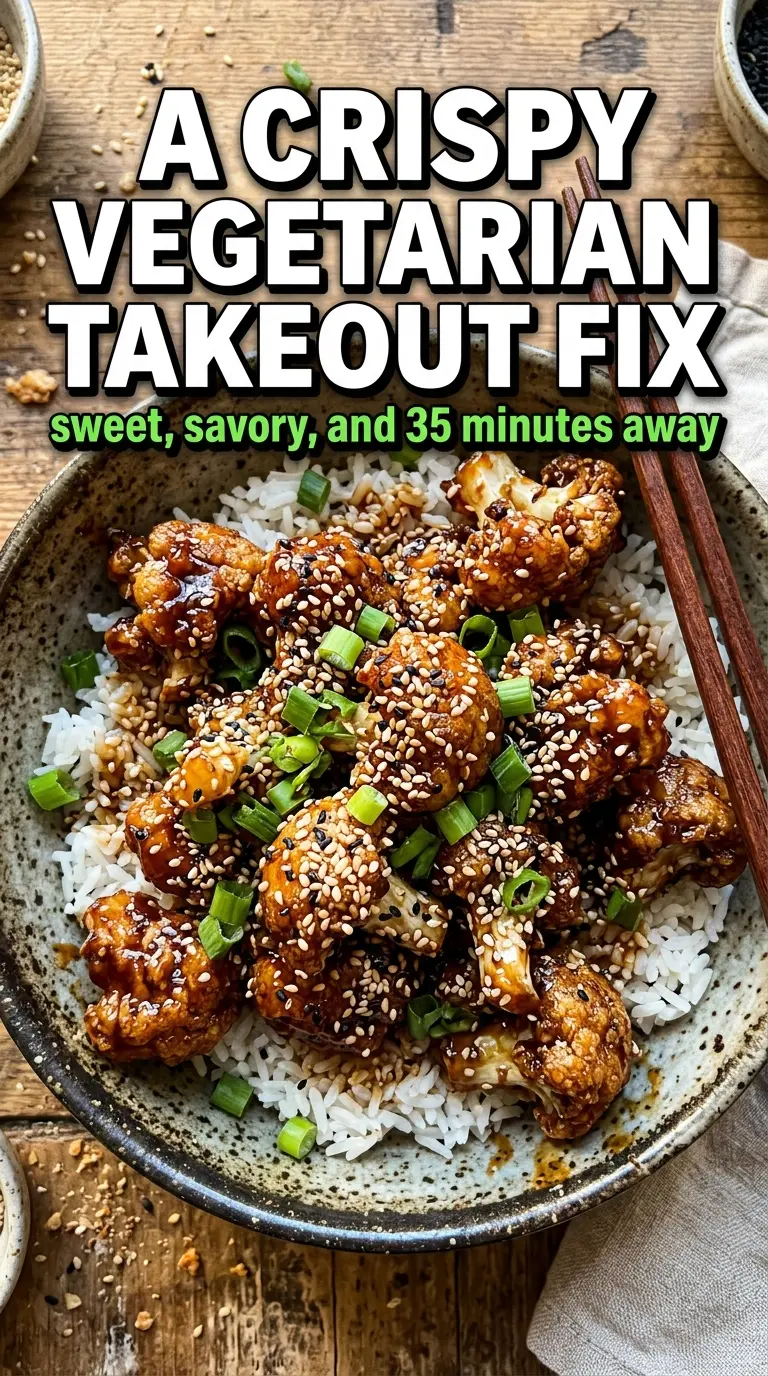
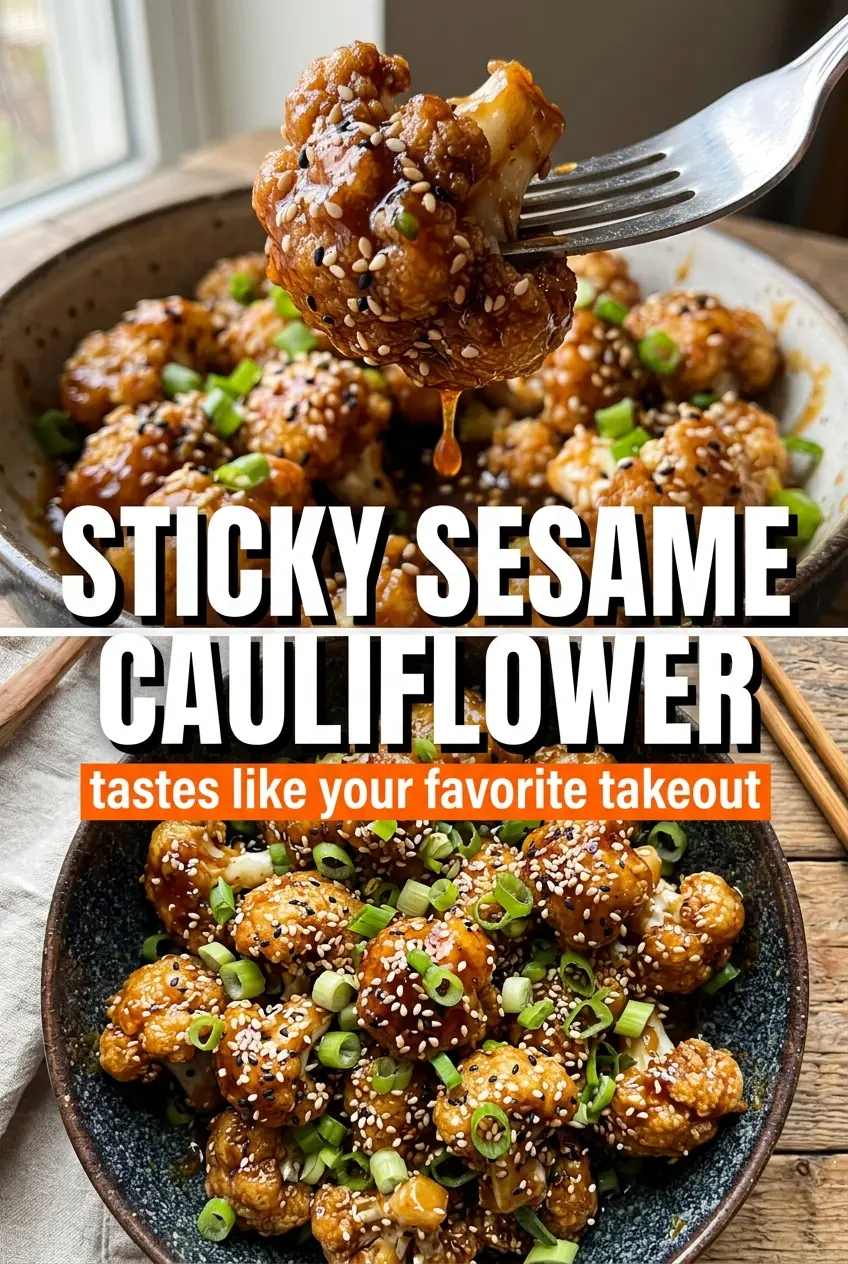
Sticky sesame cauliflower hits that sweet spot between crispy and saucy. The florets roast up with a brittle, golden edge, then get tossed in a glossy sesame sauce that clings to every ridge instead of pooling on the pan. You end up with the kind of vegetarian dish that disappears fast because it eats like takeout, only fresher and sharper around the edges.
The trick is giving the cauliflower a light cornstarch coating before it goes into the oven. That thin layer dries out the surface just enough to help it crisp, and the hot baking sheet does the rest. The sauce stays balanced too: soy sauce for salt, brown sugar for shine, rice vinegar for lift, and sesame oil for the nutty finish that makes the whole dish taste complete.
Below, you’ll find the timing that keeps the cauliflower crisp after saucing, plus a few smart swaps if you want to make it gluten-free or turn it into a more filling dinner.
The cauliflower stayed crisp even after tossing it in the sauce, and the sesame-ginger glaze thickened up beautifully without turning gummy. I served it with rice and my husband went back for seconds before I even sat down.
Sticky sesame cauliflower bakes up crisp, then gets coated in a glossy takeout-style sauce that’s worth saving for a fast meatless dinner.
The Trick to Keeping the Cauliflower Crisp After the Sauce Hits
Sticky sauces and roasted cauliflower can work together beautifully, but only if the cauliflower starts out dry and the oven is hot enough to brown the surface before the sauce goes on. Cornstarch helps here because it absorbs a little surface moisture and forms a light crust that holds up better than plain oil alone. If you skip that step, the florets soften fast and the sauce slides right off.
The other piece is timing. Roast the cauliflower until the edges are deeply golden and the florets feel light when you lift them from the pan. If they still feel heavy or pale, they haven’t developed enough texture to survive the toss. A parchment-lined sheet helps with cleanup, but the real win is spreading the cauliflower in a single layer so the pieces roast instead of steam.
What Each Ingredient Is Actually Doing in This Dish
- Cauliflower — Choose a firm, heavy head with tight florets. Fresh cauliflower roasts to a drier, snappier edge than pre-cut florets, which often carry extra moisture and brown unevenly.
- Cornstarch — This is what gives the cauliflower its crisp shell and thickens the sauce later. If you only use oil, the florets roast, but they won’t get that light crackly exterior that holds up after tossing.
- Vegetable oil — Just enough oil helps the cornstarch cling and encourages even browning. A neutral oil works best here because the sesame flavor belongs in the sauce, not the roasting step.
- Soy sauce — This brings salt and umami. For a gluten-free version, use tamari in the same amount and the sauce will stay just as balanced.
- Brown sugar — It gives the sauce its sticky sheen and rounds out the sharpness from the vinegar. Honey can work in a pinch, but it changes the flavor slightly and can make the sauce taste a little softer and less like classic takeout.
- Rice vinegar — This keeps the sauce from tasting flat or candy-sweet. If you use another vinegar, keep it mild; a harsh one will take over.
- Sesame oil — A little goes a long way. Add it to the sauce, not the pan, so the nutty aroma stays bright instead of cooking off.
- Garlic and ginger — These give the sauce its backbone. Fresh is best here; jarred garlic or dried ginger can work, but the finished dish loses some of the sharp, fresh heat that makes the glaze taste alive.
- Cornstarch slurry — This is the difference between a thin glaze and a sauce that actually coats the cauliflower. Stir it in after the sauce simmers, then give it a minute or two to turn glossy before tossing.
- Sesame seeds and green onions — The seeds add a little crunch and the green onions bring freshness at the end. Don’t skip the garnish if you want that last restaurant-style finish.
Roasting, Thickening, and Tossing Without Losing the Crunch
Coating the Cauliflower Evenly
Toss the florets with cornstarch, oil, and salt until every piece looks lightly dusty rather than pasty. If you see clumps, break them up before the cauliflower goes on the pan, because clumps bake into gummy spots. The coating should look thin and dry; that is what turns into crisp edges in the oven.
Roasting to Deep Gold
Spread the cauliflower in a single layer with space between the pieces. Crowding traps steam and gives you soft edges instead of browning. Flip halfway through so the second side picks up color, and pull it when the tips are deeply golden and the stems are tender with a little bite left.
Cooking the Sauce Until It Clings
Whisk the soy sauce, brown sugar, rice vinegar, sesame oil, garlic, and ginger together in the saucepan, then bring it to a gentle simmer. Once the cornstarch slurry goes in, the sauce should thicken within a minute or two and turn shiny enough to coat the back of a spoon. If it looks cloudy or thin, give it a little more heat; if it turns pasty, it cooked too long and needs a splash of water to loosen.
Tossing at the Very End
Add the roasted cauliflower to the sauce and toss quickly, just until every piece is coated. The longer it sits in the pan, the more steam softens the crust. Finish with sesame seeds and green onions while the sauce is still glossy so the toppings stick instead of sliding off.
Three Ways to Make It Work for Your Pantry
Gluten-Free Version
Swap the soy sauce for tamari or coconut aminos. Tamari keeps the flavor closest to the original, while coconut aminos taste a little sweeter and milder, so you may want a touch more vinegar to keep the sauce lively.
Bigger Dinner, Not Just a Side
Serve the cauliflower over steamed rice, fried rice, or noodles to turn it into a meal. The sauce is assertive enough to coat a grain, and the extra base helps catch every bit of sesame glaze.
Lower-Sugar Swap
Cut the brown sugar slightly and let the sauce reduce a little longer for more concentration. The glaze won’t be quite as sticky, but the sesame, garlic, and ginger still come through cleanly.
Air Fryer Shortcut
Air fry the coated cauliflower in a single layer at 400°F until crisp and browned, shaking once or twice during cooking. You still need the sauce on the stovetop, but the florets often get even crisper this way because the hot air drives off moisture fast.
Storage and Reheating
- Refrigerator: Store leftovers in an airtight container for up to 3 days. The cauliflower softens, but the flavor holds up well.
- Freezer: Not ideal once sauced. The cauliflower turns mushy after thawing, so I don’t recommend freezing the finished dish.
- Reheating: Reheat in a 400°F oven or air fryer until hot and the edges firm up again. The microwave works in a pinch, but it softens the coating and takes away the crisp texture you worked for.
Answers to the Questions Worth Asking
Sticky Sesame Cauliflower
Ingredients
Equipment
Method
- Preheat the oven to 425°F and line a baking sheet with parchment paper.
- Toss the cauliflower florets with the cornstarch, vegetable oil, and kosher salt until evenly coated.
- Spread in a single layer on the baking sheet and roast for 20–25 minutes, flipping halfway, until golden and crispy (look for browned edges).
- Whisk together the soy sauce, brown sugar, rice vinegar, sesame oil, garlic, and ginger in a saucepan over medium heat.
- Bring the mixture to a simmer, then stir in the cornstarch slurry and cook for 1–2 minutes until thickened and glossy (it should coat the back of a spoon).
- Toss the roasted cauliflower in the sticky sauce until well coated (shine indicates it’s fully glazed).
- Sprinkle with sesame seeds and sliced green onions before serving for a fresh, crunchy finish.