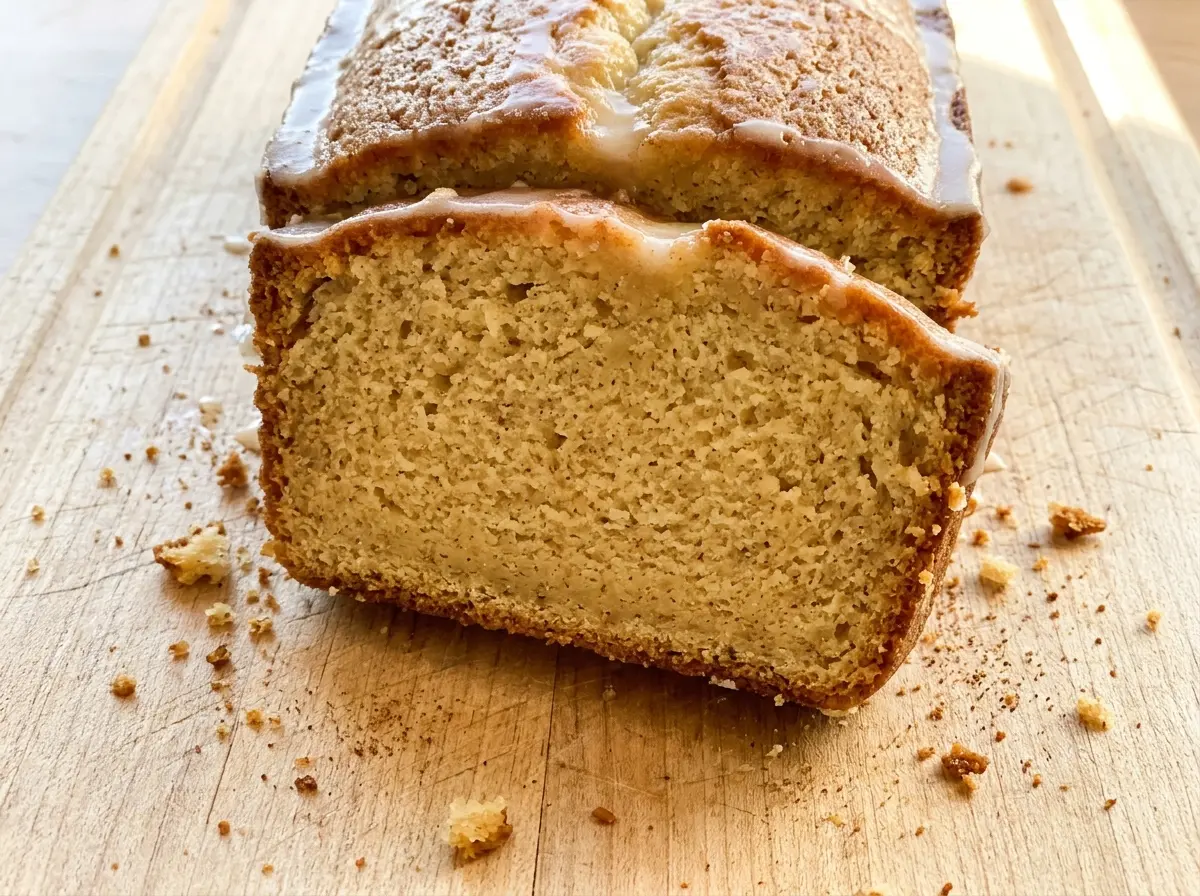
When the batter comes together, it’s thick enough to mound on a spoon, and the nutmeg smells warm before the loaf even reaches the oven. That first hint of spice is what makes this sweet eggnog bread feel like more than a basic quick bread. It bakes into a soft, fine-crumbed loaf with a lightly golden top and a gentle eggnog flavor in every slice.
I like this recipe when there’s eggnog in the fridge and I want something that works for breakfast or an afternoon coffee break. The ingredients are familiar, but room-temperature eggs and eggnog help the batter blend without making you work it hard. A little nutmeg gives the loaf its signature aroma without overpowering the vanilla. Once cooled, the bread slices neatly and has a tender, buttery crumb.
Kitchen Note
Give the nutmeg a thorough whisk through the flour before you start mixing the wet ingredients. That spreads the spice through the loaf, so you get an even, warm aroma instead of a concentrated bite here and there.
Save this sweet eggnog bread for a tender, warmly spiced loaf that turns a carton of eggnog into an easy bake.
Why This Eggnog Loaf Needs Flour and Eggnog Added in Alternating Rounds
Eggnog makes a richer batter than water or milk, and it’s easy to overmix when you’re trying to work all that liquid into flour at once. Adding the flour mixture in three rounds and the eggnog in two keeps the batter easier to combine. The flour gets incorporated gradually, rather than turning into a thick mass that needs lots of stirring to smooth out.
Mix on low and stop as soon as each addition disappears. A few small, soft-looking streaks are less of a problem than beating the batter until it’s perfectly smooth; too much mixing develops the flour’s gluten and can leave the loaf firm instead of tender. The alternating additions also help keep the butter-and-sugar mixture from losing its light texture all at once. You’re aiming for an even batter that spreads into the pan, not a glossy, heavily beaten one.
What Eggnog, Butter, and Nutmeg Each Bring to This Loaf
- All-purpose flour — It gives the loaf enough structure to rise and hold together while keeping the crumb soft. A standard store-brand flour is fine here; measure it consistently, since packing extra flour into a cup can make the batter dry and stiff.
- Baking powder — This is the lift in the loaf, so freshness matters more than brand. If it has been open a long time or has lost its strength, the bread may bake up short and heavy.
- Ground nutmeg — Nutmeg gives the bread its familiar eggnog warmth. Freshly opened ground nutmeg tends to smell more fragrant, but any fresh-tasting jar works; the spice should smell warm rather than dusty.
- Unsalted butter — Butter carries the rich flavor and helps make the crumb tender. Let it soften before beating so it can combine evenly with the sugar; an inexpensive butter works well because vanilla and nutmeg are the more noticeable flavors.
- Granulated sugar — Sugar sweetens the loaf and helps the butter mixture become light when beaten. Keep it granulated for the intended texture; swapping in a liquid sweetener changes the batter’s moisture and balance.
- Eggs — Eggs bind the batter and help the loaf set as it bakes. Room-temperature eggs blend into the butter mixture more smoothly than cold ones, and ordinary large eggs are the right fit here.
- Vanilla extract and eggnog — Vanilla rounds out the spice, while eggnog supplies the creamy, sweet flavor that defines this bread. Use an eggnog you enjoy drinking; a heavily flavored variety will make its own taste more prominent in the finished loaf.
Mixing and Baking the Loaf Without Overworking It
Whisk the Dry Ingredients Evenly
Heat the oven to 350°F and grease a 9×5-inch loaf pan. Whisk the flour, baking powder, salt, and nutmeg together in a medium bowl until the mixture looks uniform. Break up any visible clumps as you whisk, especially around the baking powder, so the dry mixture is evenly distributed. Set the bowl aside while you prepare the butter mixture.
Beat the Butter and Sugar Until Light
Beat the softened butter and granulated sugar in a large bowl until light and fluffy, about 2 minutes. The mixture should look paler and less dense than it did at the start, rather than like a smooth paste. Beat in the eggs one at a time, then mix in the vanilla. Scrape the bowl if butter or sugar is clinging to the sides, so it gets incorporated with the rest.
Alternate the Flour Mixture and Eggnog
Add the flour mixture in three additions, alternating with the eggnog in two additions. Mix on low just until each addition is combined before adding the next; scrape the sides of the bowl as needed. The batter will be thick, but it should spread when you transfer it to the pan. Stop mixing once no dry flour is visible, because extra beating can make the finished bread tougher.
Bake Until the Center Tests Clean
Spread the batter in the prepared pan and bake for 50 to 60 minutes. Check the center with a toothpick: it should come out clean or with a few moist crumbs, not streaked with raw batter. Let the bread cool in the pan for 10 minutes, then turn it out onto a wire rack and cool completely. The loaf is delicate while warm, so give it time to set before slicing.
Three Simple Ways to Change the Eggnog Bread
Use cinnamon instead of nutmeg
Replace the nutmeg with ground cinnamon for a sweeter, familiar spice note. The loaf keeps its tender texture, but the aroma shifts away from classic eggnog warmth and toward cinnamon bread.
Make it dairy-free
Use plant-based butter in place of the dairy butter and a dairy-free eggnog beverage in place of the regular eggnog. The bread will still contain eggs, and the flavor depends on the beverage you choose, but this swap keeps the loaf tender and eggnog-inspired.
Use salted butter if that’s what you have
Replace the unsalted butter with salted butter and leave out the added salt. The bread may taste a little saltier depending on the butter, but the swap works without changing the mixing method.
Storage and Reheating
- Refrigerator: Keep the cooled loaf tightly wrapped or in an airtight container for up to 4 days. Chilling firms the crumb, so let a slice come closer to room temperature for a softer bite.
- Freezer: Freeze the loaf whole or in individual slices, wrapped tightly, for up to 2 months. Thaw it while wrapped so the surface doesn’t dry out.
- Reheating: Warm a slice briefly in the microwave or toaster oven until just warm. Avoid heating it for too long; repeated or prolonged warming dries out the crumb.
Questions I Get Asked About Sweet Eggnog Bread
Sweet Eggnog Bread
Ingredients
Equipment
Method
- Heat the oven to 350°F.
- Grease a 9x5-inch loaf pan.
- Whisk the flour, baking powder, salt, and nutmeg in a medium bowl.
- Beat the butter and sugar in a large bowl until light and fluffy, about 2 minutes.
- Beat in the eggs one at a time.
- Mix in the vanilla.
- Add the flour mixture in three additions, alternating with the eggnog in two additions, mixing on low just until combined after each addition.
- Spread the batter in the prepared pan.
- Bake for 50 to 60 minutes, until a toothpick inserted in the center comes out clean or with a few moist crumbs.
- Cool the bread in the pan for 10 minutes.
- Turn it out onto a wire rack.
- Cool completely.