Thai coconut lime chicken lands on the table with tender bites of chicken coated in a silky, fragrant sauce that tastes brighter than it looks. The coconut milk rounds everything out, the red curry paste brings heat and depth, and the lime wakes up every spoonful at the end. It’s the kind of one-pan dinner that feels a little more special than the time it takes to cook.
What makes this version work is the order. Browning the chicken first builds flavor in the pan, then the onion, garlic, and ginger go in just long enough to soften and bloom without burning. The coconut milk and curry paste simmer together into a sauce that clings to the chicken instead of turning thin and greasy, and the lime waits until the end so it stays sharp instead of dulling into the background.
Below you’ll find the small details that keep the sauce smooth, the easiest swaps if you need them, and a few practical answers for the moments people usually get stuck on this kind of dish.
The sauce thickened beautifully and the lime at the end kept it from tasting heavy. I served it over jasmine rice and my husband went back for seconds before I even sat down.
Save this Thai Coconut Lime Chicken for a fast one-pan dinner with creamy coconut sauce, bold curry flavor, and a bright lime finish.
The Secret to Keeping the Coconut Sauce Creamy Instead of Split
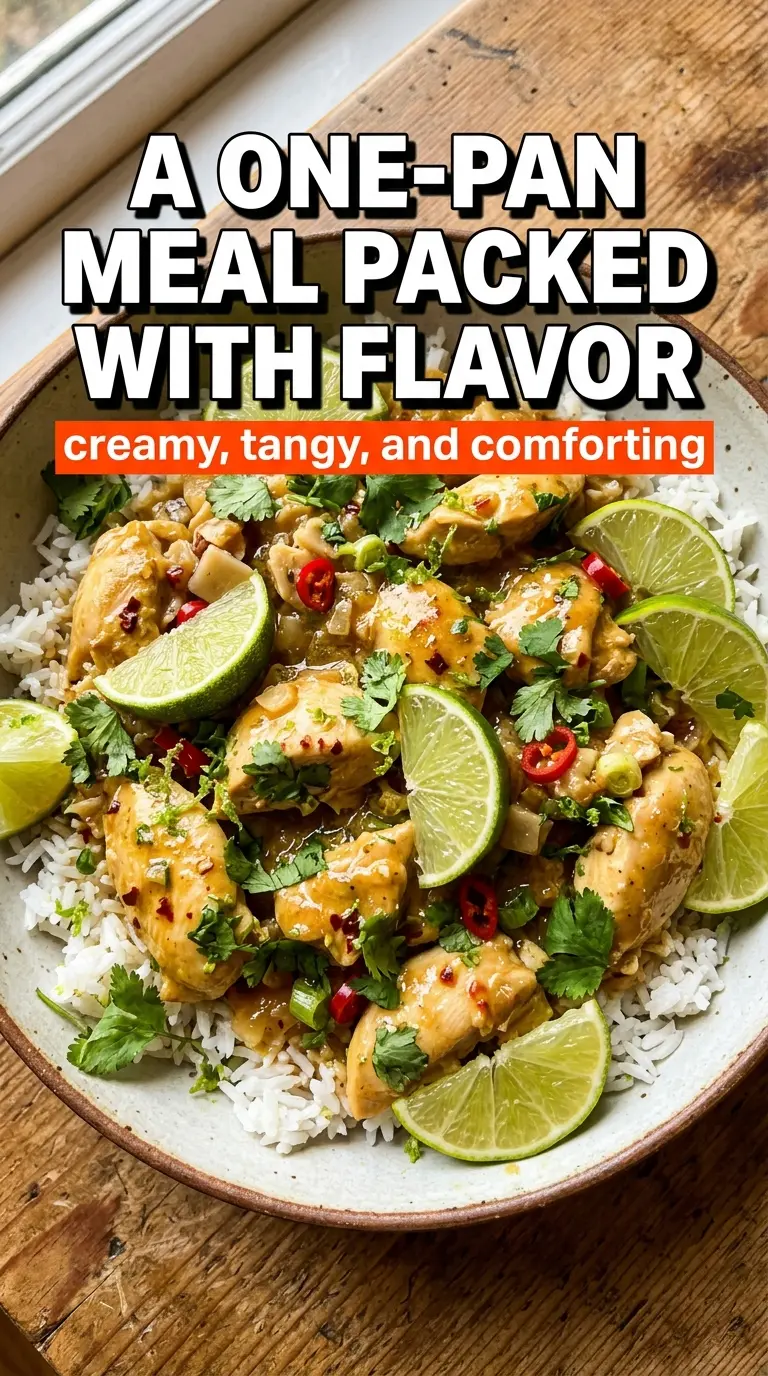
The biggest mistake with coconut-based skillet dinners is cranking the heat and boiling the sauce hard once the coconut milk goes in. Coconut milk doesn’t need aggression; it needs a gentle simmer so the fat and liquid stay together and the sauce can thicken naturally. If it boils hard, the texture can turn oily or grainy, especially once the lime gets added too early.
That’s why the chicken gets seared first and pulled out. The browned bits left in the pan deepen the sauce, but the pan should stay at a medium simmer once the coconut milk is added. The lime juice and zest go in at the end for a clean, bright finish that tastes fresh instead of cooked down.
- Chicken thighs — Thighs stay juicy through the short simmer and hold up better than breasts, which can dry out once the sauce reduces. Cut them into even bite-sized pieces so they cook at the same pace.
- Coconut milk — Use full-fat canned coconut milk for the best body and the creamiest sauce. Light coconut milk works in a pinch, but the sauce will be thinner and won’t cling as well.
- Red curry paste — This brings the heat, color, and most of the savory backbone. Brands vary a lot in salt and spice, so start with the amount here and add more only after the sauce has simmered.
- Fish sauce — It adds depth and salinity that plain salt can’t fully replace. If you need a substitute, use soy sauce or tamari, though the final flavor will be a little less round and a bit more direct.
- Lime juice and zest — Juice brings brightness, but zest gives you the aromatic lime flavor that reads right away. If you skip the zest, the dish still works, but it loses that fresh top note that makes the sauce taste alive.
How to Build the Pan Sauce So It Stays Smooth
Searing the Chicken First
Heat the oil until it shimmers, then add the chicken in a single layer. Let it sit long enough to pick up color before stirring, because crowded or constantly moved chicken steams instead of browns. You’re not cooking it through at this stage; you’re building flavor and leaving a little caramelized fond behind for the sauce.
Softening the Aromatics
Once the chicken comes out, cook the onion until it turns translucent and starts to smell sweet at the edges. Add the garlic and ginger at the end so they don’t scorch, since burnt garlic can make the whole dish taste bitter. Thirty seconds is usually enough; you want fragrance, not color.
Simmering the Sauce and Finishing Bright
Whisk the coconut milk, curry paste, fish sauce, and brown sugar together until the paste disappears and the sauce looks even. Return the chicken and keep the simmer gentle, just enough for the sauce to thicken slightly and coat the pieces. Stir in the lime juice and zest off the heat or at the very end so the citrus stays sharp and doesn’t disappear into the background.
How to Adapt This for Different Needs Without Losing the Point
Make It Dairy-Free Without Any Extra Work
This dish is already dairy-free as written, which is one reason it comes together so smoothly. Just stick with full-fat canned coconut milk, since cartons are thinner and won’t give you the same silky sauce.
Swap the Chicken Thighs for Chicken Breast
Chicken breast works if that’s what you have, but it needs less simmer time. Cook it just until the pieces turn opaque and reach 165°F, or it’ll go dry before the sauce finishes reducing.
Turn It Into a Vegetarian Curry Skillet
Swap the chicken for cubed extra-firm tofu or thick slices of cauliflower and add a handful of snap peas or bell peppers near the end. You’ll lose some richness from the meat, so the sauce becomes the star, but the coconut-lime balance still carries the dish.
Storage and Reheating
- Refrigerator: Store in an airtight container for up to 4 days. The sauce thickens as it chills, so it may look a little tighter the next day.
- Freezer: It freezes well for up to 2 months, though the coconut sauce can separate slightly after thawing. Stir well while reheating and it comes back together.
- Reheating: Warm it gently on the stove over low heat or in the microwave at medium power. High heat is what breaks coconut sauces, so go slow and add a splash of water if the sauce seems too tight.
Answers to the Questions Worth Asking
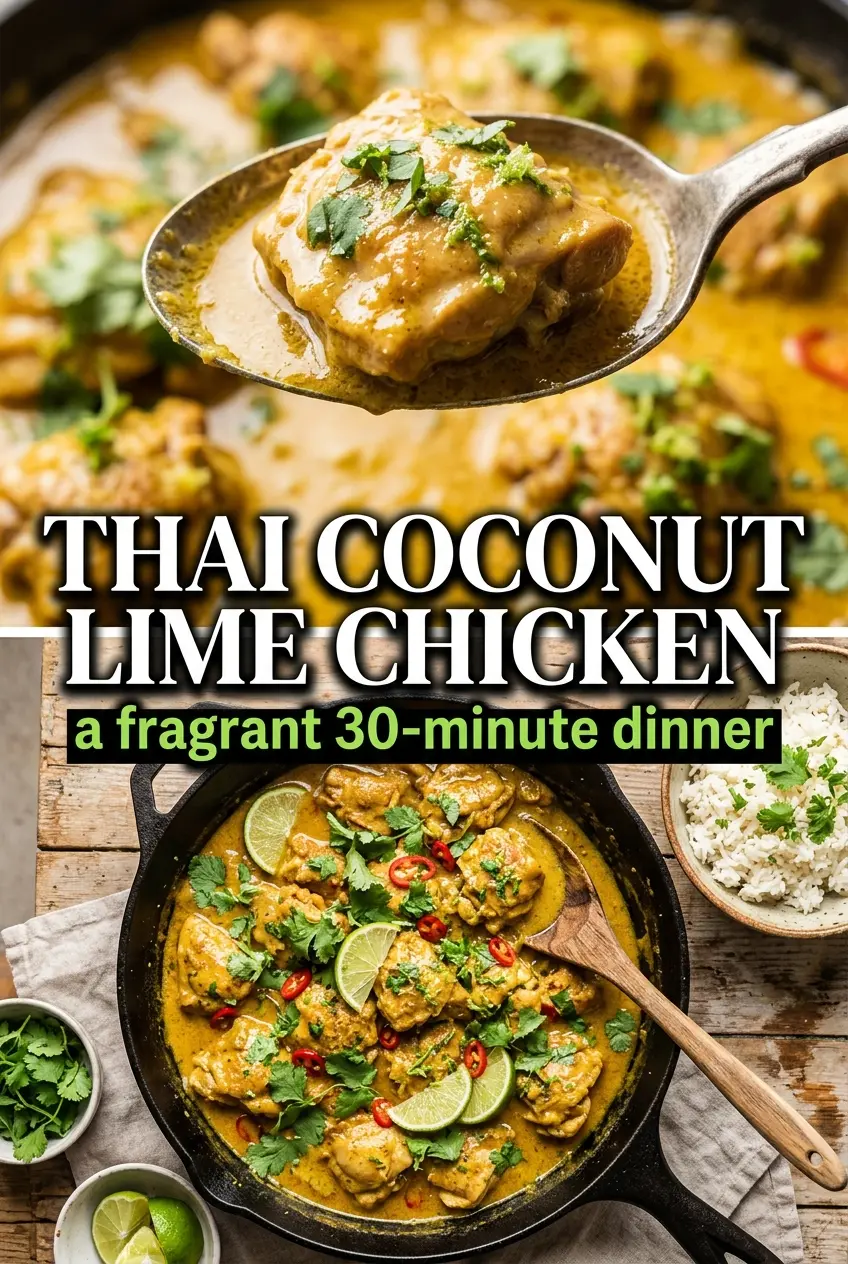
Thai Coconut Lime Chicken
Ingredients
Equipment
Method
- Heat the vegetable oil in a large skillet over medium-high heat. Sear the chicken pieces for 4–5 minutes, until browned on all sides, then remove and set aside.
- In the same skillet, sauté the onion for 3–4 minutes, until softened, then add the garlic and ginger and cook for 30 seconds, until fragrant.
- Stir in the coconut milk, red curry paste, fish sauce, and brown sugar, whisking until smooth.
- Return the chicken to the skillet and simmer for 12–15 minutes, until the chicken is cooked through and the sauce has thickened slightly.
- Stir in the lime juice and lime zest just before serving.
- Garnish with fresh cilantro and serve.