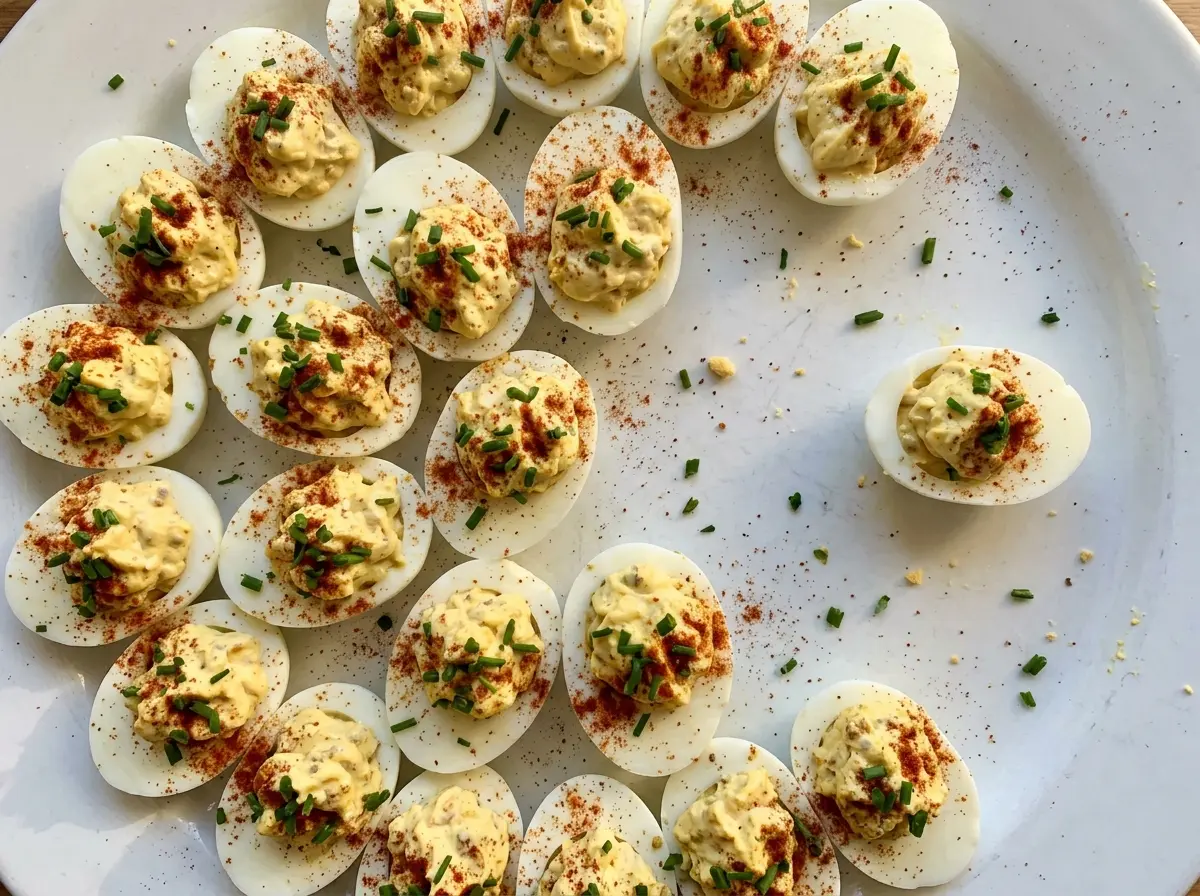
The water reaches a boil, but the eggs don’t keep cooking over the burner. That small change gives me time to set out the filling ingredients without worrying about a rolling pot or rubbery whites. These Thanksgiving deviled eggs bring sage, celery, and Dijon into the yolk filling, then finish with cranberry sauce and toasted pecans for a tart, crunchy top.
I like this combination because the familiar creamy filling still tastes like a deviled egg, while the sage and cranberry make it feel at home on a Thanksgiving table. The recipe makes 12 halves, enough to serve six as a small appetizer. Each topping stays distinct: a little cranberry brings sweetness and tang, and the pecans add a crisp bite against the smooth filling.
Kitchen Note
Keep the cranberry sauce to a small dab on each egg half. The whole berries bring plenty of tart-sweet flavor without covering the sage filling, and a light sprinkle of pecans gives you crunch without burying the top.
Save these Thanksgiving deviled eggs for a holiday spread that pairs creamy sage filling with tart cranberry and toasted pecans.
Why the Eggs Finish Cooking Off the Burner
Hard-boiled eggs don’t need to bubble away for their entire cooking time. Once the water boils, covering the saucepan and taking it off the heat lets the hot water cook the eggs more gently. The temperature eases down instead of staying at a hard boil, which helps keep the whites tender rather than tough.
This is also a useful method when you’re juggling other dishes. There’s no need to watch a pot of actively boiling eggs or guess whether the heat is too high. The covered pan does the work while you prepare the filling ingredients. Keep the eggs in a single layer in the saucepan so the hot water surrounds them evenly; crowding them into a smaller pan can make the cooking less consistent.
The ice-water bath has a separate job: it cools the eggs before peeling and halving. That pause makes the eggs easier to handle and gives you a clean starting point for filling. The yolks then mash into a smooth mixture instead of warming the mayonnaise as you work.
What Gives the Filling Its Savory Holiday Note

- Large eggs — Their size gives you sturdy white halves with room for a generous spoonful of filling. Use eggs with intact shells and handle them gently when you halve them.
- Mayonnaise — It binds the yolks into a creamy filling and softens the sharper ingredients. A mayonnaise you enjoy tasting on its own matters here because it’s the filling’s main creamy base.
- Dijon mustard — Dijon contributes a sharper, more rounded tang than the yolks have on their own. It gives the filling a savory edge without taking over the sage.
- Apple cider vinegar — Its acidity keeps the yolk mixture from tasting heavy. Measure it carefully; too much acid can make the filling taste sharp rather than balanced.
- Celery — Finely minced celery gives little crisp, savory flecks throughout the creamy filling. Keep the pieces small so they don’t make the mixture difficult to spoon into the egg whites.
- Fresh sage — Sage brings the distinctly herbal note that links the filling to the cranberry topping. Choose leaves that smell fresh and aromatic, and chop them finely so no large, chewy pieces interrupt the smooth yolks.
- Whole-berry cranberry sauce — The berries give the topping little bursts of tart fruit, not just sweetness. Use the whole-berry style for the texture that makes each small dab stand out.
- Toasted pecans — Toasting brings out their nutty flavor, while chopping them finely makes the garnish easy to eat in one bite. Pecans should smell fragrant, not stale or oily.
From Covered Saucepan to Neat, Filled Halves
Let the Covered Pan Do the Cooking
Arrange the eggs in a single layer in a 3-quart saucepan and cover them with 6 cups of water. Bring the water to a boil over medium-high heat. Once it boils, cover the pan, remove it from the heat, and leave the eggs undisturbed for 12 minutes; don’t keep the burner on during this resting time.
Cool Before Peeling and Halving
Transfer the eggs to a bowl with the remaining 4 cups of water and the ice. Let them cool for 5 minutes, then peel them and cut each one in half lengthwise. If you try to rush straight from hot water to peeling, the eggs will be harder to handle, so give them the full cooling time.
Mash Until the Yolks Look Creamy
Remove the yolks and put them in a medium bowl. Mash them with the mayonnaise, Dijon mustard, apple cider vinegar, finely minced celery, finely chopped fresh sage, kosher salt, and black pepper until smooth. Keep mashing if you still see dry yolk crumbs; filling with visible lumps won’t settle as neatly into the whites.
Fill and Finish Each Egg
Spoon the filling evenly into the egg-white halves. Add a small dab of whole-berry cranberry sauce to each one, then sprinkle on the finely chopped toasted pecans. Refrigerate the finished eggs until serving so the filling stays cool and the toppings remain in place.
Three Small Changes for Different Tables
A Nut-Free Cranberry Finish
Leave off the pecans and use a little extra whole-berry cranberry sauce in their place. The topping will be softer and sweeter, without the nutty crunch; this is the simplest adjustment for guests avoiding pecans.
Pecan-Topped, Without the Cranberry
Skip the cranberry sauce and finish each half with the chopped toasted pecans alone. You’ll get a savory, crunchy bite without the sweet-tart contrast, which suits anyone who prefers a less sweet deviled egg.
A Milder, Sage-Free Filling
Leave out the fresh sage if you want the Dijon and celery to come through more clearly. The filling will lose its herbal holiday character, but it will still be creamy and savory under the cranberry and pecan topping.
Storage and Serving
- Refrigerator: Keep the eggs covered and refrigerated, and eat them within 2 days. The cranberry topping may soften slightly as it rests on the filling.
- Freezer: These don’t freeze well. The egg whites turn watery after thawing, and the mayonnaise-based filling can separate.
- Serving: Serve them chilled and bring them out close to mealtime. Discard any that have sat at room temperature for more than 2 hours.
Questions That Come Up While Making Thanksgiving Deviled Eggs
Thanksgiving Deviled Eggs
Ingredients
Equipment
Method
- Place the eggs in a 3-quart saucepan in a single layer and cover with 6 cups of water.
- Bring to a boil over medium-high heat.
- Cover the saucepan and remove it from the heat.
- Let the eggs sit for 12 minutes.
- Transfer the eggs to a bowl with the remaining 4 cups water and the ice.
- Cool for 5 minutes, then peel and halve lengthwise.
- Remove the yolks and mash them in a medium bowl with the mayonnaise, Dijon mustard, apple cider vinegar, celery, sage, kosher salt, and black pepper until smooth.
- Spoon the filling evenly into the egg-white halves.
- Top each with a small dab of cranberry sauce and a sprinkle of pecans.
- Refrigerate until serving.