As the onion, carrot, and celery soften in the Dutch oven, the kitchen starts to smell like the beginning of a good soup. I wanted a pot that felt hearty without relying on cream or a long list of add-ins, and these Tuscan chickpeas do the job with pantry staples and a handful of kale.
The broth gets its depth before the liquids go in. Tomato paste and dried herbs cook briefly with the garlic and vegetables, which gives them a chance to bloom in the oil instead of tasting raw or lost in the broth. After that, the chickpeas simmer until they’re tender and ready to thicken the soup.
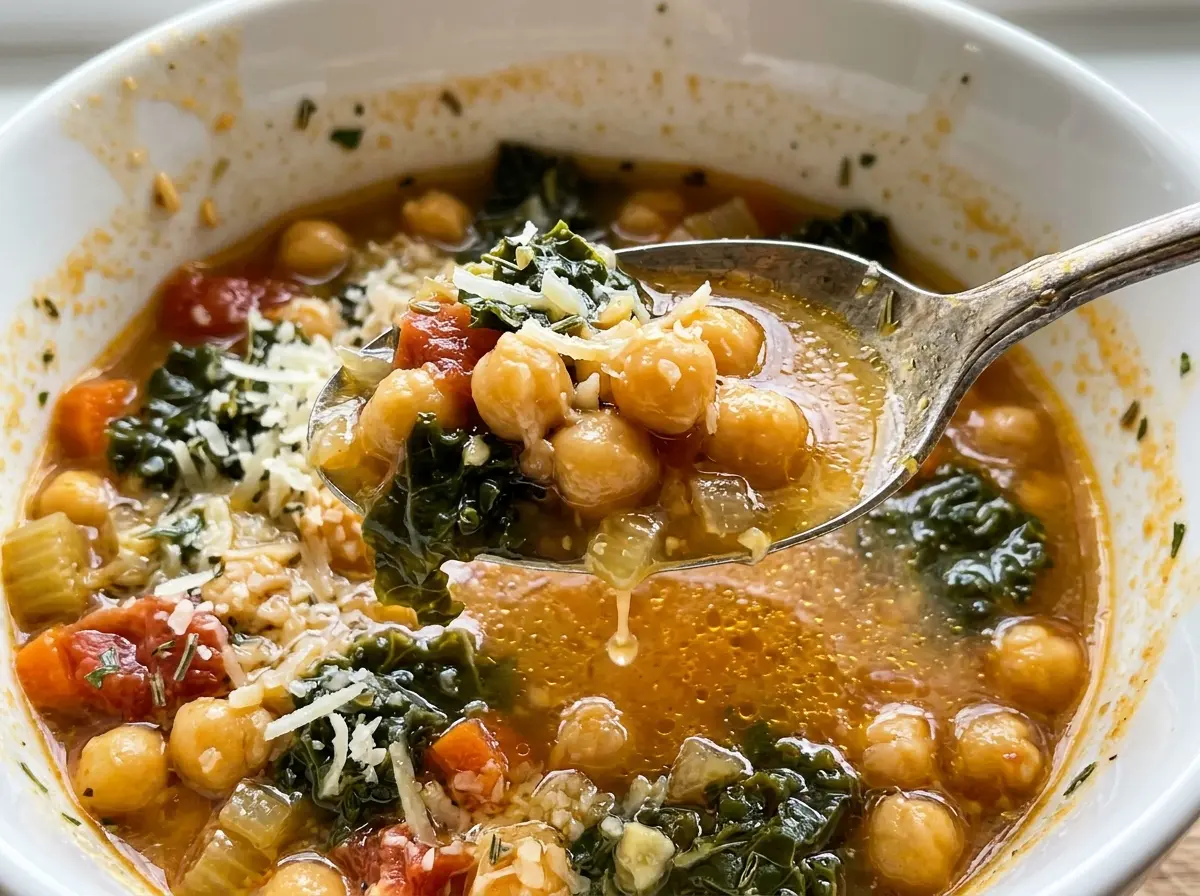
A little mashing makes the broth feel fuller, while most of the chickpeas stay whole. Kale goes in near the end, and lemon juice lifts the tomato-rich base just before serving. The result is a generous pot of soup with a soft, savory broth and plenty to spoon up.
Kitchen Note
When you mash the chickpeas, press just a portion against the side of the pot and leave most whole. That gives the broth body without turning the soup into a puree.
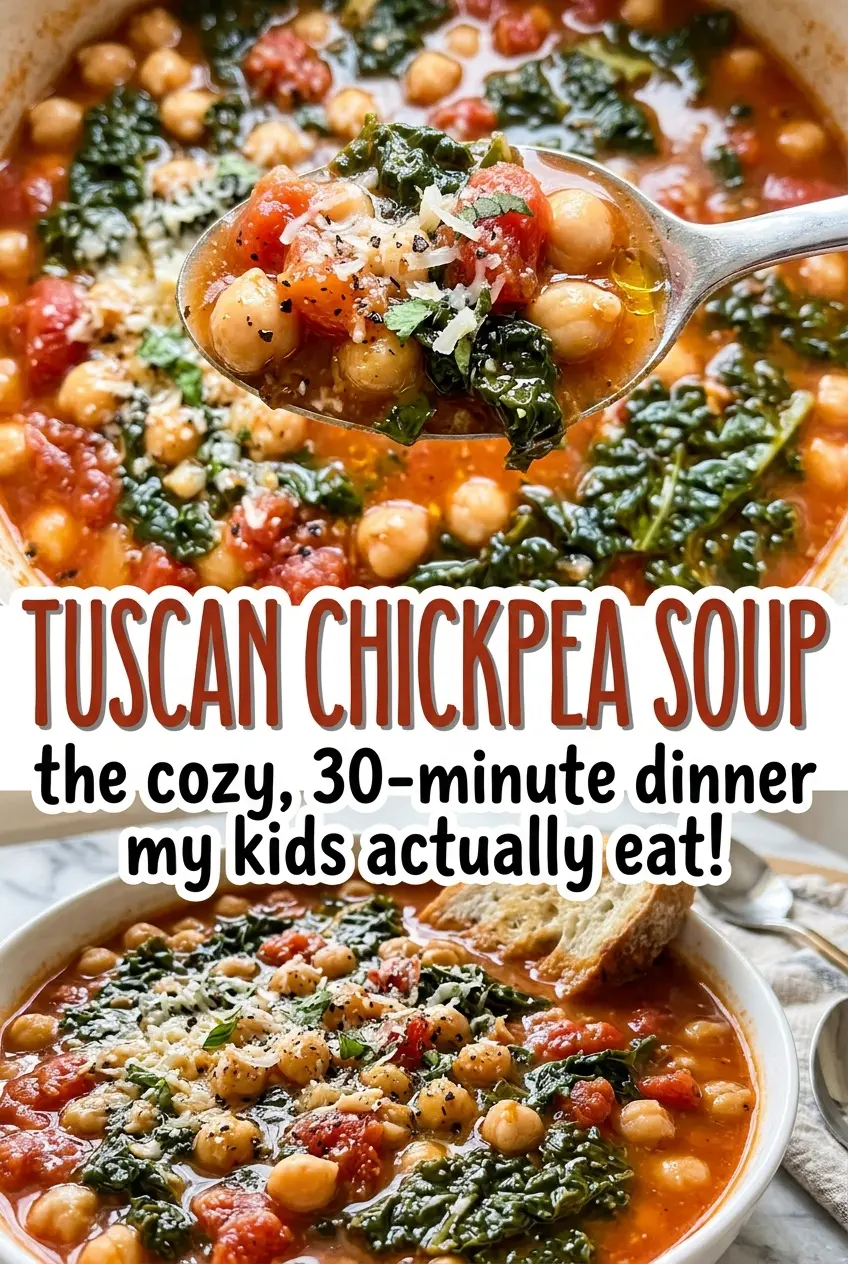
Save this Tuscan chickpea soup for a cozy bowl with tender kale, tomato-rich broth, and chickpeas that make it hearty without cream.
Why the Tomato Paste Needs Its Own Minute in the Pot
Tomato paste can taste sharp and a little tinny if it goes straight into a pot of broth. Give it a minute with the garlic, rosemary, and thyme, and it darkens slightly as it coats the softened vegetables. That brief cook builds a savory base before the broth and canned tomatoes dilute it.
This timing also keeps the dried herbs from floating through the soup without contributing much. The oil carries their aroma into the vegetables, and the paste helps tie the tomato broth together. You don’t need to brown the vegetables or cook the paste until it sticks; one minute of stirring is enough. If the mixture looks dry, keep stirring rather than letting the garlic sit against the hot pot. The garlic should smell fragrant, not toasted.
It’s a small step, but it gives the soup a more rounded, slow-cooked taste without adding a longer simmer. The uncovered simmer afterward lets the chickpeas and tomatoes share that base while the broth reduces just a little.
What the Chickpeas, Kale, and Tomatoes Bring to the Pot
- Chickpeas — Canned chickpeas make this a practical soup, and draining and rinsing them removes the canning liquid before they go into the broth. Their mild, nutty taste holds up through the simmer. If you’re out, two drained and rinsed 15-ounce cans of cannellini beans work in their place; they’re softer, so stir gently once they’re in the pot.
- Kale — Sturdy kale keeps its shape better than tender greens during a short simmer. Remove the stems and chop the leaves so they soften evenly. Baby spinach is a workable swap; use the same weight and simmer only until the leaves wilt, since it softens faster than kale.
- Diced tomatoes — Use the can and its juices, not just the tomato pieces. That liquid becomes part of the broth and brings acidity and tomato flavor throughout the pot. Canned tomatoes are a reliable choice here because their texture and moisture are consistent.
- Tomato paste — This concentrated tomato ingredient deepens the base without adding another can’s worth of liquid. A tube is handy if you cook with tomato paste often, but a small can works just as well when you have a plan for the remainder.
- Low-sodium broth — Chicken broth makes the soup savory; vegetable broth keeps it meat-free. A good-quality broth matters because it forms most of the liquid, though a familiar store brand works fine. Choose low-sodium broth so the measured kosher salt doesn’t leave the finished soup tasting overly salty.
- Rosemary and thyme — Dried herbs suit the simmering broth and are easy to keep on hand. Crush the rosemary between your fingers before adding it so the pieces are smaller and its aroma releases into the oil. Fresh herbs won’t behave quite the same way in this short cook.
- Lemon juice — The final squeeze brings a fresh, bright note to the earthy chickpeas and kale. Add it after the kale is tender rather than simmering it from the start, so its lift stays noticeable.
Build the Broth, Then Let the Chickpeas Thicken It
Soften the Aromatics Without Browning Them
Warm the olive oil in a 5- to 6-quart Dutch oven over medium heat, then add the chopped onion, carrot, celery, kosher salt, and black pepper. Cook for 6 to 8 minutes, stirring occasionally, until the vegetables have softened. They should look glossy and tender, not browned at the edges. If they’re still firm, give them another moment before adding the garlic.
Cook the Garlic, Paste, and Dried Herbs
Stir in the minced garlic, tomato paste, crushed dried rosemary, and dried thyme. Keep the mixture moving for 1 minute so the paste coats the vegetables and the garlic doesn’t scorch on the bottom of the pot. You’ll smell the herbs and garlic as they warm. If the garlic starts to darken, stir continuously and move on to the broth promptly.
Simmer the Chickpeas in the Tomato Broth
Add the drained and rinsed chickpeas, broth, and diced tomatoes with their juices. Bring the pot to a boil, then lower the heat until you have a gentle simmer; it should bubble steadily without churning. Cook uncovered for 20 minutes. Leaving the lid off lets the broth reduce a little, while the chickpeas take on the tomato and herb flavors.
Mash, Wilt the Kale, and Finish with Lemon
Use a potato masher to press some chickpeas against the side of the pot, leaving most of them whole. Stir in the chopped kale and simmer for 5 to 8 minutes, until the leaves are tender. If the kale still feels tough when you bite into a piece, let it simmer a little longer within that range. Stir in the lemon juice at the end, then serve while the greens are tender and the broth is hot.
Two Easy Ways to Adapt This Chickpea Soup
Make the Pot Vegetarian
Use vegetable broth instead of chicken broth. The soup keeps its tomato, herb, and chickpea character, with a slightly different savory note from the broth. The rest of the method stays the same.
Keep the Broth Lighter
For a looser, more brothy bowl, mash only a few chickpeas instead of pressing a larger portion against the pot. The flavor stays the same, but less starch is released into the liquid, so the broth won’t feel as thick.
Storage and Reheating
- Refrigerator: Cool in shallow containers and refrigerate within 2 hours. Keep leftovers for 3 to 4 days; the chickpeas will continue to soften a little.
- Freezer: Freeze in airtight containers for up to 2 to 3 months. The kale may soften more after thawing, but the soup freezes well.
- Reheating: Warm gently on the stovetop, stirring now and then, until the soup reaches 165°F. Avoid a hard boil, which can make the greens overly soft.
Questions That Come Up With Tuscan Chickpea Soup
Tuscan Chickpea Soup
Ingredients
Equipment
Method
- Heat the olive oil in a 5- to 6-quart Dutch oven over medium heat, then add the onion, carrot, celery, salt, and pepper. Cook for 6 to 8 minutes, stirring occasionally, until the vegetables have softened.
- Stir in the garlic, tomato paste, rosemary, and thyme and cook for 1 minute.
- Add the chickpeas, broth, and diced tomatoes with their juices, then bring the soup to a boil.
- Reduce the heat to maintain a gentle simmer and cook uncovered for 20 minutes.
- Use a potato masher to mash some of the chickpeas against the side of the pot to thicken the soup, leaving most whole.
- Stir in the kale and simmer for 5 to 8 minutes, until it is tender.
- Stir in the lemon juice and serve.