A knife that slips into the middle of a russet without meeting a firm spot tells me the potatoes are ready for the best part: turning them into a creamy, bacon-studded casserole. When the centers are still dense, they’re harder to mash evenly, and little firm bits can hide in the filling. I wait until each potato is tender all the way through, then give it a few minutes to cool before scooping.
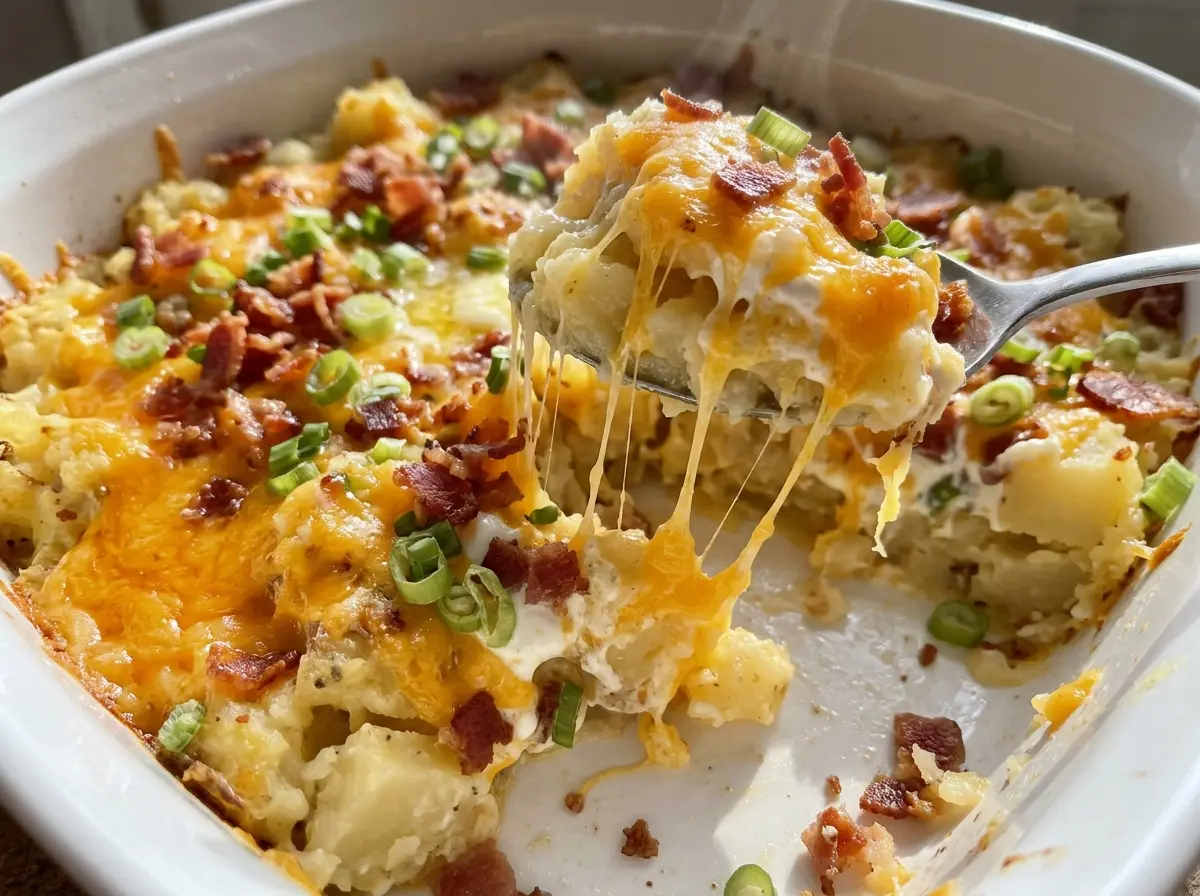
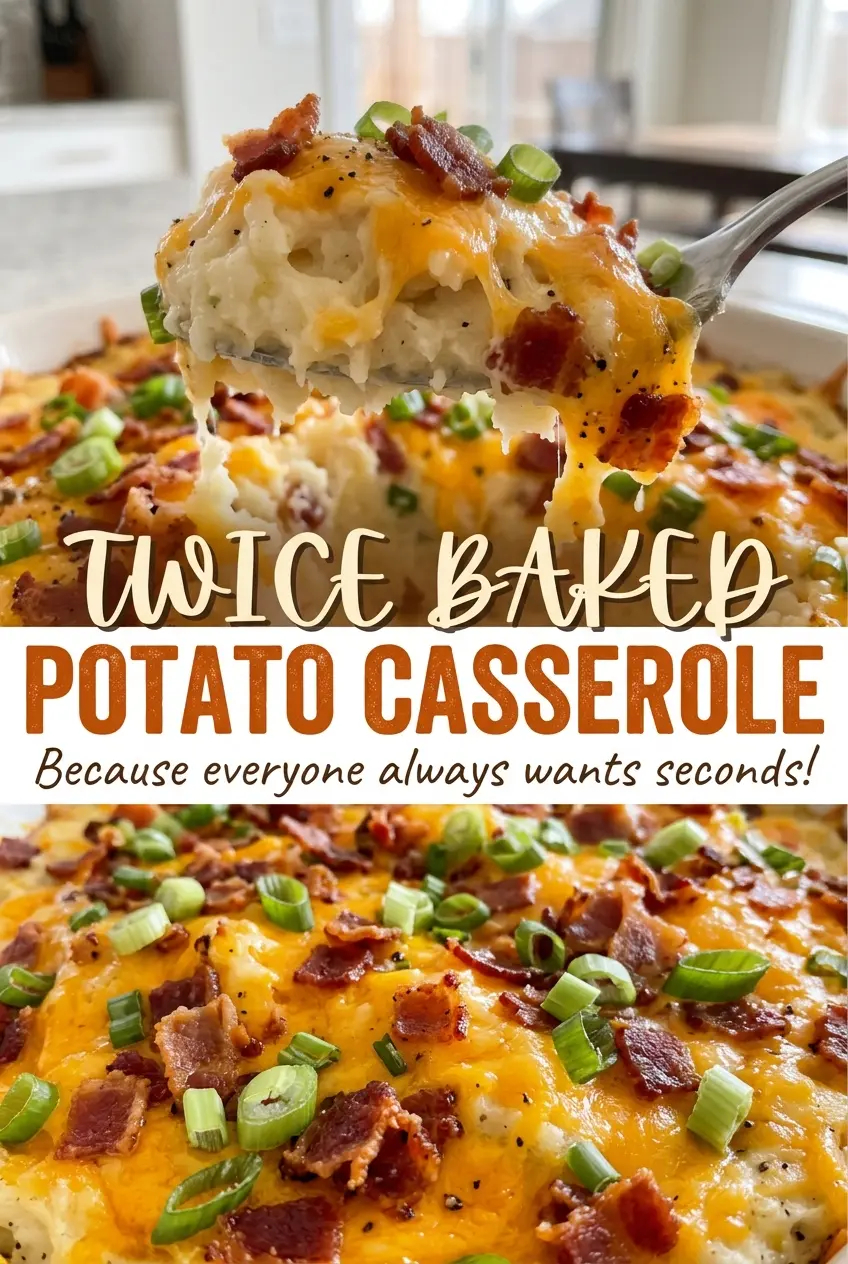
Twice Baked Potato Casserole brings that familiar baked-potato combination of sour cream, cheddar, bacon, and chives to the table in a dish that’s easy to scoop and share. I keep the mash creamy but leave a few small chunks, so it still feels like potato rather than a smooth puree. The top gets its own layer of cheddar, which melts and browns while the middle heats through. Each bite comes out soft, savory, and finished with a little fresh chive.
Kitchen Note
Use softened butter for the filling, not a cold piece straight from the refrigerator. It blends into the potatoes without leaving little firm bits, and the first tablespoon is easy to spread across the baking dish.
Save this Twice Baked Potato Casserole for a cozy side dish with a creamy center, crisp bacon, and a golden cheddar top.
Why Baking the Russets First Keeps This Casserole From Turning Waterlogged
It’s tempting to boil potatoes when you’re making a casserole, but this one starts with whole russets baked on a sheet pan. That choice matters once the sour cream and milk go in. Russets are starchy, and baking them cooks the centers without submerging them in water. The finished flesh stays fluffy enough to absorb the dairy and butter without becoming loose or soupy.
There’s also a useful difference between baked potato flesh and potato pieces boiled in a pot: the baked centers are easy to scoop away from the skins, so you can leave the skins behind and mash the part you want. Pricking each potato gives steam a way to escape as it bakes. The test that matters is simple: a knife should slide easily into the center, not stop at a firm core. Starting with tender, fluffy potatoes gives the filling a sturdy base for the bacon and cheese.
What Russets, Sour Cream, and Sharp Cheddar Each Bring to the Mash
- Russet potatoes — Their starchy centers turn fluffy after baking and mash into a filling that holds together. Choose potatoes that feel firm and have no soft spots. There isn’t another potato in the ingredient list for a like-for-like swap, and a different type can change the texture.
- Unsalted butter — It adds richness to the mash and helps grease the baking dish. Softened butter is easier to work evenly into the potato flesh. The other listed ingredients won’t replace its richness, so keep the butter in both jobs rather than redirecting all of it to the filling.
- Sour cream and milk — Sour cream brings a tangy, rich quality; milk loosens the potatoes so they’re creamy rather than stiff. They do different work, so milk alone won’t stand in for sour cream, and sour cream alone won’t thin the mash in the same way. Keep both for the intended texture.
- Sharp cheddar — Sharp cheddar gives the filling a stronger cheese flavor than a mild cheese, while the separate layer on top melts and browns. Buy a block and shred it yourself if you want a more even melt; pre-shredded cheddar is convenient and still works, though its surface may melt less smoothly.
- Bacon — Cook it until crisp before crumbling so it brings a distinct savory bite to the soft potatoes. If you’re making a meat-free version, leave it out rather than trying to replace its flavor with another listed ingredient.
- Fresh chives — Chives add a fresh, mild onion note at the end, after the casserole comes out of the oven. Chop them shortly before serving for the brightest flavor. They’re easy to omit if you don’t have them; no other listed ingredient gives quite the same finish.
From Fork-Pricked Russets to a Lightly Browned Cheddar Top
Bake the potatoes until the centers give easily
Heat the oven to 400°F, scrub and dry the russets, then prick each one several times with a fork. Set them on a rimmed baking sheet and bake for 55 to 70 minutes. A knife should slide easily into the center of every potato; if one still feels firm, give it more time. Let the potatoes cool until they’re easy to handle, about 10 minutes.
Scoop the flesh and make a textured mash
Grease a 9×13-inch baking dish with 1 tablespoon of the softened butter. Cut the potatoes in half lengthwise and scoop the flesh into a large bowl, leaving the skins behind. Add the remaining butter, sour cream, milk, kosher salt, and black pepper, then mash until creamy with a few small chunks. If you keep mashing until every piece disappears, you’ll lose the pleasantly rustic texture.
Fold in the bacon and build the cheese top
Fold the crumbled cooked bacon and 1 cup of cheddar into the potato mixture. Folding keeps the bacon and cheese distributed without crushing the potatoes into a paste. Spread the filling in the prepared dish, reaching into the corners so it heats evenly. Sprinkle the remaining cheddar across the surface for a complete top layer.
Bake until hot, then let the casserole settle
Return the dish to the 400°F oven for 20 to 25 minutes. Look for melted cheese with light browning and a casserole that’s hot throughout; don’t pull it while the middle is still cool. Rest it for 10 minutes after baking so each scoop holds its shape. Sprinkle the chopped chives over the top just before serving.
Two Useful Ways to Change the Bacon or Texture
Make it meat-free
Leave out the bacon and keep the rest of the casserole the same. For a vegetarian version, choose a vegetarian-labeled sharp cheddar. The potato and cheese stay rich, but you’ll miss the salty, smoky bites that bacon adds.
Keep the bacon crisp on top
Instead of folding the crumbled bacon into the potatoes, scatter it over the baked casserole along with the chives. You’ll get more distinct crisp pieces in each serving, while the filling itself stays smooth and cheesy.
Storage and Reheating
- Refrigerator: Store covered leftovers for 3 to 4 days. The potato filling will firm up as it chills.
- Freezer: Freeze cooled portions in an airtight freezer-safe container for up to 2 months. The texture may be a little less creamy after thawing, so thaw overnight in the refrigerator before reheating.
- Reheating: For the best texture, cover the dish loosely with foil and warm it in a 350°F oven until the center reaches 165°F. Avoid reheating uncovered for too long, which can dry the top before the middle is hot.
Questions That Come Up When Making Twice Baked Potato Casserole
Twice Baked Potato Casserole
Ingredients
Equipment
Method
- Preheat the oven to 400°F. Scrub and dry the potatoes, prick each several times with a fork, and place them on a rimmed baking sheet.
- Bake for 55 to 70 minutes, until a knife slides easily into the center of each potato.
- Let the potatoes cool until they’re easy to handle, about 10 minutes.
- Grease a 9x13-inch baking dish with 1 tablespoon of the softened butter.
- Cut the potatoes in half lengthwise, scoop the flesh into a large bowl, and discard the skins.
- Add the remaining 4 tablespoons butter, sour cream, milk, salt, and pepper, then mash until creamy with a few small chunks.
- Fold in the bacon and 1 cup of the cheddar cheese.
- Spread the potato mixture in the prepared baking dish and sprinkle the remaining 1 cup cheddar over the top.
- Bake at 400°F for 20 to 25 minutes, until hot throughout and the cheese is melted and lightly browned.
- Rest for 10 minutes, then sprinkle with the chives before serving.