The beef starts out in big, flour-dusted cubes, and the first batch tells you whether the Dutch oven is ready: it should sizzle as it lands, not sit quietly in the oil. I brown it in batches so the meat develops color instead of steaming, then let those browned bits become part of the broth. That’s the foundation of Witchs Cauldron Beef Stew, a hearty pot with tender beef and vegetables that hold their shape.
This stew takes its time, but the work is hands-on only at the beginning. The beef simmers on its own first, giving it a head start before the carrots, celery, and potatoes go in. Add them too soon and they’ll spend the whole long simmer softening; wait until the beef is nearly tender and they finish together without losing their texture.
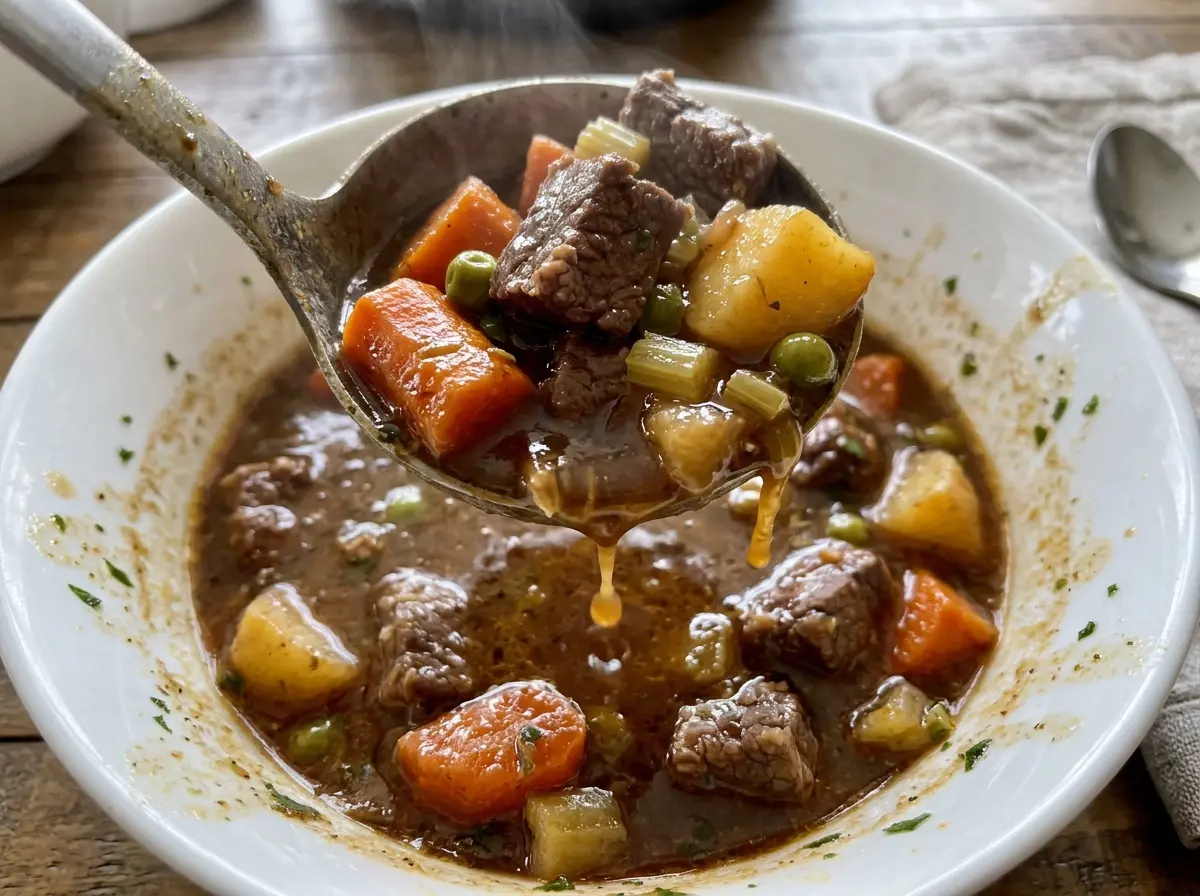
I like serving it after a short rest off the heat, when the broth has settled and the chunks are easier to ladle neatly. The result is savory and satisfying, with a broth that clings to the beef and tender vegetables in every spoonful.
Kitchen Note
Give the stew its full 10 minutes off the heat before serving. The bubbling settles, and the beef and vegetables are easier to scoop without breaking the potatoes.
Save Witchs Cauldron Beef Stew for a cozy dinner: browned chuck, tender vegetables, and a savory broth built right in the Dutch oven.
Why the Beef Gets a Flour Coat Before It Hits the Dutch Oven
Flour does more here than help the seasoning cling. As the beef browns, that light coating helps create the flavorful bits on the bottom of the pot, and later it gives the broth a little more body. The stew won’t be as thick as gravy; it should still ladle easily, with enough richness to coat the beef and vegetables.
That coating only helps if the meat has room to brown. Pack the pot full and the beef releases moisture into a crowded pan, so it steams before a proper sear can form. Working in batches takes a few extra minutes, but it gives each piece contact with the hot surface. Turn the cubes to brown their sides, then move them to a plate while you build the onion and tomato base.
Scraping the bottom after the broth goes in matters, too. Those browned bits dissolve into the liquid as you stir, carrying the flavor from the first stage into the long simmer. If a few stubborn spots remain, keep scraping gently with a wooden spoon rather than leaving the best part behind.
What Chuck, Yukon Golds, and Tomato Paste Bring to the Pot

- Beef chuck — Chuck has enough connective tissue to become tender through a slow simmer, while leaner cuts are more likely to turn dry before they develop the same soft texture. Buy a piece you can cut into even cubes; uniform pieces finish at a similar pace.
- All-purpose flour — The standard pantry version is right for coating the beef. Whisking the flour, salt, and pepper together with the meat in a large bowl helps distribute the seasoning instead of leaving a few heavily coated pieces.
- Yellow onion, garlic, and tomato paste — These form the savory base. A firm onion is fine; there’s no need to buy a specialty variety. Let the tomato paste cook with the garlic for its brief minute so it loses its raw edge before the broth goes in.
- Low-sodium beef broth and Worcestershire sauce — Low-sodium broth gives you more control over the finished saltiness, while Worcestershire brings a savory, slightly tangy depth. Use a broth you enjoy sipping; its flavor is the backbone of the liquid.
- Carrots, celery, and Yukon Gold potatoes — Cut the vegetables into the stated large pieces so they can hold up through their shorter simmer. Yukon Golds are especially useful because they turn tender without disintegrating as readily as a softer potato.
- Dried thyme and bay leaf — Dried thyme disperses easily through the broth, and the bay leaf gives a quiet herbal note while the beef cooks. Remember to fish out the whole leaf before serving.
Build the Stew in Two Simmering Stages
Coat and Brown the Beef
Toss the beef with the flour, kosher salt, and black pepper until the cubes are evenly coated. Heat the vegetable oil in a 6-quart Dutch oven over medium-high heat, then brown the beef in batches, turning the pieces so their sides color. If the cubes crowd each other, pause and cook fewer at a time; a single uncrowded layer browns instead of steaming. Transfer each batch to a plate as it’s ready.
Soften the Onion and Start the Broth
Add the diced onion to the same pot and cook for 5 minutes, stirring occasionally. It should soften and pick up some of the color left by the beef. Stir in the minced garlic and tomato paste and cook for 1 minute; keep the mixture moving so the garlic doesn’t scorch. Pour in the beef broth and Worcestershire sauce, then stir in the thyme and bay leaf while scraping the browned bits from the bottom.
Let the Chuck Turn Tender
Return the beef and any juices from the plate to the pot. Bring the liquid to a simmer, cover, and cook over low heat for 1 1/2 to 2 hours, until the beef is nearly fork-tender. Keep the heat low enough for a gentle simmer rather than a hard boil, which can make the meat tighten. If the beef still resists a fork near the end of that window, keep simmering until it’s close to tender before adding the vegetables.
Add the Vegetables for Their Shorter Cook
Stir in the carrots, celery, and potatoes once the beef is nearly tender. Cover and simmer for 30 to 40 minutes, until the vegetables are tender and the beef is fork-tender. Check a potato with a fork near the shorter end of the range; you want it tender all the way through, not crumbling at the edges. Remove the bay leaf when the pot comes off the heat.
Two Useful Swaps for Witchs Cauldron Beef Stew
Make It Gluten-Free
Replace the all-purpose flour with the same amount of rice flour, and use beef broth and Worcestershire sauce specifically labeled gluten-free. The rice flour still gives the beef a light coating for browning, though the broth may have a slightly different, less velvety body.
Use Russet Potatoes for a Thicker Broth
Replace the Yukon Golds with the same amount of russet potatoes, cut to the same size. They soften more readily and release extra starch, so the broth will be thicker and the potato edges less firm. Stir gently once they go into the pot to keep the pieces intact.
Storage and Reheating
- Refrigerator: Keep leftovers covered for 3 to 4 days. The potatoes soften a little as they sit in the broth.
- Freezer: Freeze cooled portions in airtight containers for up to 3 months. The stew is safe to freeze, though the potatoes may be softer after thawing.
- Reheating: Warm gently in a covered saucepan over low to medium-low heat, stirring carefully, until the stew reaches 165°F. Avoid a vigorous boil, which can break up the potatoes and toughen the beef.
The Questions That Come Up While This Stew Simmer
Witchs Cauldron Beef Stew
Ingredients
Equipment
Method
- Toss the beef with the flour, salt, and pepper in a large bowl until evenly coated.
- Heat the oil in a 6-quart Dutch oven over medium-high heat.
- Brown the beef in batches, turning to brown the sides, then transfer it to a plate.
- Add the onion to the pot and cook for 5 minutes, stirring occasionally.
- Add the garlic and tomato paste and cook for 1 minute.
- Pour in the beef broth and Worcestershire sauce.
- Stir in the thyme and bay leaf, scraping up the browned bits from the bottom of the pot.
- Return the beef and any juices to the pot.
- Bring to a simmer, cover, and cook over low heat for 1 1/2 to 2 hours, until the beef is nearly fork-tender.
- Stir in the carrots, celery, and potatoes.
- Cover and simmer for 30 to 40 minutes, until the vegetables are tender and the beef is fork-tender.
- Remove the bay leaf and let the stew rest off the heat for 10 minutes before serving.